Revolut has confirmed a customer data breach tied to fake government requests, an incident in which fraudulent demands dressed up as official inquiries were used to pry loose sensitive custom
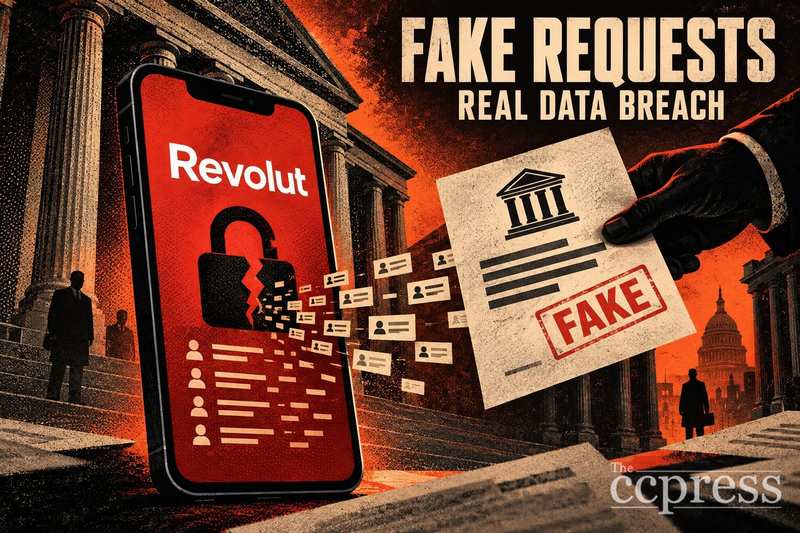
Revolut has confirmed a customer data breach tied to fake government requests, an incident in which fraudulent demands dressed up as official inquiries were used to pry loose sensitive customer information.
The Revolut data breach centers on one uncomfortable fact: attackers did not need to smash through a firewall. They asked. And the requests, impersonating legitimate government authorities, were treated as real long enough to expose customer data, as reported by Crypto Briefing. For related coverage, see BNB Chain Malware Spreads Through Fake CAPTCHAs.
What Revolut has confirmed is narrow. A breach happened. Customer data was involved. Fake government requests were the vector. Beyond that, the specifics reported here do not establish an incident date, a customer count, or the regions affected. For related coverage, see Crypto Billionaires Give Reform UK $97M in Record Donations.
How fake government requests factored into the breach
The mechanism, at its core, is social engineering. Fraudulent requests were framed to look like they came from a government body, and that framing was enough to trigger disclosure of customer information.
Impersonating authorities to extract data is a documented playbook. U.S. law enforcement has warned that criminals abuse so-called emergency and official data requests to trick companies into handing over user records, a threat detailed in an FBI public service announcement.
What the reporting here does not pin down is equally important: the exact request type, the authority that was impersonated, the channel the requests came through, and where the verification process failed. Those remain open questions, not established facts.
What is known about customer impact and Revolut’s response
Customer data was the subject of the breach. The precise fields exposed, whether names, contact details, or identity documents, are not confirmed in the material available here.
A data breach is not the same as an account takeover. Nothing in this reporting establishes that funds were moved, accounts were compromised, or that any cryptocurrency holdings were touched. Readers should not assume consequences that have not been verified.
This is not the first time Revolut’s customer data has drawn scrutiny. Earlier incidents raised questions about sensitive customer data exposed through a phishing attack, and separate reporting described passport and Bitcoin records reportedly exposed in connection with fake government requests.
The fintech, which has pushed deeper into crypto with moves like its EURR stablecoin launch, holds identity documents and financial records for millions of users. That makes any verification failure high stakes, even before the full scope is known.
The harder question is how a request-handling process gets fooled in the first place, and whether the safeguards that failed here have been fixed. On that, the evidence available stops short of an answer. So what does a bank owe its customers when the front door was social engineering, not a hack?
Disclaimer: This article is for informational purposes only and does not constitute financial or investment advice. Cryptocurrency and digital asset markets carry significant risk. Always do your own research before making decisions.
The article Revolut data breach linked to fake government requests first featured on theccpress.com.