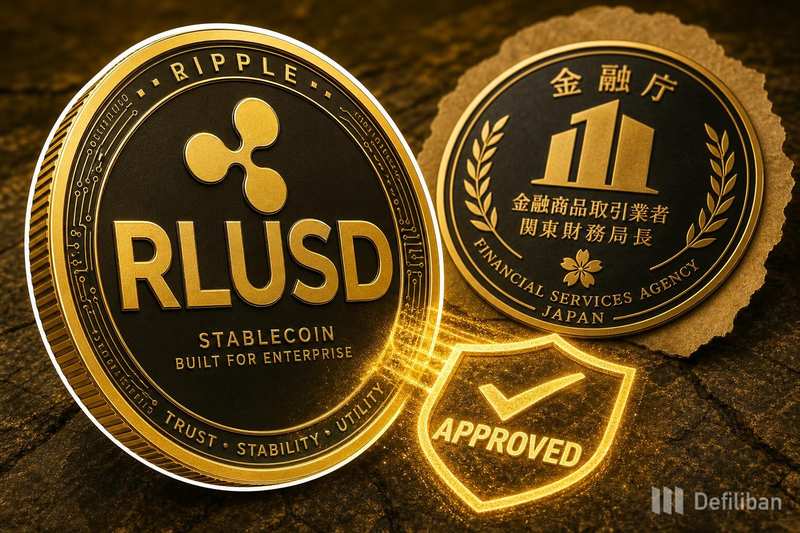
Ripple's RLUSD stablecoin has been approved for use in Japan, marking a significant expansion for the dollar-denominated stablecoin into one of Asia's most regulated digital asset markets. Th
Ripple's RLUSD stablecoin has been approved for use in Japan, marking a significant expansion for the dollar-denominated stablecoin into one of Asia's most regulated digital asset markets.
The development was confirmed through a partnership between Ripple and SBI Group to bring RLUSD to the Japanese market. RLUSD is Ripple's USD-pegged stablecoin, designed to maintain a 1:1 value with the U.S. dollar while operating on blockchain infrastructure. For related coverage, see Ripple Announces XRPL AI Starter Kit for Developers.
The approval positions RLUSD as one of the few foreign-issued stablecoins to gain access to Japan, a jurisdiction known for its strict licensing requirements around digital assets. The stablecoin has gone live in Japan following the regulatory clearance. For related coverage, see Ripple Labs Plans $1B SPAC Raise: XRP and Market Impact.
Why Japan Matters for RLUSD
Japan operates one of the most comprehensive regulatory frameworks for digital assets globally. Country-specific approval is not a formality; it signals that a product has met the compliance bar set by Japanese financial authorities. For related coverage, see Dormant Wallet 0x096 Sells 27,585 ETH for $44.84M After 7 Years.
For a stablecoin, this type of approval carries additional weight. Stablecoins occupy a sensitive position between traditional finance and crypto markets, and Japan has historically been cautious about which products can operate within its borders.
The partnership with SBI Group is notable because SBI is one of Japan's largest financial conglomerates with deep roots in both traditional banking and digital asset services. This is not Ripple's first collaboration with SBI; the two companies have a longstanding relationship around cross-border payments and XRP-related services. SBI's involvement also arrives amid broader stablecoin activity in the Japanese market, where SBI Group recently launched JPYSC, a trust bank-backed yen stablecoin.
The Japan entry gives RLUSD access to a market where institutional trust and regulatory clarity could drive adoption in ways that less regulated jurisdictions cannot. It also distinguishes RLUSD from competitors that have not yet secured equivalent approvals in the region.
What to Watch Next for Ripple and RLUSD
The confirmed fact is the approval and launch. What remains to be seen is how RLUSD adoption plays out in practice: trading volumes on Japanese exchanges, integration with payment rails, and whether the stablecoin gains traction among institutional users.
Ripple has been expanding its footprint across multiple regulatory jurisdictions. The company has also been testing XRP-based trade finance in Singapore's MAS sandbox, suggesting a broader Asia-Pacific strategy. Whether the Japan launch accelerates similar approvals in other markets is an open question.
The SBI partnership could also serve as a template for how Ripple approaches other regulated markets, pairing with established local financial institutions to navigate compliance requirements. For now, the Japan approval stands as a concrete milestone for RLUSD's geographic expansion.
Disclaimer: This article is for informational purposes only and does not constitute financial or investment advice. Cryptocurrency and digital asset markets carry significant risk. Always do your own research before making decisions.
Read original article on defiliban.io