Robinhood Ecosystem Makes On-Chain Finance More Accessible The Robinhood ecosystem has grown into something bigger than a simple crypto trading app. Most people still think of Robinhood as a
Robinhood Ecosystem Makes On-Chain Finance More Accessible
The Robinhood ecosystem has grown into something bigger than a simple crypto trading app. Most people still think of Robinhood as a place to buy and sell digital assets, but the company has quietly built a much wider blockchain network, one that ties together trading platforms, self-custody wallets, DeFi, infrastructure providers, and cross-chain bridges.
Rather than build every piece in-house, Robinhood chain teamed up with many of crypto's most established applications. That means users get to work with tools they already trust while still getting a foothold in on-chain finance, whether that's trading tokens, storing crypto safely, earning yield, or moving assets across chains.
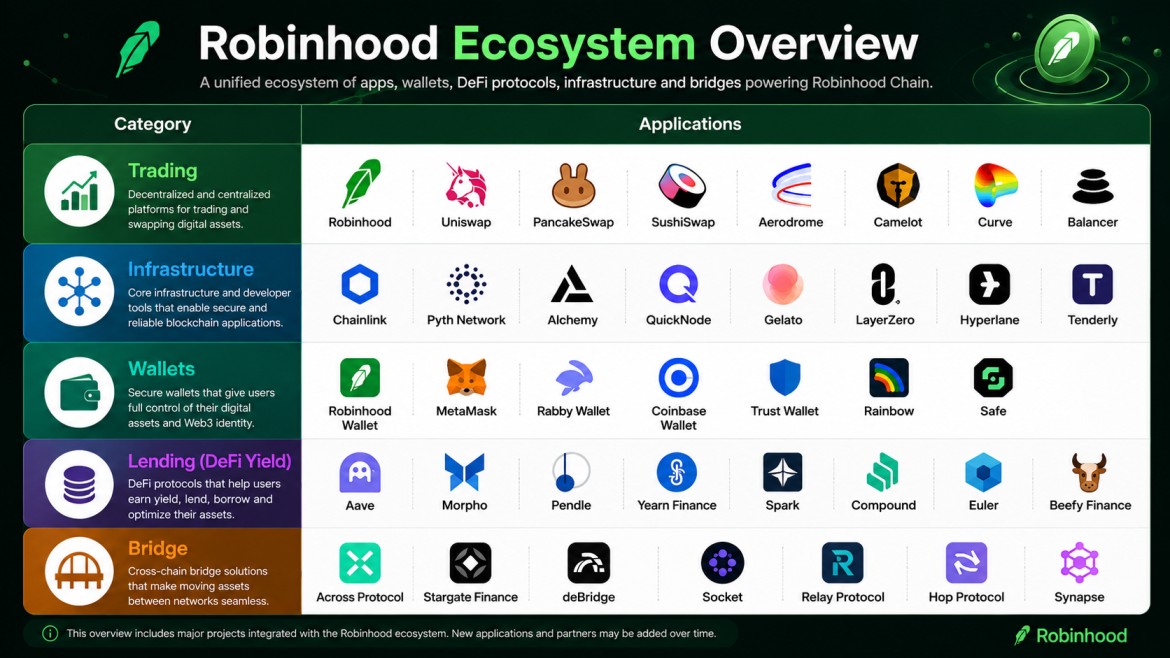
Here's a breakdown of the main categories and the applications that make up the network.
Robinhood Ecosystem Overview
Category
Applications
Trading
Robinhood, Uniswap, PancakeSwap, SushiSwap, Aerodrome, Camelot, Curve, Balancer
Infrastructure
Chainlink, Pyth Network, Alchemy, QuickNode, Gelato, LayerZero, Hyperlane, Tenderly
Wallets
Robinhood Wallet, MetaMask, Rabby Wallet, Coinbase Wallet, Trust Wallet, Rainbow, Safe
Lending (DeFi Yield)
Aave, Morpho, Pendle, Yearn Finance, Spark, Compound, Euler, Beefy Finance
Bridge
Across Protocol, Stargate Finance, deBridge, Socket, Relay Protocol, Hop Protocol, Synapse
Trading Applications in the Robinhood Ecosystem
Trading sits at the center of this whole ecosystem. It's what lets people buy, sell, swap, and manage digital assets, whether they'd rather stick with a centralized app or go fully decentralized. Different platforms suit different kinds of users too, from someone who just wants a clean, simple interface to seasoned DeFi traders chasing better liquidity and tighter fees.
Robinhood: Robinhood is the front door into all of this. The app offers an easy trading interface, covers a wide range of cryptocurrencies, and is built with regulated, beginner-friendly users in mind. Its tie-in with Robinhood Wallet also smooths the path between centralized and decentralized services, so switching between the two doesn't feel like a hassle.
Uniswap: Uniswap remains one of the biggest decentralized exchanges around. Anyone can swap thousands of ERC-20 tokens right from their own wallet, no middleman required. Its automated market maker model keeps liquidity deep across a huge range of trading pairs.
PancakeSwap: PancakeSwap started life on BNB Chain and has since spread across multiple networks. It handles token swaps, liquidity pools, yield farming, and staking, and it manages to keep transaction costs fairly low while doing it.
SushiSwap: SushiSwap pairs decentralized trading with a handful of extra DeFi services. On top of swaps, it offers liquidity incentives and works across several blockchains, which is part of why more experienced DeFi users tend to gravitate toward it.
Aerodrome: Aerodrome has turned into a major liquidity hub for assets on Base. Its focus is efficient liquidity management, which helps traders get competitive pricing on the tokens it supports.
Other trading platforms worth knowing: Camelot, Curve, Balancer, Velodrome, Maverick Protocol, and a few other decentralized exchanges also add liquidity and trading options across the network.
Infrastructure Behind the Robinhood Ecosystem
No blockchain ecosystem runs without solid infrastructure behind it. These are the services quietly supplying market data, blockchain connectivity, automation, APIs, and cross-chain interoperability that let decentralized apps actually function.
Chainlink: Chainlink is the go-to decentralized oracle network. It feeds smart contracts real-world data, crypto prices included, and a large chunk of DeFi protocols depend on it for accurate, secure information.
Pyth Network: Pyth focuses on real-time financial market data. Its low-latency price feeds get used heavily by decentralized exchanges and derivatives platforms, places where even a small pricing delay can matter.
Alchemy: Alchemy gives developers a platform for building blockchain apps without reinventing the wheel. Its APIs, monitoring tools, and node services help teams ship reliable dApps faster.
QuickNode: Instead of running their own nodes, developers can just plug into QuickNode's infrastructure. It's built for scale, and it tends to improve both speed and reliability for whatever's connected to it.
Gelato: Gelato takes care of automating blockchain transactions and smart contract execution. Developers use it to schedule recurring tasks and automate workflows, cutting down on manual work and smoothing out the user experience.
A few more infrastructure players: LayerZero, Hyperlane, Tenderly, Blockscout, Goldsky, and Thirdweb round things out, adding interoperability and development tooling across the ecosystem.
Wallets Available in the Robinhood Ecosystem
Wallets are really the gateway into decentralized finance. They let people hold onto their assets securely while interacting directly with dApps, all without handing over control of their private keys.
Robinhood Wallet: This is the ecosystem's native self-custody wallet. It handles token storage, swaps, and NFT management and gives direct access to decentralized apps, all while users keep full ownership of what's in it.
MetaMask: Still one of the most widely used crypto wallets out there. MetaMask supports Ethereum-compatible networks and plugs into thousands of decentralized apps without much friction.
Rabby Wallet: Rabby was built with security at the front of mind. It reviews transactions automatically before you approve them, which helps catch suspicious activity and avoid costly mistakes before they happen.
Coinbase Wallet: Coinbase Wallet gives users full control over their holdings while supporting multiple blockchain networks. It connects with dApps too and manages NFTs and crypto securely.
Trust Wallet: Known mostly for its clean mobile interface and broad blockchain support. Beyond just storage, Trust Wallet enables staking, NFT management, and direct interaction with DeFi protocols.
Other wallets in the mix: Rainbow Wallet, Safe, Argent, Zerion Wallet, and a handful of other self-custody options also serve people interacting with the ecosystem.
DeFi Yield Opportunities
One of DeFi's biggest draws is turning idle assets into something productive. A handful of well-known protocols here handle lending, borrowing, staking, and yield optimization for anyone looking to put their crypto to work.
Ave: Aave is one of the largest decentralized lending platforms around. Users can supply assets to earn interest or borrow against what they already hold, all without going through a traditional bank.
Morpho: Morpho works by optimizing existing lending markets rather than replacing them. It matches borrowers with lenders more efficiently, which tends to mean better rates for both sides.
Pendle: Pendle takes a different approach: it separates future yield from the underlying asset itself. That lets investors trade expected yield on its own, opening up strategies that wouldn't otherwise be possible.
Yearn Finance: Yearn automates the whole yield-chasing process, shifting deposited assets between strategies as conditions change. Users don't have to babysit the market to benefit.
Spark: Spark sticks mostly to stablecoin lending and borrowing. Its simplicity and solid liquidity make it a natural pick for anyone after lower-risk DeFi exposure.
More lending and yield platforms: Compound, Euler, Beefy Finance, Convex Finance, and Fluid also offer lending, staking, and yield tools within the broader network.
Bridge Solutions in the Robinhood Ecosystem
As more people move across different blockchains, bridge protocols become essential. They make transfers faster and cheaper, and they let users move assets around without being forced to sell first.
Across Protocol: Across is known for quick, capital-efficient cross-chain transfers. It cuts down on both wait times and fees while keeping the process fairly simple for the end user.
Stargate Finance: Stargate handles native asset transfers through unified liquidity pools, which simplifies moving assets between supported chains without adding unnecessary steps.
deBridge: deBridge is built around secure interoperability between blockchain ecosystems. It goes beyond simple transfers too, enabling cross-chain messaging that developers can build directly into their apps.
Socket: Socket gives developers the infrastructure to add cross-chain functionality into their apps, automatically picking efficient routes for each transfer.
Relay Protocol: Relay simplifies bridging by connecting users to optimized liquidity providers, aiming to make cross-chain transactions both faster and cheaper.
Other bridges worth mentioning: Hop Protocol, Synapse Protocol, Orbiter Finance, Rhino.fi, and Superbridge also help improve cross-chain interoperability across the network.
Conclusion
The Robinhood Ecosystem has turned into something well beyond a crypto trading app at this point. By pulling together trusted trading platforms, secure wallets, dependable infrastructure, DeFi protocols, and cross-chain bridges, it's built an environment where people can explore blockchain services using tools that already feel familiar.
Rather than trying to out-compete existing decentralized apps, Robinhood has taken the route of bringing many of the industry's top projects under one roof. As Robinhood Chain keeps developing, expect more integrations to show up, giving users even more ways to get involved in decentralized finance.
Disclaimer
This article is for informational purposes only and shouldn't be taken as financial, investment, or trading advice. The projects mentioned belong to their respective organizations. Always do your own research before using any blockchain application or investing in digital assets.