Robinhood insider trading case defendant Huaisong Xiang pleaded guilty to wire fraud in Manhattan federal court on November 16, after using confidential token-listing information to trade per
Robinhood insider trading case defendant Huaisong Xiang pleaded guilty to wire fraud in Manhattan federal court on November 16, after using confidential token-listing information to trade perpetual futures on Hyperliquid, according to the U.S. Department of Justice. Prosecutors said he made $125,523 and agreed to forfeit that amount.
Why Robinhood insider trading matters
The plea shows that confidential information about exchange listings can lead to criminal charges even when the trades happen on a separate crypto platform. Xiang’s case also leaves an important question open: the September charges named another former Robinhood engineer, Hefu Chai, and the available information does not establish his current case status.
What we know about the Robinhood insider trading case
The Justice Department said Xiang, a 30-year-old former software engineer from Jersey City, pleaded guilty to one count of wire fraud. The government said his trades used private information about planned Robinhood Crypto listings. The department’s plea announcement says Xiang agreed to forfeit $125,523. His sentencing is scheduled for February 25, 2027, and the charge carries a maximum sentence of 20 years. That is the statutory maximum, not a prediction of the sentence he will receive.
According to the sealed complaint, Xiang worked on new digital-asset listings and belonged to Robinhood’s restricted “Coin Aware Individuals” group. The complaint said members were barred from trading on any platform before a listing announcement and for 24 hours afterward. It also alleged that listing plans were shared in a private Slack channel.
Robinhood insider trading and the alleged trades
Prosecutors’ complaint alleged at least 11 instances of trading ahead of listings between March 2025 and February 2026. In one example described in the filing, Xiang received messages about a planned POPCAT listing, transferred about 18 ETH, then worth roughly $34,000, to Hyperliquid and traded POPCAT perpetuals before Robinhood’s public announcement. That account is an allegation in the complaint, distinct from the facts stated in the later plea announcement.
The complaint said Robinhood listings could put upward pressure on a token before the public announcement because assets could become tradable on the platform up to about an hour earlier. That timing helps explain why advance access to the listing schedule could matter to a trader using another venue. Decrypt reported that Xiang admitted repeatedly trading perpetual futures and profiting $125,523.
The case began publicly on September 15, when prosecutors announced charges against Xiang and former Robinhood engineer Hefu Chai. The Justice Department said each was alleged to have made more than $50,000 trading Hyperliquid perpetuals ahead of token-listing announcements. Xiang has pleaded guilty, while sentencing remains pending.

The complaint said Xiang had access to restricted listing plans through his work.
What is still unclear
The Justice Department’s announcement does not detail the full list of trades Xiang admitted to, nor does it specify how the court will calculate any sentence beyond the agreed forfeiture. The February 25, 2027 sentencing date is the next major court milestone. The 20-year maximum should not be read as the likely outcome; the available reporting does not provide a forecast for the sentence.
Chai’s status also remains unresolved in the information provided. He was charged alongside Xiang in September, but neither the plea announcement nor the reports from Decrypt and The Block establish whether he has entered a plea or what the next steps in his case will be.
Robinhood’s response was reported when the charges were announced, rather than after Xiang’s plea. At that time, the company said it had investigated the matter, reported it to law enforcement and regulators, would cooperate, and had zero tolerance for insider trading, according to The Block. No newer company statement was included in the available reporting.
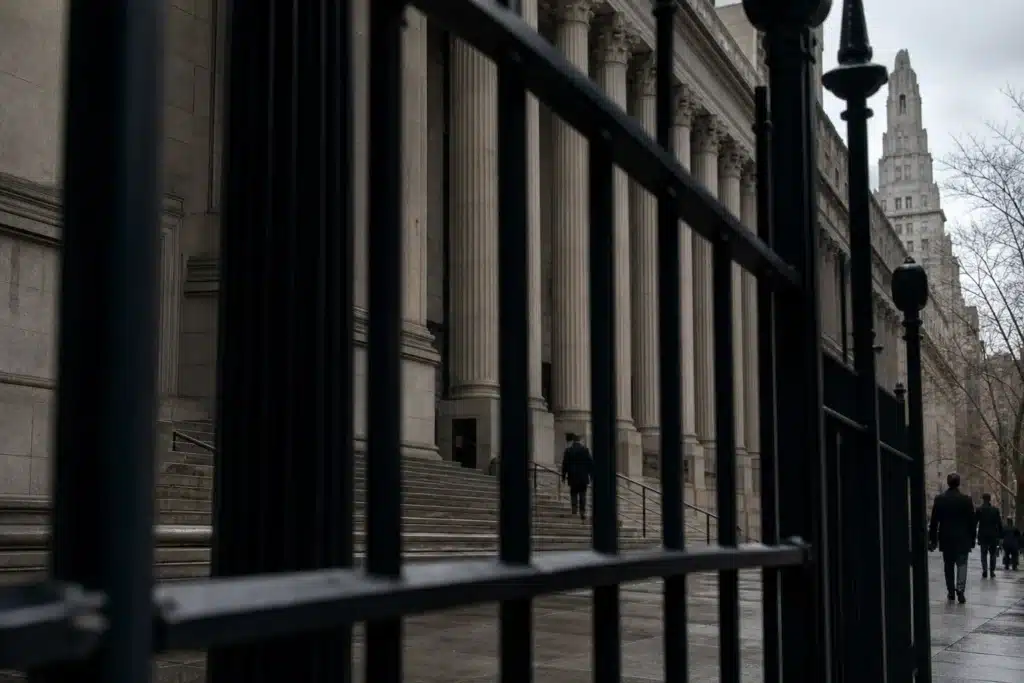
Xiang entered his guilty plea in Manhattan federal court.
Market context after the plea
Decrypt and The Block covered the plea as a criminal enforcement development. The provided coverage contains no token-specific price reaction or analyst forecast tied to the case. Broad crypto-market prices on November 17 therefore offer context, not evidence that traders moved in response to Xiang’s plea.
Asset
Price
24-hour change
Data time
Bitcoin (BTC)
$63,633
-1.86%
November 17, 2026, 18:13 UTC
Ethereum (ETH)
$1,782.50
-1.88%
November 17, 2026, 18:13 UTC
CoinGecko’s snapshot showed both assets lower over 24 hours, but those moves cannot be attributed to the court case from the data available. The Crypto Fear & Greed Index was 12, classified as Extreme Fear, on November 17, according to Alternative.me. That reading reflects broader sentiment and is not a measure of views on the prosecution.
U.S. Attorney Jamie McDonald said the plea showed that corporate insiders could be held accountable for using misappropriated information regardless of the trading platform, according to the Justice Department. The message is about enforcement across venues, not a market outlook.

Trading venue and platform risks remain distinct from the insider-trading allegations.
What it means for investors
The Robinhood insider trading case highlights a market-integrity risk that differs from ordinary price volatility: a person with access to confidential listing plans may trade before the public has the same information. It does not establish that every price move before a listing announcement is evidence of wrongdoing. The complaint’s claims concern specific alleged conduct and a specific information channel.
The case involved trades on Hyperliquid perpetuals using confidential listing information Xiang accessed through his employment. U.S. Attorney Jamie McDonald said the plea demonstrated that corporate insiders could be held accountable for trading on misappropriated information regardless of the trading platform, according to the Justice Department.
Robinhood said after the September charges that it had reported the matter and was cooperating. The case’s next test is whether the court’s sentencing record adds detail about the conduct or penalty.
Bottom line
Huaisong Xiang pleaded guilty to wire fraud in the Robinhood insider trading case; sentencing and the status of co-defendant Hefu Chai remain open. The prosecution underscores the legal exposure tied to misuse of confidential listing information, without offering a signal about crypto prices.
Related Articles
Sources
This article is for informational purposes only and does not constitute financial or investment advice. Cryptocurrencies are highly volatile; always do your own research before investing.
Read More:Robinhood Insider Trading: Engineer Admits Wire Fraud">Robinhood Insider Trading: Engineer Admits Wire Fraud