Russia, the theoretical energy paradise for Bitcoin miners, has just denied its own reputation. While analysts praised crypto mining efficiency in Putin’s homeland, the current administration
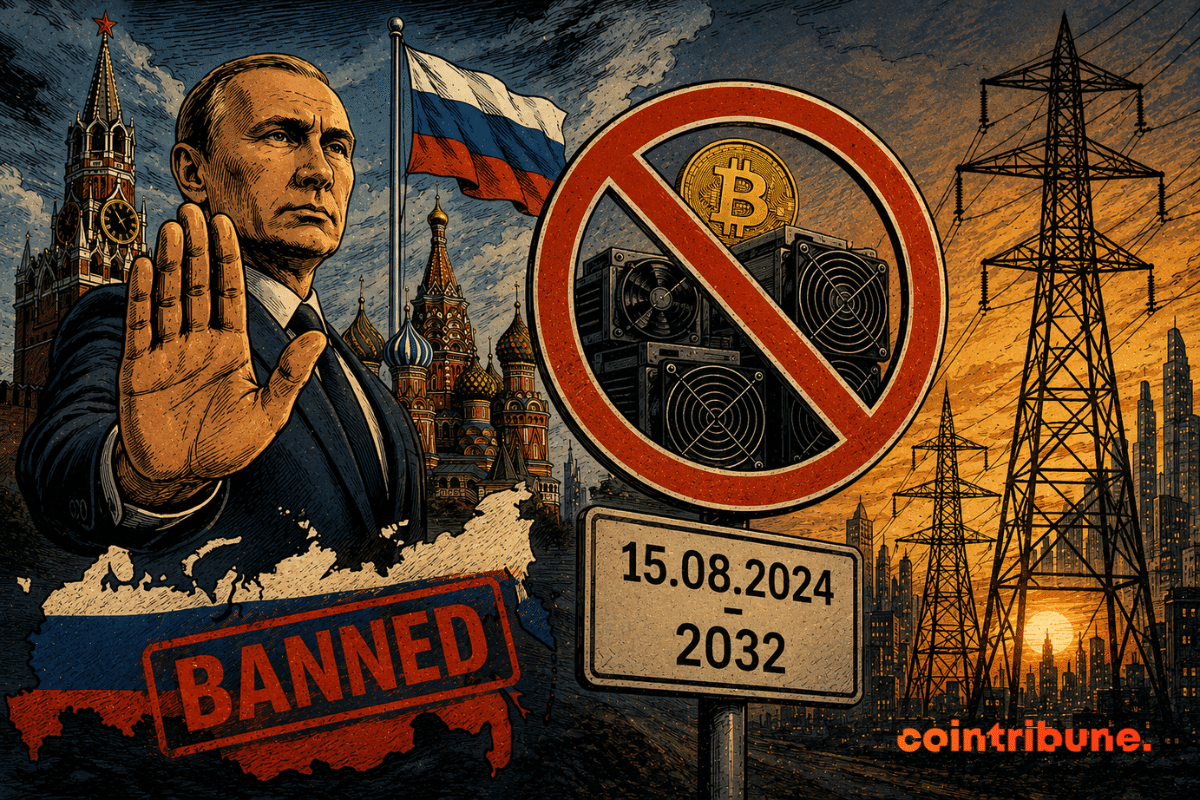
Russia, the theoretical energy paradise for Bitcoin miners, has just denied its own reputation. While analysts praised crypto mining efficiency in Putin’s homeland, the current administration takes the opposite stance. Like China once did, the country seems intent on banning this practice from its most strategic territories.
In Brief
- Russia bans crypto mining in Moscow, its region and Kursk from August 15, 2026 to December 31, 2032.
- Power consumption from mining in the Moscow region has exceeded 1 GW, putting stress on the grid.
- The 65 data centers in the region have a capacity of 734 MW, including 233 MW in the Moscow region.
- BitRiver founder Igor Runets has been placed in pretrial detention for fraud in a case involving En+.
Moscow pulls the plug on crypto miners — and it’s staying off until 2032
While the USA is not pro-CBDC, Russia plans to launch its own central bank digital currency as early as September. No turning back now, indeed. But there’s more: the Decree No. 936 of July 25, 2026 signed the death warrant of mining in the Russian capital. Signed by Prime Minister Mikhail Mishustin, this text extends the ban to Moscow, its region, and several districts of Kursk.
The ban takes effect on August 15, 2026, lasting until December 31, 2032.
Restrictions are introduced until the end of 2032 to stabilize the energy system and prevent capacity shortages in the affected regions.
Source: Decree No. 936 of July 25, 2026
This decision marks a decisive turning point. After targeting remote regions like Buryatia or the Caucasus, the Kremlin now strikes the country’s economic heart. The ban’s long duration far exceeds the mining equipment’s lifecycle.
Operators now know that investing in Moscow is a lost cause.
One gigawatt of juice: why the Kremlin had to pull the plug on mining
The electricity consumption of mining operations in the Moscow region has surpassed one gigawatt, a load the grid struggles to support. The Moscow region’s Ministry of Energy estimates that the area has 65 data centers connected to the grid, with a total capacity of 734 megawatts.
Among them, 19 are in the Moscow region, representing 233 MW of capacity. The ministry requested this ban as early as April 2026, warning of rising electricity demand and insufficient economic benefits.
Your 1st cryptos with BitMartThis link uses an affiliate program.Russia thus joins a growing list of countries facing the energy dilemma of mining. The United States, Kazakhstan, and Iceland are also under this pressure.
Russia’s strategy is clear: ban mining where electricity is scarce, while allowing it elsewhere. A regional approach that might set a precedent.
Crypto miners hit the road: relocate or go bust?
Mining operators have a few weeks to comply with the ban. Relocating equipment promises to be costly: transport, ventilation, new electricity contracts.
Large operators might turn to Siberia or other regions with low electricity prices. Smaller ones, on the other hand, may not survive this upheaval.
Participation in mining pools is also banned, affecting even miners outside the restricted zones. The government might see this relocation as an opportunity to reorganize the industry, but the risk of capital and skills flight is real.
Some operators might leave Russia for Kazakhstan or Belarus.
- BTC Price at the time of writing: 64,261 dollars
- Ban in Moscow: August 15, 2026 – Dec. 31, 2032
- Data centers (Moscow + region): 65 (734 MW)
- Mining consumption Moscow: > 1 GW
BitRiver, En+, and Russia’s great crypto mining crackdown
On July 30, 2026, BitRiver founder Igor Runets was transferred from house arrest to pretrial detention. He is charged with large-scale fraud in connection with a contract with the En+ conglomerate. The damage is estimated at 1 billion rubles, about 12.5 million dollars.
Investigators say Runets caused these damages by failing to deliver an $8 million equipment contract. BitRiver’s parent company, Fox Group, is already under observation proceedings for a $9.2 million debt to En+.
This case adds to allegations of tax fraud. The coordination between judicial authorities and the energy sector is striking.
Russia closes Moscow’s doors to crypto miners while opening a judicial front against its giants. Yet Moscow remains a large Bitcoin holder, like China. But preemptive attacks, like the one against Telegram, show that the Kremlin doesn’t hesitate to strike hard.