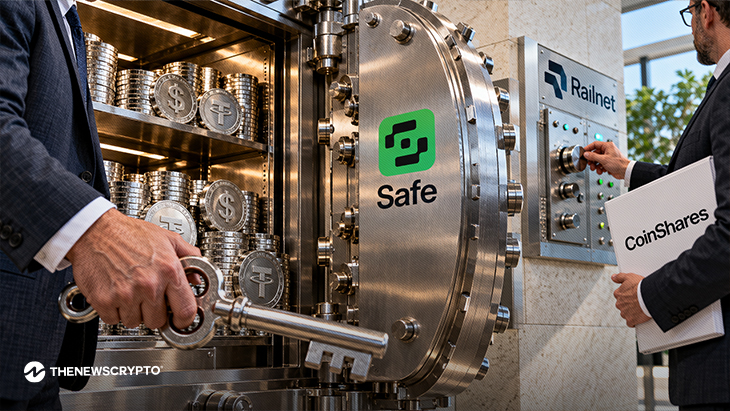
Safe Wallet has integrated CoinShares-designed stablecoin yield strategies, allowing corporate treasuries, DAOs and foundations to generate returns on idle stablecoin balances without moving
- Safe Wallet has integrated CoinShares-designed stablecoin yield strategies, allowing corporate treasuries, DAOs and foundations to generate returns on idle stablecoin balances without moving funds out of self-custody.
- The integration offers onchain organisations a way to put unused stablecoin capital to work while maintaining control of their assets rather than handing them to a third-party custodian.
Safe Wallet has integrated CoinShares-designed stablecoin yield strategies directly into its platform, giving corporate treasuries, DAOs, and foundations a way to earn institutional-grade yield on idle stablecoin balances without moving funds out of self-custody.
Corporate treasuries and onchain organisations sitting on idle stablecoin balances now have a direct path to put that capital to work, without handing assets to a third party or trusting an unfamiliar protocol to manage the risk.
Users open the Earn widget, allocate from their existing Safe account, and access yield strategies built by CoinShares, a regulated, Nasdaq-listed asset manager. The position never leaves the user’s own Safe account, and CoinShares never takes custody.
Stablecoin yield is easy to find, but the yield that a finance team can actually defend to stakeholders is not. The usual options force a choice between handing assets to a third party and hoping the protocol holds, or using DeFi lending where rates move with market conditions and risk oversight is minimal.
Neither option sits comfortably with a treasury team that has governance requirements and approval processes to follow. Onchain stablecoin balances now exceed $315 billion globally.
Besides, a significant portion of that capital sits completely idle because the risk-adjusted yield options that meet institutional standards simply have not been accessible without giving up custody. This integration closes that gap without changing how teams operate.
How the Three-Part Structure Works
Each partner in this integration has a clearly defined role, and none of them overlaps. CoinShares designs the yield strategies and manages the risk framework behind them. Each strategy follows a defined mandate, rebalances weekly, and uses no leverage or recursive lending.
CoinShares takes no discretionary control over user funds at any point. Also, Railnet provides the vault infrastructure, handling execution, accounting, and reporting on the on-chain side through Kiln’s existing integration with Safe.
Safe sits as the smart account layer throughout the entire process. Every deposit goes through the account’s existing approval rules. Teams can see their position on-chain at any time and request a withdrawal whenever they choose. The assets stay in the team’s own Safe account from start to finish.
On the other hand, the strategies are designed for corporate treasuries, DAOs, foundations, family offices, and funds. Individual investors who want institutional-grade yield without custody risk. Access is fee-free for the first six months.
Rahul Rumalla, CEO of Safe Labs, stated:
“Safe’s role is to give enterprises and onchain organizations secure, programmable control over their assets. Users can access professionally designed stablecoin strategies while staying in self-custody through their own Safe account.”
Crypto Market Highlights
Ethereum (ETH) Holds Near $2.5K as Price Revisits Key Accumulation Zone