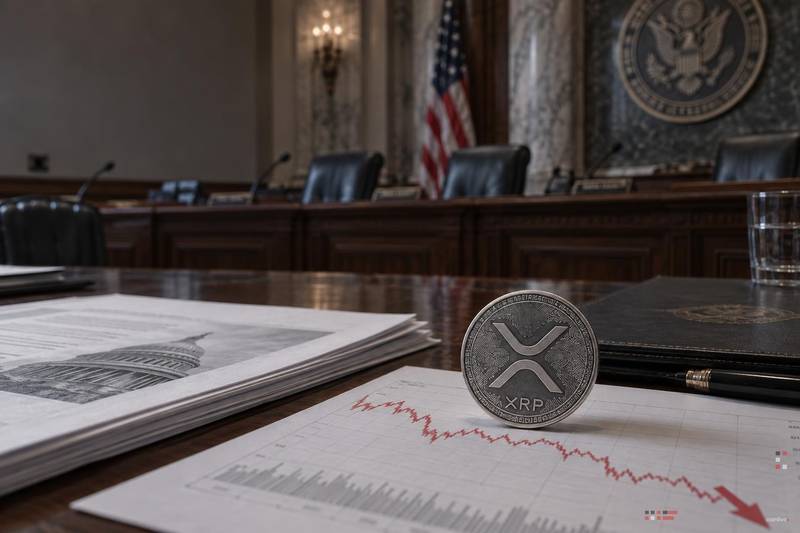
The chairmen of the SEC and CFTC have signaled they intend to pursue crypto rulemaking through agency authority alone, without waiting for Congress to pass the CLARITY Act. The move separates
The chairmen of the SEC and CFTC have signaled they intend to pursue crypto rulemaking through agency authority alone, without waiting for Congress to pass the CLARITY Act. The move separates the regulatory timeline from the legislative one, with implications for every protocol, exchange, and on-chain market participant operating under U.S. jurisdiction.
Two Agencies, One Direction: Rulemaking Without Legislative Cover
According to reporting from The Defiant, the heads of both the Securities and Exchange Commission and the Commodity Futures Trading Commission stated they will write crypto rules independently of whether the CLARITY Act clears Congress. That framing is significant: it means the agencies are not treating legislation as a prerequisite for regulatory action. For related coverage, see Revised Clarity Act Text: DeFi and Credit Union Changes.
Agency-led rulemaking and congressional legislation operate on separate tracks. Rules written through the standard notice-and-comment process carry legal force but can be challenged in court and reversed by future administrations. A statute like the CLARITY Act (H.R. 3633) would lock in a jurisdictional framework that neither agency could unilaterally undo. By proceeding without it, the chairmen are choosing speed and control over durability. For related coverage, see SEC Reviews Exotic ETFs Across Crypto, Leverage and Private Assets.
The scope, timing, and specific text of any forthcoming rules have not been disclosed in available reporting. What is clear is that both the SEC and CFTC see their existing statutory authority as sufficient to begin the rulemaking process without a new legislative mandate.
What Independent Rulemaking Means for DeFi and Crypto Markets
For DeFi protocols, the key question is how each agency interprets its own jurisdictional boundaries in the absence of statutory clarity. The SEC has historically asserted broad securities jurisdiction over digital assets; the CFTC has staked a parallel claim over crypto commodities and derivatives. Without the CLARITY Act's proposed framework establishing which assets fall under which regulator, agency-written rules risk producing overlapping or conflicting requirements.
Liquidity providers, market makers, and protocol governance contributors operating in U.S. markets face the most direct compliance exposure. Rules drafted under existing securities or commodities law could impose registration requirements, reporting obligations, or custody standards on activities that currently run through autonomous smart contracts. Any rule that touches on-chain activity without safe harbors for decentralized protocols could force structural changes at the smart contract layer.
The revised CLARITY Act text had specifically addressed DeFi treatment, making its absence from the rulemaking process a notable gap. Earlier, SEC Chair Paul Atkins had publicly called on the Senate to pass the CLARITY Act, making the pivot toward independent rulemaking a shift in stated strategy.
The CLARITY Act's Role in the Policy Debate
The CLARITY Act remains active legislation in the 119th Congress. Its passage would establish a statutory basis for digital asset jurisdiction that neither the SEC nor the CFTC can replicate through rulemaking alone. Agency rules can be litigated away; a statute requires Congress to undo.
The chairmen's position does not foreclose the legislation. It means that by the time Congress acts, if it acts, the regulatory landscape may already reflect agency-written rules that could either align with or conflict with whatever the statute ultimately requires. That sequencing creates transition risk for protocols that build compliance infrastructure around early agency rules.
Analysts tracking the stablecoin regulatory thread have noted that a CLARITY Act failure keeps certain stablecoin reward structures alive, illustrating how the legislative outcome carries downstream effects beyond simple jurisdiction mapping. The next concrete signals to watch: any formal NPRM (Notice of Proposed Rulemaking) filings from either agency, and whether congressional momentum on the CLARITY Act accelerates or stalls in response to the regulatory chairs' stated position.
Disclaimer: This article is for informational purposes only and does not constitute financial or investment advice. Cryptocurrency and digital asset markets carry significant risk. Always do your own research before making decisions.
Read original article on defiliban.io