SEC Opens Door to On-Chain Trading of Tokenized US Stocks
The SEC approved a temporary “Innovation Exemption” allowing tokenized US stocks to trade on regulated on-chain venues The exemption runs for up to five years The CFTC separately eased rules
A
AnonymousCryptoCompass newsroom
September 19, 2026
3 min read
NEWS
CryptoCompass editorial visual for policy coverage.
The SEC approved a temporary “Innovation Exemption” allowing tokenized US stocks to trade on regulated on-chain venues
The exemption runs for up to five years
The CFTC separately eased rules for software providers connecting users to regulated derivatives on the same day
The SEC approved a temporary exemption allowing tokenized US stocks to trade on regulated on-chain venues, opening a five-year window for platforms to offer blockchain-based versions of traditional equities without going through the full securities registration process that would otherwise apply. The move came days after the CLARITY Act, the broader crypto market structure bill, failed a Senate cloture vote, and appears designed to give the market meaningful regulatory progress even while the legislative path remains stalled.
The SEC framed the exemption as part of an effort to keep the United States competitive in financial infrastructure, arguing the agency intends to ensure America remains the leading destination for building the next generation of market infrastructure regardless of whether Congress passes comprehensive legislation. The exemption is explicitly temporary and conditional, requiring platforms to meet specific disclosure and custody standards, rather than a permanent rule change, which means it can be narrowed or allowed to lapse if problems emerge during the five-year window.
The CFTC moved in parallel the same day, expanding its own no-action relief for software providers, including firms building consumer-facing crypto applications, that connect users to regulated derivatives markets without registering as brokers themselves. Officials at both agencies described the coordinated timing as a signal that they intend to keep advancing crypto-specific rulemaking using their existing statutory authority, rather than waiting for Congress to grant new authority through legislation like CLARITY.
Tokenized stock trading has been a growing focus for exchanges and asset managers over the past year, with several platforms already building infrastructure to represent shares of public companies as blockchain-based tokens that can be traded around the clock rather than only during traditional market hours. The SEC’s exemption gives that existing infrastructure a clearer legal pathway to operate at scale for the first time, though platforms will still need to satisfy the exemption’s specific conditions before launching tokenized equity products to US users.
Custody remains one of the more technically demanding conditions platforms will need to satisfy under the exemption, since tokenized shares still need to be backed one-to-one by real shares held with a qualified custodian to avoid the kind of mismatch that has caused problems for some earlier tokenized asset products. Platforms seeking to operate under the exemption will likely need to demonstrate a clear audit trail linking each tokenized share to its underlying real-world counterpart, a requirement that mirrors custody standards already applied to spot bitcoin and ether ETFs.
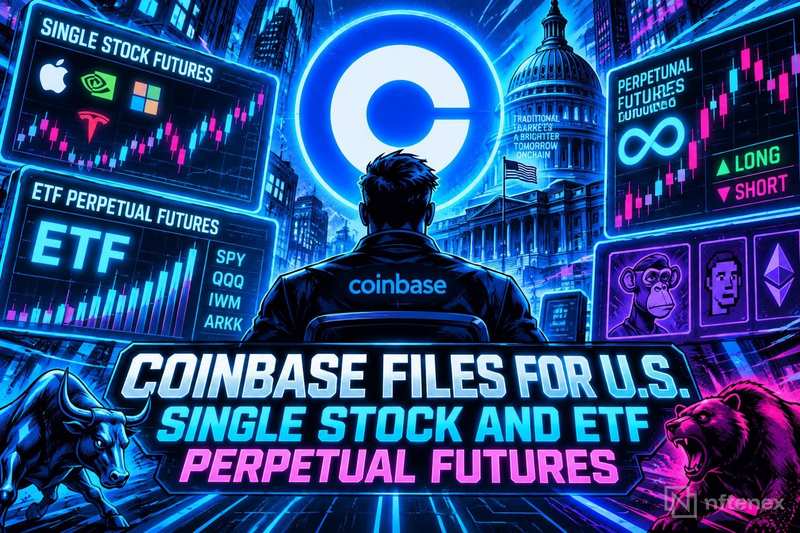
Coinbase Derivatives has filed with the U.S. Commodity Futures Trading Commission to introduce single-stock and ETF perpetual futures, marking a push to expand the range of regulated derivati
Bitcoin climbed back above $80,000 two days after the Federal Reserve's latest rate hike, with a fresh development from the Commodity Futures Trading Commission cited as a key catalyst for th
The recent setback for the CLARITY Act in the US Senate has put new attention on how American crypto firms manage custody and comply with regulatory demands. GenLayer Labs CEO Albert Castella