SEC staff have updated their crypto guidance to add clarity around token buyback announcements, signaling that how projects communicate these actions to the public is coming under closer scru
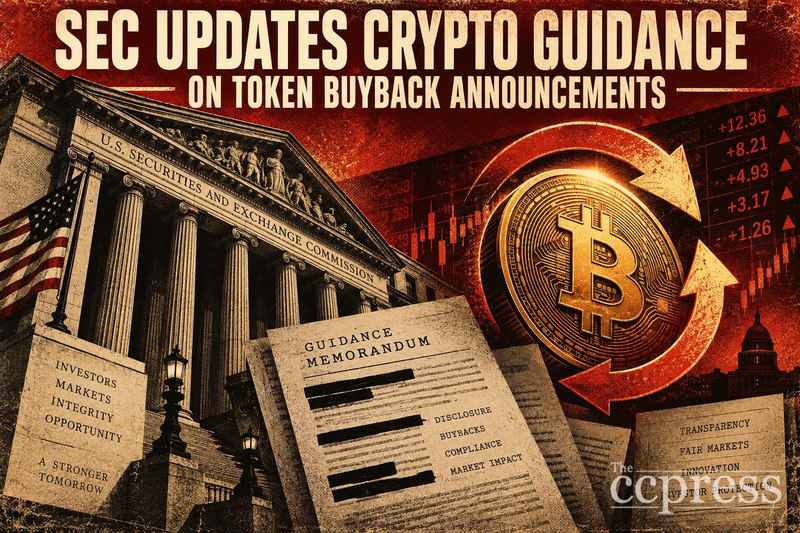
SEC staff have updated their crypto guidance to add clarity around token buyback announcements, signaling that how projects communicate these actions to the public is coming under closer scrutiny. The update, published through the SEC’s official channels, is a staff-level clarification rather than a formal rulemaking, but it carries practical weight for crypto projects that regularly announce token repurchases.
Staff Guidance, Not a New Rule
There is an important distinction here: SEC staff guidance is not the same as a regulation or enforcement action. Guidance documents reflect staff interpretation and practice, offering market participants a clearer picture of what the agency expects, without carrying the force of law on their own. For related coverage, see 12 Crypto Regulators to Watch in 2026.
That said, ignoring staff guidance is rarely a smart move. When the SEC’s newsroom signals a position, it often foreshadows how the agency will approach related issues in reviews, comment letters, and eventual enforcement decisions. For crypto projects, that means the update is worth reading carefully. For related coverage, see Binance Suspends Crypto Trading Services in France Amid MiCA Pressure.
The specific area flagged in the update is token buyback announcements. These are communications in which a project or issuer states it intends to purchase its own tokens from the open market, typically framed as a signal of confidence or as a mechanism to reduce circulating supply. For related coverage, see LBank Pay Expands to Support BTC, ETH and 20+ Crypto Assets, Launches 20,000 USDT Campaign.
Why Buyback Announcements Draw Regulatory Attention
Token buyback announcements can move markets. When a project publicly commits to acquiring its own tokens, it can influence how holders and prospective buyers assess the asset’s near-term trajectory. That informational weight is precisely why disclosure quality matters. For related coverage, see Scam Center Strike Force Restrains $52M in Crypto in One Day.
The SEC’s interest is in whether such announcements contain accurate, complete, and appropriately qualified information. Vague or misleading buyback disclosures, ones that overstate scope, omit funding sources, or obscure timing, create the kind of information asymmetry that securities regulators exist to address. Regulators globally have been expanding their oversight of crypto communications, as seen in actions like Vietnam’s rules targeting unlicensed trading activity and pressure on exchanges operating in regulated markets.
Clear guidance on what a buyback announcement should include, such as the intended scope of purchases, the funding mechanism, the timeframe, and the stated rationale, gives projects a roadmap for compliant communications. It also gives investors a checklist for evaluating what they are being told.
What Projects and Investors Should Watch Next
For crypto project teams, the immediate implication is practical: review any planned or existing buyback announcement templates against the updated staff expectations. The guidance narrows the gap between what has been typical in crypto communications and what regulators consider adequate disclosure.
Investors should look for specificity when evaluating buyback announcements going forward. Disclosures that name a dollar amount or token quantity, identify where the funds come from, and define a clear timeframe are more credible than open-ended commitments. Those that lack these details now carry an added layer of ambiguity in light of the updated staff position.
The broader regulatory direction is clear. As detailed in coverage of 12 crypto regulators to watch in 2026, agencies worldwide are tightening their grip on how crypto projects communicate with markets. The SEC’s staff update on buyback announcements fits that pattern precisely.
Further official materials, including any formal guidance documents or staff bulletins published to SEC.gov, will be needed to establish the update’s full scope and practical effect. What is already clear is that how a project talks about buying back its own tokens now carries more regulatory weight than it did before. Will more projects face scrutiny over past announcements that fall short of these expectations?
Additional source references: source document 1.
Disclaimer: This article is for informational purposes only and does not constitute financial or investment advice. Cryptocurrency and digital asset markets carry significant risk. Always do your own research before making decisions.
The article SEC Updates Crypto Guidance on Token Buyback Announcements first featured on theccpress.com.