A Seychelles court has ordered KuCoin-linked entities to pay a Swiss investor more than $2 million in a dispute tied to a delisted token, adding to the legal and regulatory pressures facing t
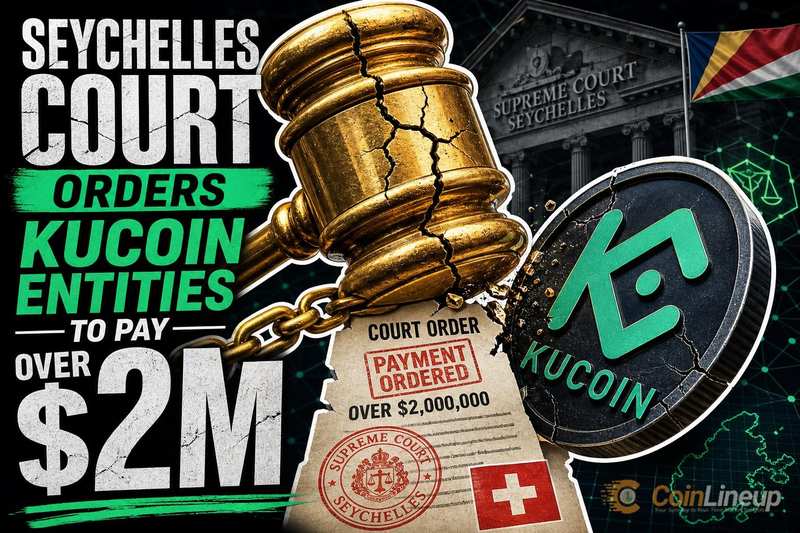
A Seychelles court has ordered KuCoin-linked entities to pay a Swiss investor more than $2 million in a dispute tied to a delisted token, adding to the legal and regulatory pressures facing the cryptocurrency exchange.
What the Seychelles court ordered
The ruling stems from a case brought by a Swiss investor against entities associated with KuCoin over losses connected to a token that was delisted from the platform. The Supreme Court of Seychelles directed the KuCoin entities to compensate the investor for damages exceeding $2 million.
The case involves Peken Global Limited, which trades as KuCoin. The Financial Services Authority of Seychelles has previously issued a public statement regarding Peken Global Limited, confirming the entity's connection to the KuCoin brand.
Despite the court order, the investor has indicated that KuCoin has not fulfilled the payment. According to reporting via Cointelegraph, the investor claims the exchange has failed to comply with the ruling, raising questions about enforcement of court orders against crypto platforms operating through offshore structures.
Why the Swiss investor case matters for KuCoin
A court-ordered payout above $2 million elevates this beyond a routine customer complaint. The cross-border nature of the dispute, involving a Swiss national, a Seychelles-registered company, and a Seychelles court, illustrates the jurisdictional complexity that defines legal action against major crypto exchanges.
KuCoin, like many major crypto platforms, uses a web of corporate entities registered in different countries. This structure can complicate enforcement even when a court rules in a plaintiff's favor, as the investor's claim of non-payment suggests.
Whether KuCoin will comply with the order, contest it through further proceedings, or attempt to settle remains unclear. The exchange's response could determine whether the ruling carries practical weight or becomes another unenforceable judgment against an offshore crypto entity.
What the ruling could mean for crypto exchanges and users
The Seychelles Financial Services Authority has published guidelines for virtual asset service provider licensing, signaling the jurisdiction's efforts to formalize oversight of crypto businesses operating within its borders. This ruling tests whether that regulatory framework can produce enforceable outcomes for investors.
For users evaluating platform risk, the case underscores the importance of understanding where an exchange is incorporated and what legal protections exist in that jurisdiction. An evolving regulatory landscape in regions like Europe may offer stronger investor frameworks, but enforcement against offshore entities remains a persistent challenge.
This ruling arrives at a time when governments globally are debating how to regulate crypto platforms, including questions about licensing and consumer protection. Meanwhile, independent investigators like blockchain analysts tracking illicit fund flows continue to highlight the difficulty of holding crypto entities accountable across borders.
Disclaimer: This article is for informational purposes only and does not constitute financial or investment advice. Cryptocurrency and digital asset markets carry significant risk. Always do your own research before making decisions.
Read original article on coinlineup.com