SGD Stablecoins: The Quiet Revolution in Asian Finance Singapore Dollars on the blockchain. It sounds simple, but the implications are profound. We’re witnessing the emergence of a regulated,
SGD Stablecoins: The Quiet Revolution in Asian Finance
Singapore Dollars on the blockchain. It sounds simple, but the implications are profound. We’re witnessing the emergence of a regulated, fiat-backed digital asset that bridges traditional finance with the speed of Web3.
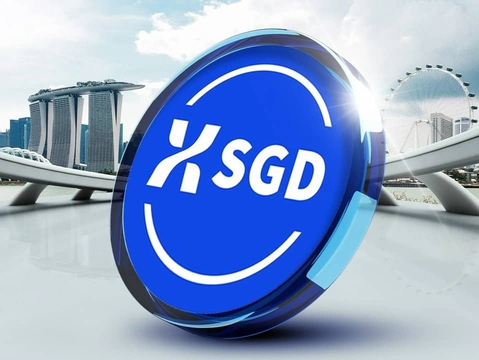
An SGD stablecoin is a cryptocurrency pegged 1:1 to the Singapore Dollar. Unlike volatile assets like Bitcoin, these tokens offer price stability combined with blockchain’s 24/7 settlement. The dominant player here is StraitsX Singapore Dollar (XSGD) , which commands nearly the entire market.
The Mechanics of Trust
XSGD is a fiat-collateralized stablecoin. Every token in circulation is backed by an equivalent Singapore Dollar held in segregated accounts with a licensed financial institution. This isn’t just a promise—it’s verified monthly by an independent ISCA-listed auditing firm.
The mint-and-redeem mechanism is straightforward. Users deposit SGD into the StraitsX platform to mint XSGD, and they can redeem tokens for fiat at any time. This direct link maintains the 1:1 peg without relying on algorithmic complexity.
Multi-Chain Strategy
XSGD isn’t confined to a single blockchain. It’s available on Ethereum, Polygon, Avalanche, Arbitrum, Base, Hedera, Zilliqa, XRPL, and Solana. This multi-chain presence maximizes utility across different DeFi ecosystems and payment rails.
The recent launch on Solana is particularly strategic. It enables high-speed, low-cost swaps between SGD and USD stablecoins, uniting centralized exchange support with AMM liquidity and DeFi lending pools on one high-performance network.
Real-World Adoption
Since its launch in October 2020, XSGD has processed billions of dollars in real-world transactions. Cumulatively, XSGD and its USD counterpart XUSD have exceeded $18 billion in on-chain volume. This isn’t speculative trading—it’s actual payments, remittances, and B2B settlements.
The market cap sits around $1.2 million as of early 2026, reflecting focused utility rather than speculative hype. This is a workhorse stablecoin, not a moon-shot asset.
Use Cases That Matter
- On-Chain SGD Access: Programmable, 24/7 liquidity for smart contracts and DeFi.
- Payments & Settlements: Faster, cheaper cross-border transfers than traditional banking.
- Digital FX: Efficient on-chain currency swaps for Southeast Asian businesses.
- DeFi Integration: Lending, borrowing, and yield generation with a stable asset.
- Automated Economies: Potential for AI-driven on-chain transactions.
The fee structure is designed for accessibility. Bank transfers are free, and withdrawal fees are capped at 30 XSGD on Ethereum and 1 XSGD on other chains.
Crynet’s Executive Take
SGD stablecoins like XSGD represent a strategic bridge for crypto projects targeting the Asian market. By integrating a regulated, fiat-backed asset, projects can offer users a stable on-ramp while maintaining compliance with local regulations. This isn’t just about convenience—it’s about unlocking institutional liquidity in one of the world’s fastest-growing digital economies. For ROI-focused teams, supporting XSGD means tapping into a user base that demands both stability and blockchain efficiency.
What’s your take on the future of fiat-backed stablecoins in Asia? Are they the key to mainstream adoption, or just a stepping stone to something bigger? Share your thoughts below.
Disclaimer: This content is for informational purposes only and does not constitute financial or investment advice. Always conduct your own research before engaging with any cryptocurrency or stablecoin.