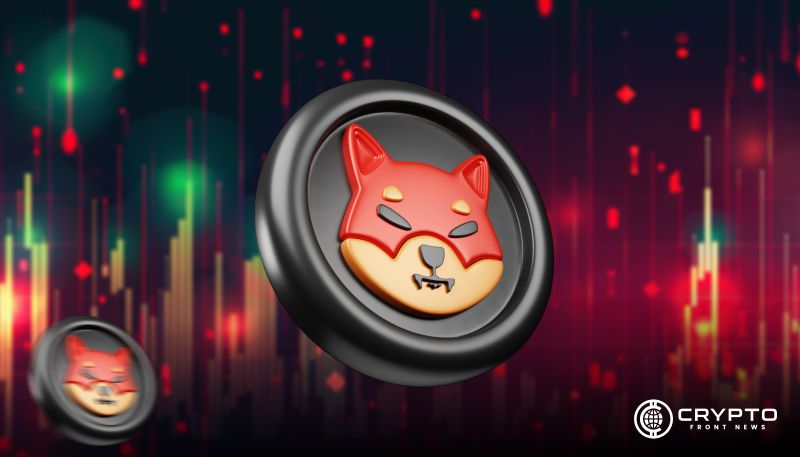
SHIB burns are permanent, the impact on the price will depend on sustained demand for this coin, its liquidity, and the overall market conditions. Shiba Inu began with one quadrillion tokens,
- SHIB burns are permanent, the impact on the price will depend on sustained demand for this coin, its liquidity, and the overall market conditions.
- Shiba Inu began with one quadrillion tokens, and around 41% of that has been reportedly burned, mostly from big transactions earlier in the year.
- Shibarium activity contributes to burn discussions, but higher transaction counts do not automatically produce proportional increases in SHIB destruction.
As demand surges and the token supply is depleted, the question on everyone's mind is whether SHIB can maintain momentum and drive future market valuation.
Token Destruction Targets Shiba Inu’s Supply
Shiba Inu's token-burning is a mechanism that permanently takes tokens out of circulation and cannot be used for future transactions. The process typically involves sending tokens to blockchain addresses that nobody can access. Consequently, burned tokens cannot return to the market through ordinary trading.
BSCN recently examined why Shiba Inu supporters closely monitor these transactions and changing burn rates. The report explained how supply reduction could support value when demand remains stable or increases. However, token destruction alone cannot guarantee appreciation.
https://twitter.com/BSCNews/status/2109589529623773287?s=20
Shiba Inu entered the market in August 2020 with an initial supply of one quadrillion tokens. According to BSCN, approximately 41% of that supply has reportedly been burned. Much of the reduction followed Vitalik Buterin’s 410.24 trillion SHIB burn in May 2021.
That transaction represented a substantial supply reduction compared with subsequent reported activity. It also illustrates the effect of individual events on the total burn amount. However, attention is needed to more recent transactions and estimates of the circulating supply.
According to BSCN, 707.5 million SHIB have been burned in the 30 days leading up to October 9, 2026. Although it was a large number, it was about 0.000121% of the circulating supply. It is important to consider the percentage when evaluating the size of the recent destruction.
Huge numbers of tokens can get the community talking, especially if burn notifications are shared on social media. However, absolute counts cannot be used to conclude if supply reduction is happening at a meaningful rate. Comparing burned tokens against circulating supply offers a clearer measure of relative change.
The difference between historical and recent burns is also important for understanding current activity. Buterin’s transaction accounted for a substantial portion of the reported cumulative reduction. The 30-day figure is much smaller than the change in available supply in the latest period, however.
For holders, burn rates are a useful method of tracking these developments over time. Transaction records can establish how many tokens have been removed permanently. However, those records cannot independently demonstrate stronger demand or predict future market prices.
Shibarium Activity and Market Demand Remain Crucial
Shibarium, Shiba Inu’s layer-2 network, forms another part of the ecosystem’s burning discussion. BSCN noted that network activity includes BONE transfers from Shibarium to Ethereum. These mechanisms contribute to discussions about how ecosystem transactions relate to SHIB destruction.
However, increased network transactions do not necessarily generate proportional increases in burned tokens. The relationship depends on the mechanisms connecting network activity with token removal. Therefore, transaction growth and burn totals must be assessed separately.
Market demand remains another essential factor when evaluating the potential effects of reduced supply. Even permanent token destruction may have limited influence when buyers show less interest. Price movements are also due to liquidity, market conditions and investors' sentiment.
If demand holds steady or increases, a lower supply could be beneficial. On the other hand, lower demand can counter the impact of lower supply of tokens. This separation makes the statistics for burns not a reliable measure of the likelihood of future appreciation.
The key issue for Shiba Inu investors is whether they should continue to burn or if there is a sustainable demand. Supply figures reveal how many tokens have been removed, while market activity reflects purchasing interest. Both measures remain necessary when assessing whether token destruction could influence SHIB’s longer-term valuation.