Key points According to Shibburn, 155 million SHIB were burned in the seven days to Monday, worth around $606 at the current price. That equals about 1.2 seconds of the 24-hour trading volume
Key points
- According to Shibburn, 155 million SHIB were burned in the seven days to Monday, worth around $606 at the current price.
- That equals about 1.2 seconds of the 24-hour trading volume CoinGecko reports for Shiba Inu.
- In the month to November 16, 395 million SHIB went into the burn, against 477 million in September.
The Shiba Inu price stood at $0.00000391 at 3:40 pm on Monday afternoon, November 16, or 0.00000354 euros, according to market data from CoinGecko. That is a gain of 0.2 percent over 24 hours, a loss of 13.4 percent over seven days and a loss of 23.5 percent over 30 days. What the data shows: the token burn, which the community has linked with scarcity for years, reached a value of just $606 in the same week. Our view of what that means for the price follows further down in a separate section.
A burn means tokens are sent to an address for which nobody holds a private key. That takes them out of circulation permanently.
Shiba Inu burn: 155 million SHIB in seven days, worth $606
On Monday the Shibburn tracker counted 48.2 million SHIB burned in 24 hours, 155.0 million in seven days and 395.1 million in 30 days. At Monday afternoon's price that is around $189, $606 and $1,545. Circulating supply stands at 589.24 trillion SHIB according to CoinGecko. The weekly amount makes up 0.000026 percent of that.
What stands out is how few transfers account for these figures. Shibburn's list of recent burns shows two large items on Sunday, November 15: 88.6 million SHIB from a single address at 2:01 pm and 47.8 million SHIB at 4:50 pm from an address the tracker attributes to the US platform Robinhood. The second transfer alone explains almost the entire daily amount, the first more than half of the week. Without these two items, the week's burn would have stayed below 20 million SHIB.
Almost everything ever burned goes back to a single event. In total Shibburn shows 410.85 trillion SHIB burned, spread across 21,967 transfers. Around 410 trillion of that was sent to a dead address by Ethereum co-founder Vitalik Buterin in May 2021, as CoinDesk reported at the time. The developers had allocated the tokens to him without asking.

A drop in the lake: this is how the weekly burn compares with Shiba Inu's circulating supply.
Burn vs trading volume: a week of burning equals 1.2 seconds of trading
Trading volume is the best yardstick. CoinGecko reports $42.8 million for Shiba Inu in the 24 hours to Monday afternoon. Broken down to the second, SHIB worth just under $500 changes hands every second on average. A whole week's burn therefore equals about 1.2 seconds of trading. That is why the price falls despite ongoing burns: the amount buyers and sellers move every day is around 800,000 times the amount that disappears each day.
Most of this volume is traded on the large exchanges. Which providers in Germany operate with a licence under the EU's MiCA crypto regulation is shown in our comparison of regulated crypto exchanges.
Less burned than in September: 395 instead of 477 million SHIB in 30 days
At the end of September we had already recalculated the Shiba Inu burn balance. Back then, 476.96 million SHIB had been burned in 30 days, worth around $2,671 at a price of $0.0000056. Today the figure is 395.1 million SHIB in 30 days, a decline of 17 percent. In dollar terms the monthly burn has shrunk by 42 percent, because the price has also fallen 30 percent since then.
A projection shows what that means. At the pace of the past 30 days, just over 13.2 million SHIB a day, it would take around 1,225 years for one percent of the circulating supply to disappear. In September the same figure was just over 1,015 years. Market capitalisation reflects the decline too: at the end of September Shiba Inu ranked 35th with $3.30 billion, on Monday 38th with $2.30 billion.
Shiba Inu price since Sunday: the low at $0.0000037 holds
On Sunday we reported on the first death cross since September 2025, when SHIB stood at $0.00000396 at midday. Little has moved since: on Monday the daily range on CoinGecko was between $0.00000381 and $0.00000396, with the price at $0.00000391 in the afternoon. The weekend low at $0.00000371 was not retested.
For comparison, Bitcoin gained 1.1 percent over the same 24 hours and Dogecoin 2.3 percent. Shiba Inu is lagging both. The zone around $0.000005, where both moving averages sit, remains the level SHIB would have to reclaim.
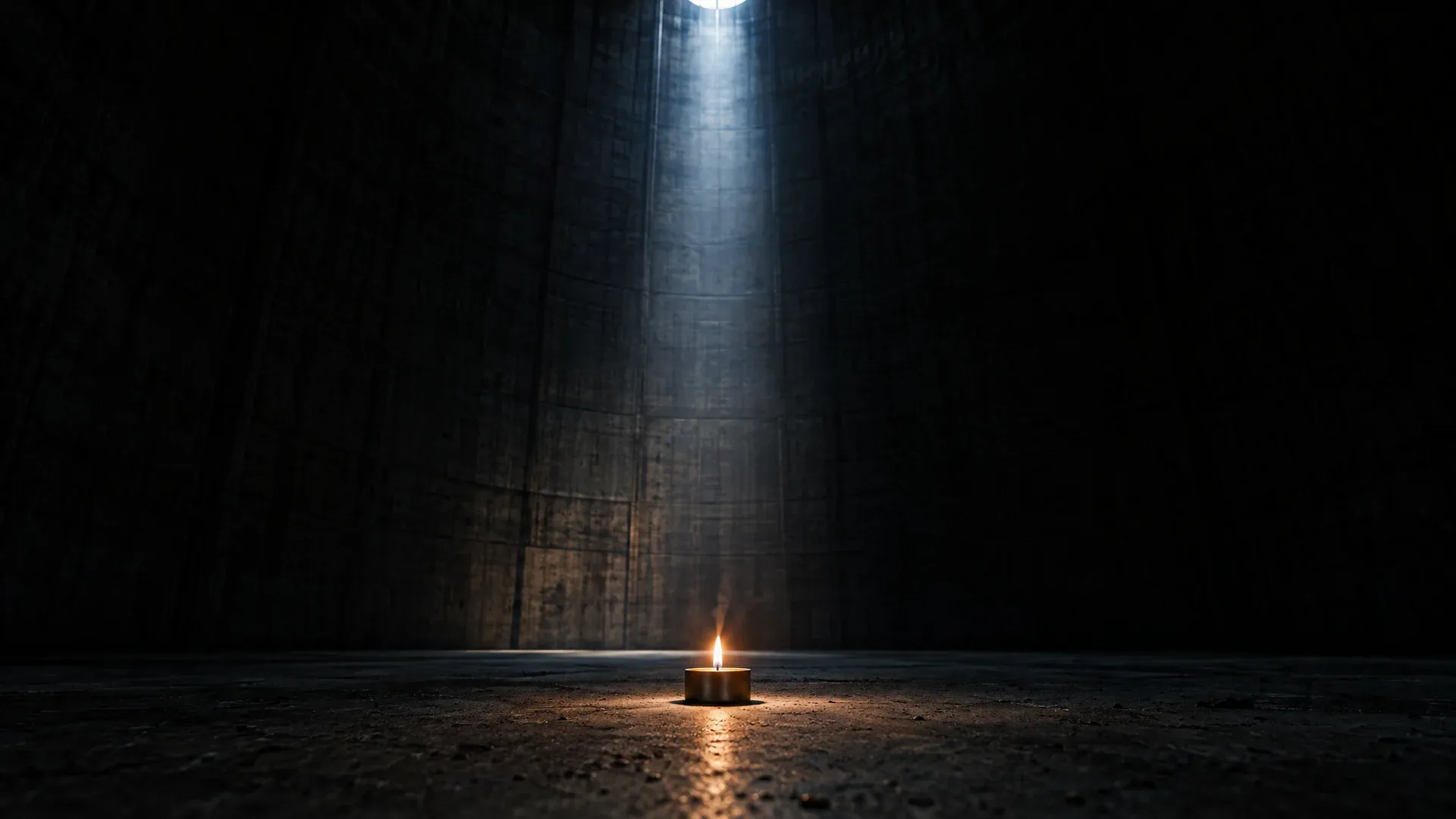
A tea light in a silo: the burn is visible, yet it does not fill the space.
Editorial view: why the burn does not carry the Shiba Inu price
Our assessment: for Shiba Inu, the burn is a symbol rather than a price driver. Three documented figures support this. The weekly amount is 0.000026 percent of circulating supply. It equals 1.2 seconds of trading volume. And it depends on individual items that cannot be predicted. What moves the price is demand, and demand has fallen with the broader market: volume was $42.8 million on Monday, against $92.2 million at the end of September.
Against this view stands the fact that Shibarium, the project's own blockchain, directs part of its fees into SHIB burns with every transaction. If usage rises there, the burn rises too. With a recent 691 transactions a day on Shibarium, however, there is no sign of that. Anyone reading reports of an "exploding burn rate" should therefore always check the absolute amount: with Shiba Inu, a jump of several hundred percent can arise when 40 million SHIB are burned instead of 5 million, meaning tokens worth around $150. If you want to see prices and fees of different trading venues side by side, you will find them in our exchange comparison.
SHIB at $0.0000039: without demand, the burn remains a footnote
For the Shiba Inu price, two things will matter more than the burn in the coming days: whether the low at $0.0000037 holds, and whether trading volume picks up again with the broader market.
(As of November 16, 2026. This article is not investment advice. Prices and fee structures change; check the terms with the provider before you buy.)