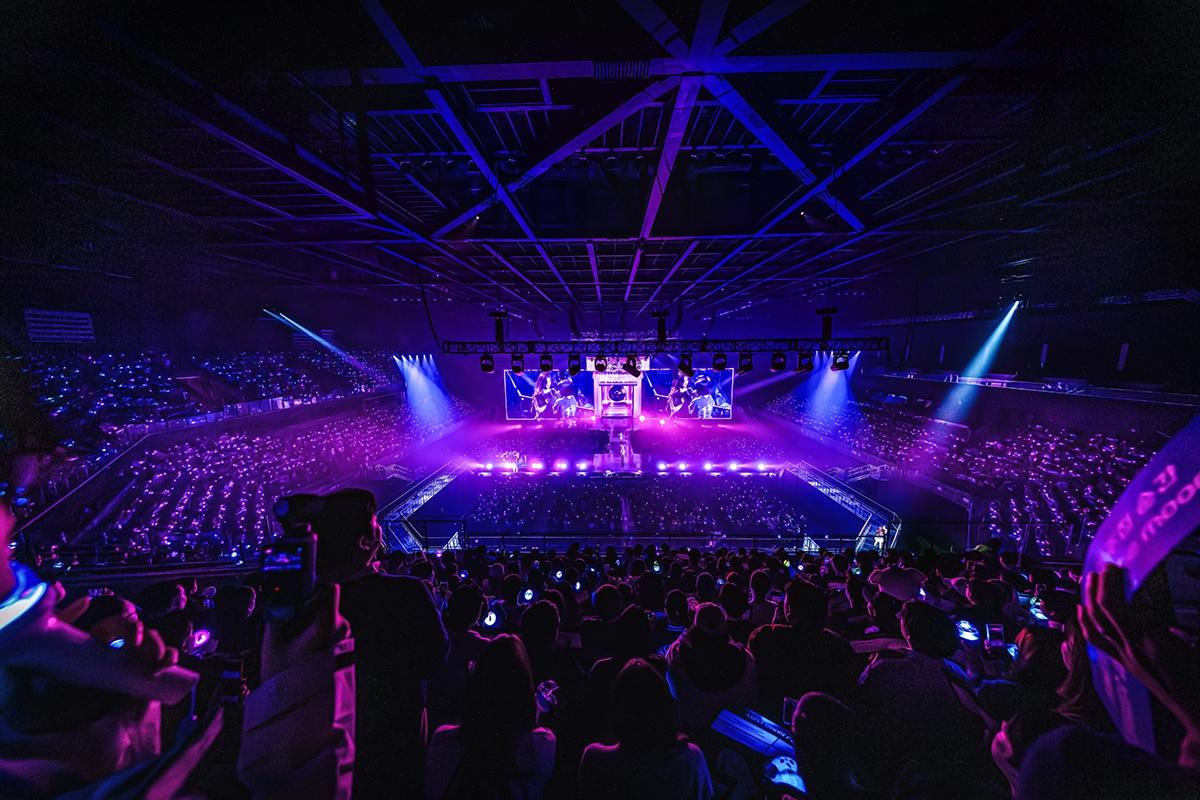
Soneium launched its first K-pop IP Bond on November 17, backed by concert revenue associated with BTOB member Seo Eunkwang. The $850,000 offering runs for nine months and pays a stated 12% A
Soneium launched its first K-pop IP Bond on November 17, backed by concert revenue associated with BTOB member Seo Eunkwang. The $850,000 offering runs for nine months and pays a stated 12% APR, comprising an 8% base yield and a 4% Soneium launch bonus. Minimum subscription is $100. Subscriptions run from November 17 to December 1, 2026, with maturity on September 1, 2027. Subscribers pay in ipUSD or USDC.e, and the resulting tokens represent their subscription positions — they are non-transferable, with no secondary market.
The structure involves four parties. DayOneDream produces the underlying concert. WAVIST, DayOneDream's K-pop IP real-world-asset platform, structures and issues $CNCRT. Astar handles tokenization and the purchase experience. Soneium Portal is the subscription surface. Participation requires investor verification and is subject to jurisdictional restrictions.
The bond is a fixed-term, fixed-yield financial position backed by the revenue of an entertainment business. It is not a claim on the artist's music, identity, brand, or creative output, and it conveys no authority over any of them.
Soneium's own documentation is explicit about this boundary. Its vision paper states that tokenized IP is "the representation of creative works as programmable, tradeable onchain assets, without transferring ownership or decision-making authority away from the creator," and continues:
"Copyright and creative control remain with the rights holder at every stage. What is made available to the market is a claim on future value generated by the work, not the underlying rights themselves."
That is the correct description of what this product is, and it is worth stating plainly because the category error is easy to make. "Tokenized IP" is treated in much of the market as a single proposition. It is at least three.
1. IP ownership and representation. How intellectual property and associated rights are registered, represented, and managed on-chain.
2. IP-linked financial infrastructure. How revenue generated by entertainment properties is structured, financed, and distributed through on-chain products.
3. Creative and community participation. How fans and other contributors participate in the development, interpretation, extension, or governance of an entertainment property.
These can intersect. They are not interchangeable, and they require different infrastructure. Soneium's K-pop IP Bond sits squarely in the second category. It changes how entertainment revenue can be packaged and distributed. It does not change who creates the story, who controls canon, or how a fictional world evolves.
That distinction is the analytical point. The yield is the headline; the infrastructure proposition is the substance.
The published terms answer the headline questions and leave the mechanics open. For anyone evaluating the model, five questions are not yet resolved:
How is the underlying concert revenue allocated to support the bond?
What happens if actual revenue falls short of projections?
What contractual protections and recourse do subscribers hold?
How are the underlying revenue claims verified and reported?
Can this structure extend beyond concerts to music rights, film, television, or other entertainment assets?
The offering documentation and contractual structure need examination before the financial mechanics can be assessed. The announcement establishes the instrument's existence and headline terms, not its resilience.
There is also a participation question. The product is presented as access to entertainment revenue, but KYC, jurisdictional restrictions, and non-transferability shape who can participate and how. Access to a financial product is not influence over the creative property behind it — a distinction worth keeping in view when "fan participation" is used to describe the proposition.
None of this makes the bond insignificant. It makes its significance specific. A revenue-generating entertainment activity has been structured into an on-chain financial instrument, distributed through a dedicated portal, with a defined maturity and a stated yield. That is a concrete step in connecting entertainment businesses to blockchain-based finance, and it is a different step from anything in the collectible space.
The question for the wider sector is whether this becomes a repeatable layer. A single concert-backed bond is a test. A pattern of entertainment revenue instruments across concerts, tours, catalogs, and media rights would be infrastructure. Soneium's broader Tokenized IP architecture — IP Tokens, IP Vaults, IP Bonds — suggests the intention. One bond does not establish the pattern.
What it does establish is the distinction. Putting entertainment revenue on-chain changes how value is represented and distributed. It does not automatically change who creates the story or controls its canon. Those are different problems, and they need different infrastructure. Soneium's K-pop IP Bond is a real development in the first. Whether the wider initiative contributes to the others remains open.
Sources