This article was first published on TurkishNY Radio. South Korean prosecutors have launched what authorities describe as the country’s first criminal case tied directly to a decentralized exc
This article was first published on TurkishNY Radio.
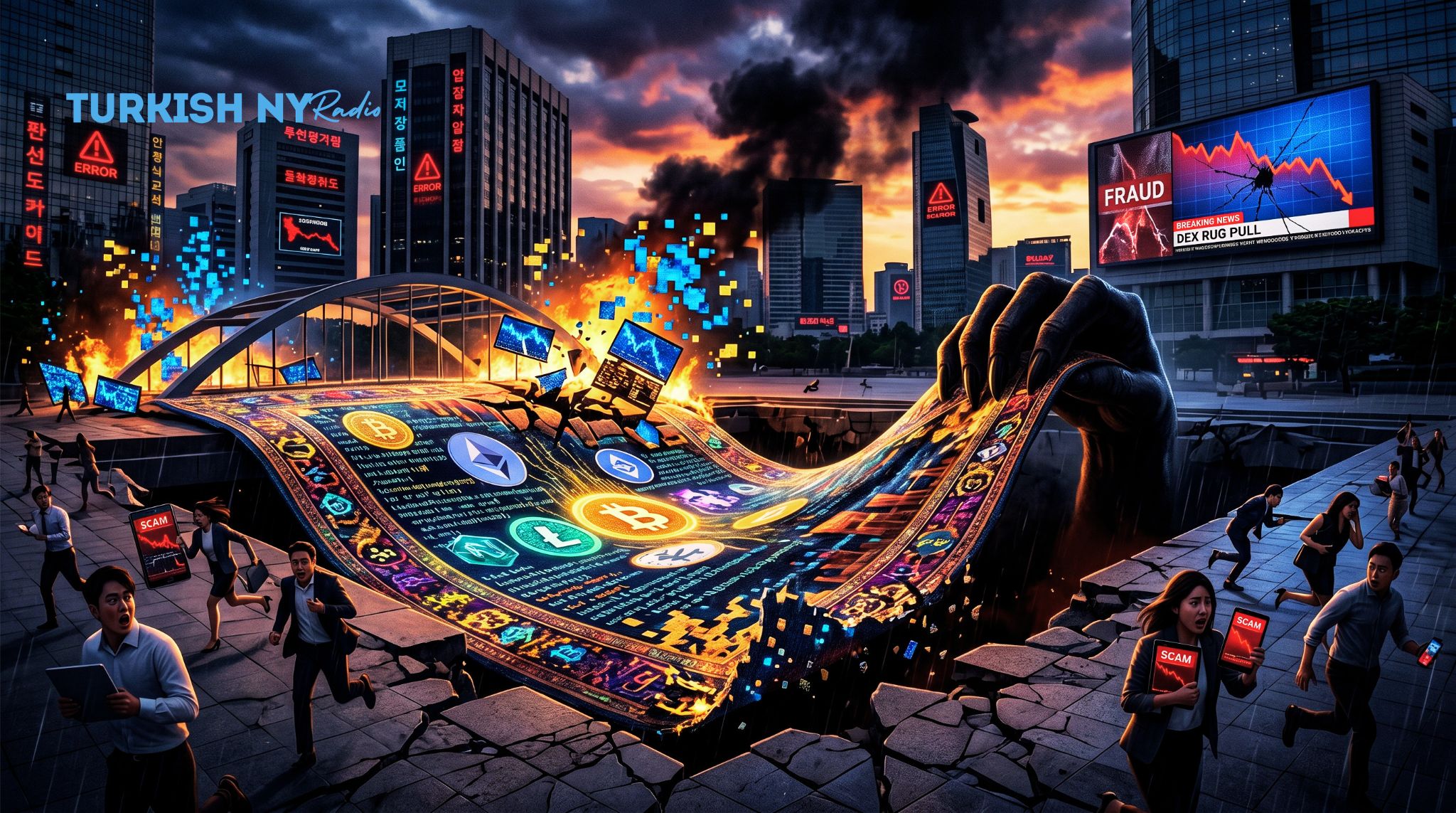
South Korean prosecutors have launched what authorities describe as the country’s first criminal case tied directly to a decentralized exchange rug pull, marking a major step in how regulators are approaching crypto fraud cases tied to meme coins and onchain trading platforms.
The South Korea DEX rug pull case centers around a Solana-based meme coin called CATFI, which prosecutors say was used in a coordinated scheme that left hundreds of investors with financial losses.
According to prosecutors in Seoul, five individuals were arrested and indicted after investigators traced wallet activity and social media accounts connected to the token’s promotion and collapse. Authorities estimate that 256 investors lost nearly 900 million won, or around $600,000.
The case is drawing attention because decentralized exchanges have traditionally operated with fewer listing requirements compared to centralized crypto platforms. That has allowed meme coins to launch quickly, often with little transparency around token ownership or liquidity controls.
South Korea DEX Rug Pull Case Exposes CATFI Hype
Investigators claim the suspects quietly accumulated large amounts of CATFI tokens before aggressively promoting the project online.
The main suspect, identified only by the surname Park, allegedly operated under the social media identity “Eth Father.” Prosecutors say the account presented itself as an independent crypto influencer while secretly coordinating marketing efforts tied to the token.
Authorities believe the group created artificial hype around CATFI to attract retail investors into the project. Once trading activity increased and the token price surged, prosecutors allege the suspects withdrew liquidity and sold holdings, causing the token’s value to collapse within hours.

South Korea DEX Rug Pull Case Raises New Crypto Fraud Fears
Blockchain records reviewed during the investigation reportedly helped authorities connect wallet addresses used in the token launch and trading activity with accounts operated by the accused individuals.
The South Korea DEX rug pull case shows how crypto investigations are increasingly relying on blockchain analysis instead of traditional banking records alone.
South Korea DEX Rug Pull Case Hits Solana Memes
The South Korea DEX rug pull case arrives at a time when regulators and blockchain researchers are paying closer attention to meme coin activity across the Solana network.
Low transaction costs and rapid token creation tools have made Solana one of the most active chains for meme coin launches. While that has fueled trading activity, it has also increased concerns about pump-and-dump schemes and short-lived token projects.
Research published this year by blockchain analysts studying Solana-based tokens found that many newly launched meme coins displayed patterns associated with liquidity manipulation and coordinated insider trading.
Several decentralized token launch platforms have also come under criticism for allowing projects to go live without identity verification or financial disclosure requirements.
Although decentralized exchanges remain popular among traders seeking early-stage opportunities, the South Korea DEX rug pull case may increase calls for stronger monitoring systems across the sector.

South Korea DEX Rug Pull Case Raises New Crypto Fraud Fears
South Korea Tightens Crypto Oversight
South Korean regulators have expanded crypto enforcement efforts throughout 2026 following a rise in fraud cases and market manipulation concerns.
The government recently introduced stricter digital asset compliance measures, including real-time monitoring requirements for exchanges and stronger reserve standards for stablecoin issuers.
Financial authorities are also reviewing broader market reforms tied to investor protection and digital asset transparency.
The South Korea DEX rug pull case could become an important legal reference for future prosecutions involving decentralized finance scams and anonymous crypto trading activity.
Prosecutors stated that investigations into market manipulation involving digital assets will continue as authorities attempt to reduce fraud risks for retail investors entering the crypto market.
Summary
- South Korean authorities have taken action in the country’s first criminal case involving a decentralized exchange rug pull linked to the Solana-based CATFI meme coin.
- Prosecutors say the group behind the token created fake online hype to attract investors before suddenly pulling liquidity and crashing the project.
- Around 256 investors reportedly lost close to $600,000 in the collapse.
- Investigators tracked blockchain transactions and social media accounts to uncover the operation and identify the people involved.
Glossary of Key Terms
DEX Rug Pull A scam where the people behind a crypto project suddenly withdraw funds from a decentralized exchange, causing the token price to collapse and investors to lose money.
Decentralized Exchange (DEX) A crypto trading platform that lets users buy and sell tokens directly from their wallets without needing a bank, broker, or centralized exchange company.
Liquidity Pool A pool of crypto funds locked into a blockchain system that helps traders buy and sell tokens smoothly on decentralized exchanges without traditional market makers.
Solana Meme Coin A cryptocurrency created on the Solana blockchain, usually inspired by internet jokes, trends, or online communities rather than serious business or financial use cases.
Onchain Analysis The process of studying blockchain transactions and wallet activity to understand how funds move, identify suspicious behavior, or investigate possible crypto-related fraud cases.
Wash Trading A deceptive practice where someone repeatedly buys and sells the same token to create fake trading activity and make the project look more popular than it is.
Smart Contract A blockchain-based digital agreement that automatically carries out transactions or actions once certain conditions are met, without requiring manual approval from third parties.
Crypto Market Manipulation Actions taken to unfairly influence crypto prices or investor behavior through fake promotions, misleading information, coordinated trading, or artificial hype around a token.
FAQs About South Korea DEX Rug Pull Case
What is the South Korea DEX rug pull case?
The case involves five people accused of promoting the CATFI meme coin, attracting investors, and then pulling liquidity, which caused heavy financial losses for traders.
How did investigators uncover the CATFI scheme?
Authorities followed blockchain transactions, tracked connected wallets, and reviewed social media activity to identify the people allegedly involved in promoting and managing the scam.
Why are Solana meme coins getting more attention now?
Many Solana meme coins launch quickly with little oversight, making the network attractive for speculative trading but also increasing concerns around fraud and manipulation.
Could this case lead to stricter crypto rules in South Korea?
Yes, the investigation could push regulators to introduce stronger monitoring systems, tighter exchange rules, and better protections for retail crypto investors in future.
Referencescrypto.news
BINANCE SQUARE
Trading View