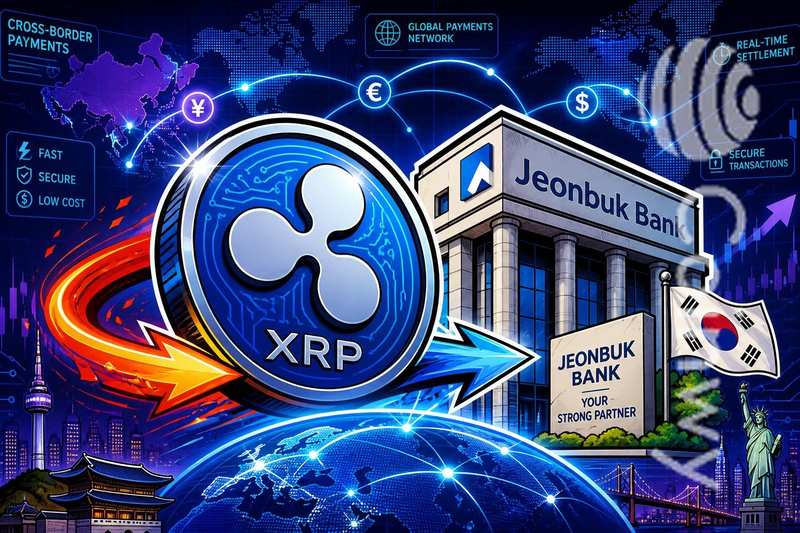
South Korea's Jeonbuk Bank has selected Ripple for cross-border payments, tying a regional Korean lender to Ripple's payment infrastructure and putting a fresh spotlight on blockchain-based s
South Korea's Jeonbuk Bank has selected Ripple for cross-border payments, tying a regional Korean lender to Ripple's payment infrastructure and putting a fresh spotlight on blockchain-based settlement as an institutional use case.
Why Jeonbuk Bank Chose Ripple for Cross-Border Payments
The core development is that Jeonbuk Bank, a South Korean regional bank, has picked Ripple as its partner to modernize cross-border payments, according to Ripple's announcement. For related coverage, see Crypto Payments Barely Register Among Euro Area Merchants: ECB.
The decision connects a Korean lender directly with Ripple's payment rails, a segment where international settlement is one of the most established institutional applications of blockchain technology, as reported by Cointelegraph. For related coverage, see US Court Backs Bybit Bid to Trace North Korea Hack Funds.
KEY TAKEAWAYS
- Jeonbuk Bank, a South Korean regional bank, has selected Ripple for cross-border payments.
- The tie-up connects the lender to Ripple's payment infrastructure for international transfers.
- The move adds to Ripple's institutional footprint in the South Korean banking sector.
What the Partnership Could Change for Remittance and Settlement Flows
Cross-border payment relationships are typically weighed on speed, cost efficiency, and settlement visibility, the same factors banks evaluate when choosing a payment partner alongside compliance readiness and network reach.
Jeonbuk Bank's selection signals confidence in blockchain-enabled rails for moving money internationally, though the scope of any rollout, transaction volumes, and the specific role of XRP are not detailed in the available reporting and should not be assumed. South Korea has separately been tightening oversight of digital-asset transfers, having cut its Travel Rule threshold for crypto, which frames the compliance environment such payment partnerships operate within.
Any efficiency gains would come from faster settlement and streamlined operations, likely motivations rather than confirmed outcomes at this stage. That distinction matters given how cautiously banks phase in new infrastructure.
Why the Jeonbuk Bank Move Matters for Ripple in South Korea
A regional banking partnership can strengthen Ripple's institutional credibility in a market that remains influential in shaping digital-asset and blockchain narratives, even after episodes like the Delio fraud case that tested confidence in the sector.
Adoption stories rooted in banking utility tend to influence sentiment around enterprise blockchain more durably than retail-driven cycles. That framing places the Jeonbuk Bank decision alongside other institutional experiments with payment rails, including central-bank work such as the Bank of England's stablecoin test in cross-border payments.
Read in that light, the Jeonbuk Bank selection is best understood as a measured signal of enterprise blockchain momentum in cross-border settlement, as covered by Crypto Briefing, rather than a proven shift in how remittances move at scale.
Disclaimer: This article is for informational purposes only and does not constitute financial or investment advice. Cryptocurrency and digital asset markets carry significant risk. Always do your own research before making decisions.
Read original article on coinwy.comRead also :