Markets5 min read
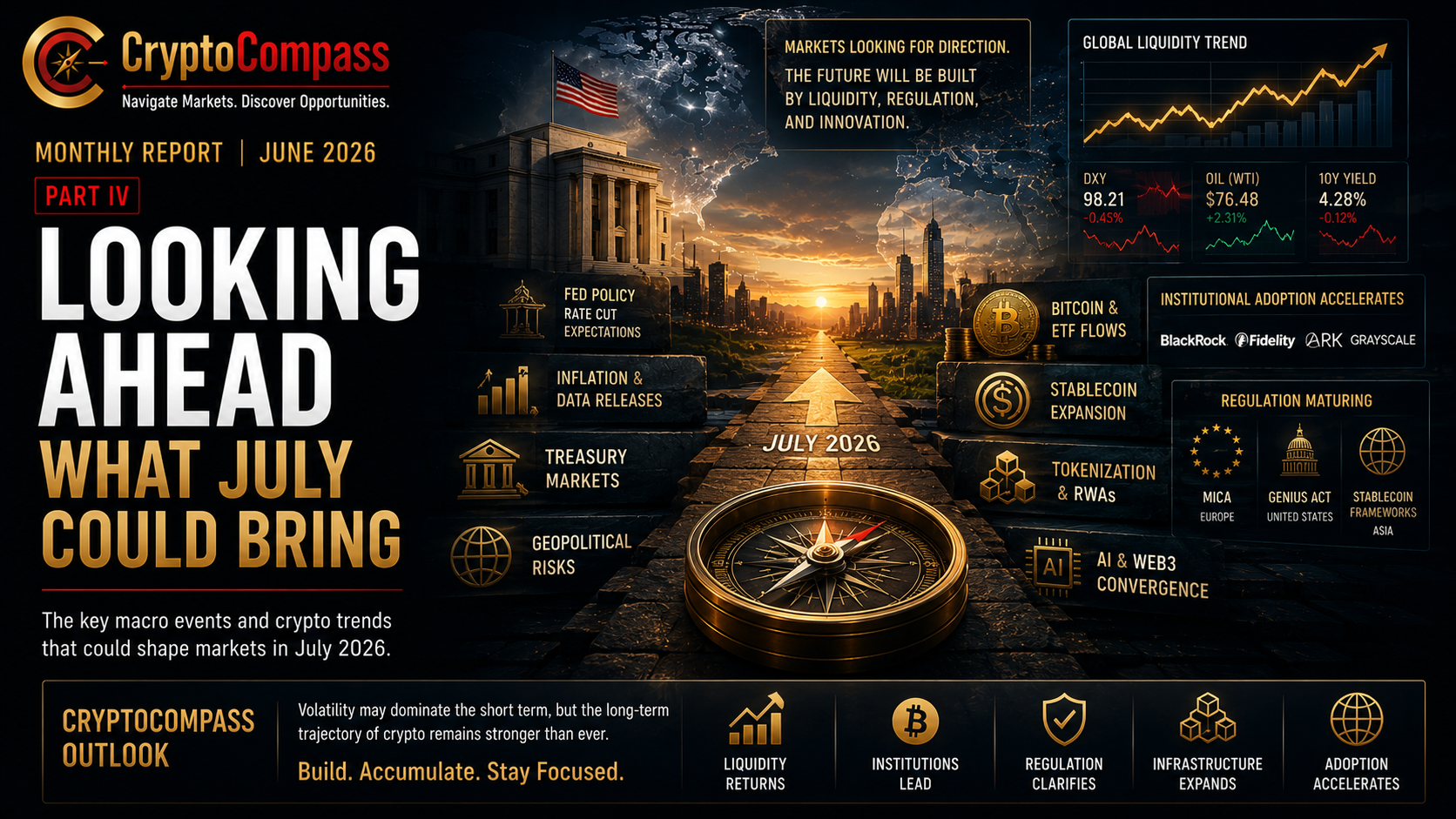
Monthly Report | Part IV — Looking Ahead: What July Could Change
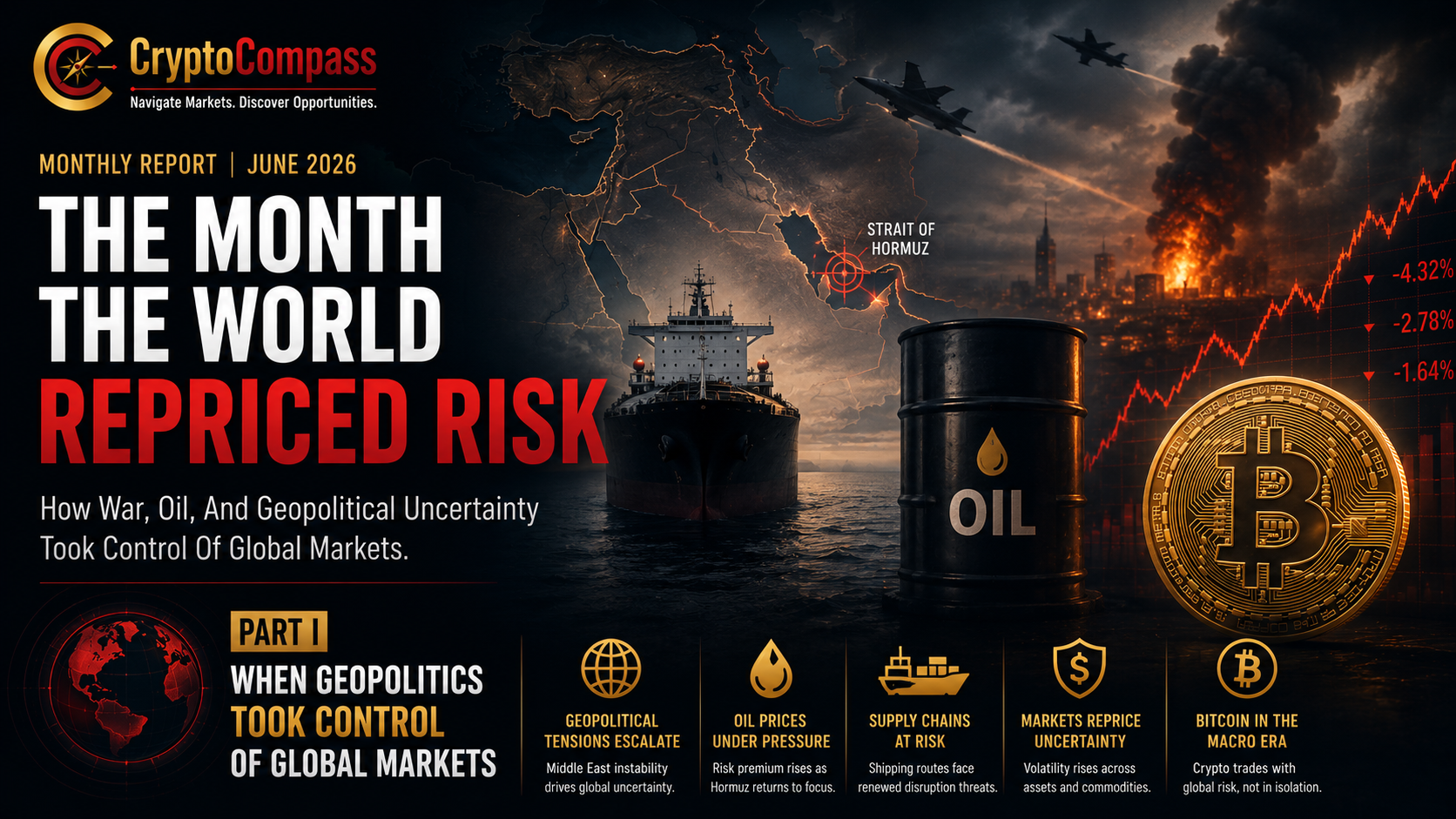
Geopolitical tensions reminded investors that global markets remain vulnerable to external shocks.
For years, regulators viewed cryptocurrency as a niche asset class capable of generating volatility within its own ecosystem while having limited impact on traditional financial markets.
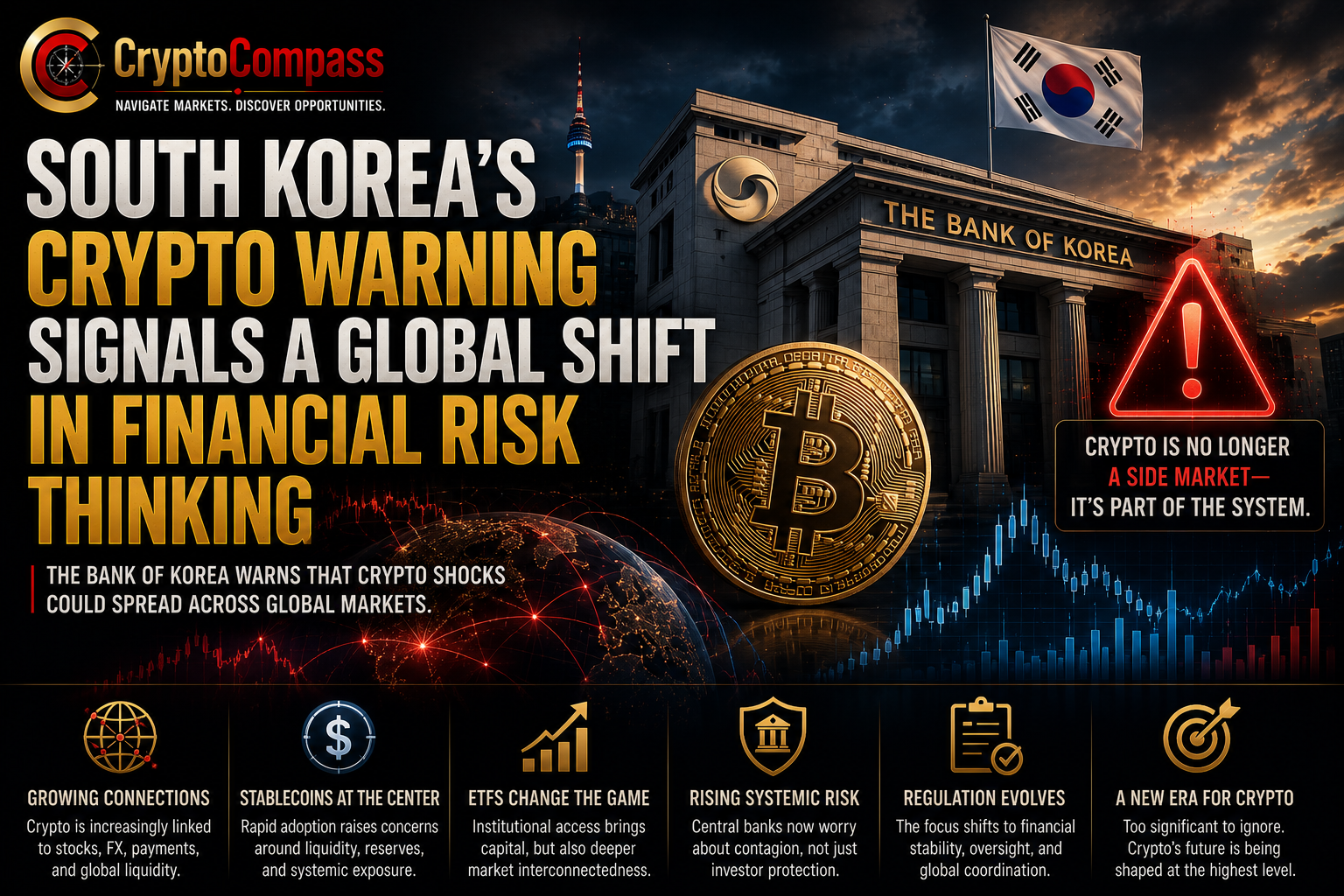
South Korea Says Crypto Is No Longer A Side Market
For years, regulators viewed cryptocurrency as a niche asset class capable of generating volatility within its own ecosystem while having limited impact on traditional financial markets.
That assumption is rapidly disappearing.
The Bank of Korea (BOK) has issued one of its strongest warnings yet, arguing that shocks originating in digital assets could increasingly spread into stocks, foreign exchange markets, and the broader financial system.
The message reflects a growing consensus among central banks worldwide: crypto is no longer operating on the financial perimeter—it is becoming part of the core.
From Contained Risk To Systemic Risk
According to the Bank of Korea, the rapid expansion of digital asset ownership, institutional participation, stablecoin adoption, and tighter integration between crypto and traditional finance means market disruptions may no longer remain isolated.
Instead, stress in crypto markets could increasingly affect:
Equity markets
Banking liquidity
Payment systems
Foreign exchange markets
Household wealth
Institutional portfolios
The warning represents a significant evolution in regulatory thinking.
Several years ago, policymakers were primarily concerned with investor protection.
Today, they are increasingly focused on financial stability.
That distinction matters.
Investor protection regulates individual participants.
Financial stability regulates the entire system.
Why South Korea Matters
South Korea has long been one of the world's most active cryptocurrency markets.
Retail participation remains among the highest globally.
Domestic exchanges regularly generate significant trading volumes.
Major Korean corporations continue investing in blockchain infrastructure, digital assets, and Web3 technologies.
Because of this, Korean regulators often identify structural market trends earlier than many other jurisdictions.
Their latest assessment therefore deserves attention well beyond Asia.
Crypto Is Becoming Interconnected
The Bank of Korea's concern is less about Bitcoin's price and more about connectivity.
Today's crypto market is deeply linked with traditional finance through:
Spot Bitcoin ETFs
Institutional custody
Stablecoins
Corporate treasury holdings
Tokenized securities
Payment infrastructure
Cross-border settlement
Every new connection increases efficiency.
It also increases potential channels for financial contagion.
That is precisely what central banks are beginning to monitor.
Stablecoins Sit At The Center
One of the fastest-growing connections between crypto and traditional finance is stablecoins.
US dollar-backed digital assets now facilitate billions of dollars in daily transactions across exchanges, payment networks, DeFi protocols, and international settlements.
If stablecoins become systemically important, regulators must consider scenarios involving:
Liquidity stress
Redemption pressure
Reserve management
Banking exposure
Cross-border capital movement
This explains why stablecoin regulation has become a priority in the United States, Europe, Singapore, Hong Kong, and South Korea.
ETFs Have Changed The Equation
The launch of spot Bitcoin ETFs fundamentally altered crypto's relationship with traditional markets.
Institutional investors can now gain exposure through regulated investment vehicles.
That means crypto volatility can increasingly influence:
Pension funds
Asset managers
Insurance companies
Public companies
Wealth management portfolios
Likewise, macro events affecting equities or bond markets now influence crypto much more directly than in previous cycles.
The relationship has become two-way.
Correlation Continues Rising
Historically, Bitcoin was often viewed as an independent asset.
During the past several years, however, correlations with technology stocks and broader risk assets have periodically increased.
When global liquidity tightens:
Stocks often fall.
Crypto frequently declines alongside them.
When financial conditions ease:
Both markets typically recover together.
This growing correlation reinforces regulators' concerns that crypto has become integrated into broader capital markets.
Regulation Is Moving Beyond Crypto
The Bank of Korea's comments reflect a broader international trend.
Governments are no longer debating whether crypto should exist.
Instead, policymakers are asking:
How should digital assets integrate into the financial system?
Which institutions require oversight?
How should stablecoins be supervised?
What capital requirements should apply?
How can systemic risk be monitored?
This represents one of the industry's biggest structural changes since Bitcoin's creation.
CryptoCompass View
The Bank of Korea's warning should not be interpreted as bearish for crypto.
Rather, it highlights something arguably more important.
Digital assets have become too significant for central banks to ignore.
A decade ago, regulators worried about whether crypto was relevant.
Today, they worry about what happens because it is.
That shift marks another milestone in crypto's transition from an alternative financial experiment into a globally interconnected asset class.
As institutional participation, tokenization, and stablecoin adoption continue expanding, the line separating traditional finance and crypto will likely become even harder to distinguish.