TLDR SpaceX stock falls as lenders question the safety of orbital AI chip collateral. Lenders seek rules keeping Nvidia AI chips on Earth to protect recovery rights. Project Saturn raises $32
TLDR
- SpaceX stock falls as lenders question the safety of orbital AI chip collateral.
- Lenders seek rules keeping Nvidia AI chips on Earth to protect recovery rights.
- Project Saturn raises $32 billion to fund AI hardware leased back to SpaceX.
- SpaceX faces mandatory quarterly payments even if its AI computing hardware fails.
- Orbital data centers could force lenders to rely more on long-term contracts.
Space Exploration Technologies Corp. (SPCX) shares declined 6.76% to $129.07, losing $9.36 amid concerns over AI chip financing. Lenders raised concerns about recovering expensive computing hardware if SpaceX deploys the equipment in orbit. Meanwhile, Elon Musk’s orbital data center plans have introduced new questions about collateral protection and future borrowing costs.
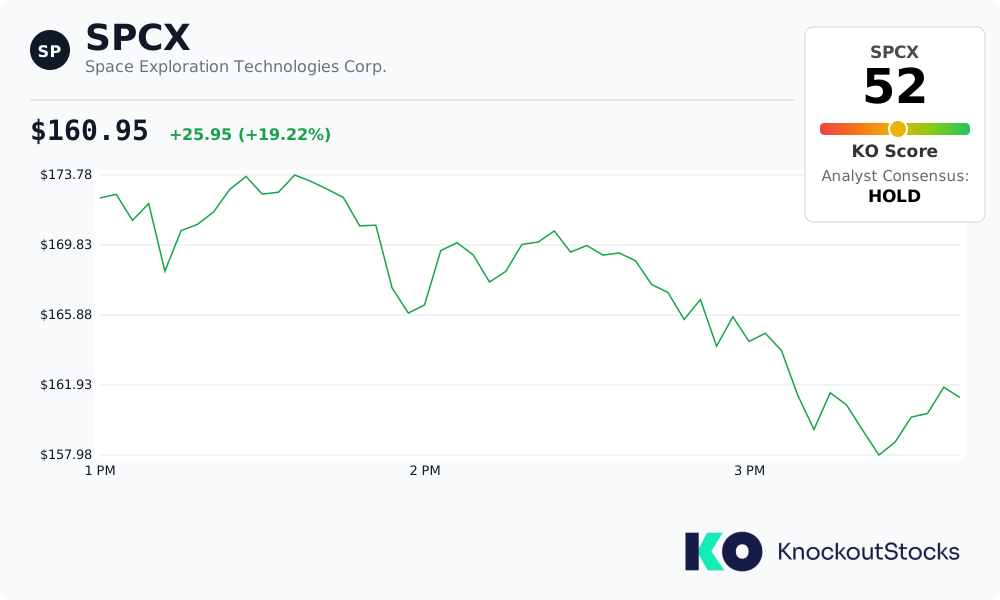
Space Exploration Technologies Corp., SPCX
SpaceX Lenders Seek Protection Against Orbital AI Chip Deployment
According to the Financial Times, lenders requested restrictions preventing SpaceX from sending financed Nvidia Vera Rubin NVL72 systems into orbit. The proposed clause would keep the equipment on Earth and preserve lenders’ ability to recover their collateral. However, the report did not establish whether the final financing agreement included those restrictions.
The dispute highlights the financial challenges surrounding Musk’s proposed orbital data centers and their expensive computing equipment. Traditional hardware financing allows lenders to repossess assets and recover funds through equipment sales after payment defaults. However, placing those assets in space could complicate recovery and reduce their practical value as collateral.
Musk expects Starship’s expanding launch capacity to reduce transportation costs and support commercial computing infrastructure in orbit. He recently suggested that orbital shipping costs could eventually fall below certain international air freight rates. Such reductions could improve the economics of orbital data centers while creating additional complications for equipment-backed lending.
SpaceX Secures Major Financing Through Project Saturn
Saturn Funding Trust completed a $32 billion bond sale Thursday to finance advanced computing infrastructure for SpaceX. Under Project Saturn, a separate entity will purchase the hardware and lease it to SpaceX for approximately five years. The arrangement keeps the associated bond debt outside SpaceX’s balance sheet while supporting its expanding AI operations.
SpaceX expects approximately $40 billion in principal payments covering chips and related equipment under the financing structure. The largest bond tranche offered an 8.3% yield, compared with 7.2% on SpaceX’s existing 2031 bonds. Moody’s assigned the new financing a rating one notch above the company’s existing debt.
The agreement requires SpaceX to make quarterly payments regardless of equipment performance or potential technical failures. Consequently, lenders depend on scheduled payments and the resale value of hardware to protect their capital. Ratings agency KBRA also identified technological obsolescence and uncertain recovery values as important risks under the arrangement.
Orbital Data Center Plans Raise Financing Questions
SpaceX could launch its first Starmind satellites during the third quarter of 2027, according to Musk’s plans. Nvidia’s Vera Rubin architecture will also support specialized computing systems designed for the proposed orbital network. This development would extend the company’s AI infrastructure ambitions beyond conventional ground-based facilities.
Polymarket traders assigned approximately 20% probability to a qualifying orbital AI data center deployment before 2028. The prediction contract requires operators to deploy at least 100 data-center-grade accelerators to meet its conditions. However, those market estimates reflect trading activity rather than confirmed deployment schedules or technical readiness.
Future orbital financing may require stronger revenue contracts because lenders could struggle to recover equipment deployed in space. CoreWeave previously secured $8.5 billion through GPU-backed financing, demonstrating how contracted customer payments can support large borrowing arrangements. For SpaceX, long-term computing agreements could become essential as its orbital infrastructure plans expand beyond terrestrial facilities.
The post SpaceX (SPCX) Stock: Slides as Lenders Fear Losing $32 Billion AI Chips to Orbital Data Centers appeared first on Blockonomi.