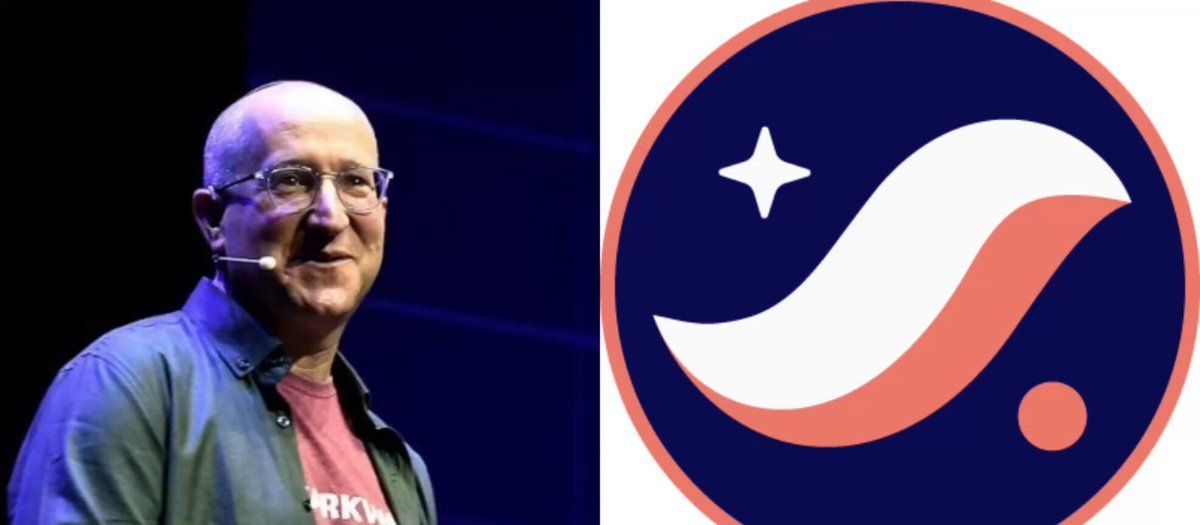
A Potential Break from Ethereum @Starknet has disclosed that it is actively considering a significant architectural shift: migrating from its current position as an Ethereum Layer-2 network t
A Potential Break from Ethereum
@Starknet has disclosed that it is actively considering a significant architectural shift: migrating from its current position as an Ethereum Layer-2 network to become an independent Layer-1 blockchain. Any protocol change would still require governance approval, but the network has set 2027 as its target date for the move.
@StarkWare CEO @EliBenSasson revealed the plan during his appearance at the Token2049 conference in Singapore on October 8, 2026. Ben-Sasson stated that Starknet, as a Layer-2 network relying on Ethereum's underlying security, is evaluating multiple options, including converting to a Layer-1 network, to independently manage its security migration process and mitigate cryptographic risks posed by quantum computing and AI.
The ambition is to build what the team describes as the first-ever quantum-resistant public base layer. Ben-Sasson listed three requirements for a chain to be future-proofed: the right cryptography, crypto agility, and becoming an L1.
Why Quantum Computing Changes the Calculus
The urgency behind the proposal stems from growing concern that conventional cryptographic systems are not built to survive the quantum era. Blockchains use cryptographic building blocks like elliptic curve cryptography to secure transactions, wallets, and private keys. That system was built for classical computers, but quantum computers with enough qubits would break it by solving its underlying mathematical problems.
Ben-Sasson has argued that both quantum computing and artificial intelligence are advancing faster than most in the industry appreciate, and that networks cannot afford to wait for Ethereum's longer-dated migration timeline. Ethereum plans to achieve full resistance to quantum attacks at L1 by the end of 2029, while Starknet expects to implement related upgrades as early as 2027.
Starknet is powered by STARK proofs, whose security relies on collision-resistant hash functions rather than elliptic curves. STARKs are widely recognized as quantum-resistant, meaning Starknet's proof layer requires no reinvention. The remaining work, including replacing legacy hash functions and migrating consensus signing to a post-quantum scheme, is laid out across a three-phase roadmap.
The proposal is not yet a done deal. It remains subject to community governance, and the team has framed it as a question worth debating rather than a settled decision. Still, the direction of travel is clear: Ben-Sasson pointed to the quantum threat, which he said "may be MUCH closer than we think," and AI, which he said is "becoming more powerful than we can process," as twin pressures calling for what he described as "bunker mode."
Sources:Unchained Crypto: Starknet Weighs Becoming a Layer 1 to Chase Quantum Resistance by 2027StarkWare: Starknet Quantum Security Research HubComputer Weekly: Eli Ben-Sasson on Quantum Computing and Bitcoin