An investigator has alleged that stolen funds from the Binance security incident were laundered through decentralized finance protocols, and that the resulting transaction volume generated me
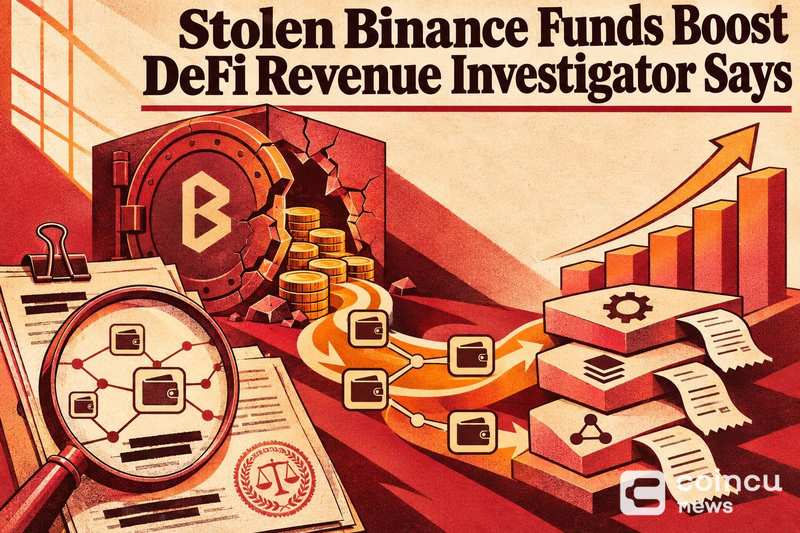
An investigator has alleged that stolen funds from the Binance security incident were laundered through decentralized finance protocols, and that the resulting transaction volume generated measurable fee revenue for those protocols, adding a new dimension to the fallout from what the FBI attributed to North Korean state-linked hackers.
Investigator Links Stolen Binance Funds to DeFi Revenue
According to reporting by CryptoPotato, an investigator examining the movement of stolen Binance-related assets found that the laundering activity passed through decentralized protocols in a way that generated revenue for those platforms. The investigator stopped short of alleging that any protocol operator was complicit; rather, the finding centers on how the volume of illicit transactions interacted with automated fee structures that do not distinguish between the origin of funds. For related coverage of how major protocol incidents unfold on-chain, see How Curve Lost $10B: What It Means for DeFi Users.
The FBI, in a public alert attributing the Binance attack to North Korean cyber actors, characterized the incident as one of the most significant exchange compromises in the sector's history. That alert did not independently confirm the DeFi revenue finding, which originates from the investigator's separate analysis and is not yet corroborated by additional public sources as of the time of writing. Context on a comparable exchange-level compromise is detailed in How Bybit Lost $1B: What It Means for DeFi Users.
The scale described in the investigator's account involves hundreds of millions of dollars in stolen assets. No exact figure for the DeFi revenue generated by laundering activity was provided in the available reporting, and the specific protocols said to have received fee income were not named. Both of those details should be treated as unconfirmed absent independent verification. The speed at which incident funds can move through the DeFi layer is illustrated by smaller precedents, including Base Lost $721.14K: What It Means for DeFi Users. For related coverage, see How Curve Lost $10B: What It Means for DeFi Users.
Separately, Symbiosis flagged Binance incident funds in a protocol attempt, suggesting that multiple DeFi platforms have already encountered attempts to route assets connected to the incident, a pattern consistent with the investigator's broader account of funds moving through the permissionless layer of the crypto market. Context on this theme: How Bybit Lost $1B: What It Means for DeFi Users.
How Laundering Activity Can Create Protocol Revenue
Decentralized exchange protocols and lending platforms generate revenue through transaction fees that are collected automatically by smart contracts. Every swap, deposit, or liquidity operation triggers a fee, a fraction of which typically accrues to the protocol's treasury or is distributed to liquidity providers, regardless of whether the counterparty's funds originated from a legitimate source or from theft.
Transaction activity and protocol fees
When large volumes of stolen assets move through a DeFi protocol in a short window, the fee income attributable to those transactions can be material. A protocol processing the equivalent of hundreds of millions of dollars in swaps, even at fee tiers of 0.05 percent to 0.30 percent, would collect hundreds of thousands to low millions of dollars in fees solely from that volume. The investigator's allegation, as reported, implies that this exact dynamic played out across one or more unnamed platforms during the laundering process.
On-chain fee mechanics compound this effect because liquidity providers earn a proportional share of swap fees. When a surge in trading volume drives elevated returns, additional liquidity is often attracted to the pool, deepening it further. The investigator appears to be arguing that illicit volume inadvertently subsidized protocol health metrics, at least temporarily, even as it represented a systemic risk to the broader market.
Why revenue is not the same as an endorsement or benefit to all users
Protocol-level fee revenue accruing from laundering activity does not constitute an endorsement by the protocol, its developers, or its governance token holders. Smart contracts execute deterministically; they do not screen counterparty identity before processing a transaction. The investigator's characterization of the situation as a revenue gain for DeFi protocols should be understood as a description of an unintended mechanical outcome, not an allegation of knowing participation.
That distinction matters for how regulators and compliance teams read the finding. A protocol that passively collected fees from illicit volume occupies a fundamentally different legal and reputational position than one that actively facilitated concealment, though where exactly that line sits under evolving anti-money-laundering frameworks remains contested. Policy discussions around the Binance hack and crypto regulatory frameworks have sharpened precisely because incidents of this scale force that question into public debate.
What the Allegation Means for DeFi Risk Monitoring
The investigator's finding raises a practical question for protocol teams and token holders: if a platform's reported revenue was partially inflated by illicit volume, how should that be disclosed, and does it create downstream liability? Current DeFi governance frameworks do not include standardized procedures for identifying, flagging, or returning fee income traceable to stolen assets, largely because on-chain privacy and the pseudonymous nature of transactions make real-time attribution difficult.
Screening and monitoring considerations
Blockchain analytics firms already offer transaction screening tools capable of flagging wallets associated with known theft proceeds before a transaction settles, but integration of those tools at the smart-contract level remains rare. Most screening happens at the front-end interface layer, which can be bypassed by users who interact directly with the contract. The investigator's account, if accurate, suggests that the Binance incident funds moved through channels that were not effectively screened at the point of interaction.
Incident precedents illustrate the scale at which this can occur. Prior major exchange compromises have shown that large outflows from a hacked exchange move rapidly through the DeFi layer, with funds dispersed across multiple protocols within hours of the initial breach. The speed of movement is deliberately designed to complicate tracing and to generate enough on-chain noise that attribution requires forensic reconstruction rather than real-time observation.
Distinguish protocol revenue from legal, compliance, and reputational risk
Even if a protocol's treasury grew as a by-product of laundering activity, that growth does not insulate it from reputational damage or from potential regulatory scrutiny in jurisdictions that are expanding the scope of AML obligations to cover DeFi intermediaries. Governance token holders who benefited from elevated fee distributions during the laundering period could, under some proposed regulatory frameworks, be considered indirect beneficiaries of proceeds of crime, a designation with significant legal implications that no major jurisdiction has yet resolved definitively.
Protocol teams watching this situation should expect regulators to cite the investigator's findings as further evidence that permissionless fee collection from unscreened transaction flows creates systemic compliance exposure. The argument is not that DeFi enabled the theft; it is that DeFi provided the laundering infrastructure and was compensated for doing so, even if passively.
Key Details Not Established in the Available Report
The available reporting does not name the specific DeFi protocols alleged to have received fee revenue from laundering activity. Any inference about which platforms were involved would be speculative and is not supported by the evidence currently in the public domain. Readers and market participants should not assume that any particular protocol is implicated absent a named attribution from the investigator or a regulatory body.
The exact dollar value of DeFi revenue generated by the laundering activity is also not confirmed. The investigator's account uses directional language describing gains rather than a precise figure. Any report that attaches a specific number to the DeFi revenue claim without citing a primary source for that number should be treated with caution.
The chain or chains through which the funds moved, the specific routing mechanism, and whether mixing or bridging services were used in addition to decentralized protocols are all details that were not established in the research material available for this article. The FBI's public attribution to North Korean actors addresses the identity of the alleged perpetrators, but the publicly accessible alert does not provide a step-by-step account of the laundering pathway that would allow independent verification of the DeFi revenue claim.
Attribution of the hack itself to North Korea rests on the FBI's public alert, which represents an official U.S. government position but has not, as of this writing, been tested in a court proceeding or independently confirmed by a second governmental body. The investigator's DeFi revenue finding is a separate layer of analysis built on top of that attribution and should be evaluated on its own evidentiary merits.
FAQ: Stolen Binance Funds and DeFi Protocol Revenue
What is the investigator alleging?
Per reporting at CryptoPotato, the investigator is alleging that stolen funds connected to the Binance security incident, which the FBI attributed to North Korean hackers, were routed through decentralized finance protocols during the laundering process, and that this routing produced fee revenue for those protocols as a direct consequence of the transaction volume involved. The allegation is presented as a finding about a mechanical outcome of how DeFi fee structures work, not as a claim that any protocol was a knowing participant in the laundering scheme.
How could laundering raise DeFi protocol revenue?
DeFi protocols collect fees automatically on every transaction processed by their smart contracts. When hundreds of millions of dollars in assets pass through a protocol's swap or lending functions, the fee income scales proportionally with volume. A launderer moving large sums through a decentralized exchange generates the same fee revenue as any other user conducting the same volume of trades; the protocol's code does not differentiate by source. The investigator's finding relies on this feature of permissionless finance to explain how illicit activity could, as a side effect, inflate a protocol's reported revenue metrics.
Does the report identify the DeFi protocols involved?
No. The available reporting does not name any specific DeFi protocol as having received fee revenue from funds connected to the Binance incident. The investigator's account, as reported, refers to protocols collectively without naming individual platforms. Until the investigator publishes a more detailed breakdown or a regulatory filing names specific protocols, any assumption about which platforms are implicated would be conjecture. The absence of named protocols is one of the most significant evidentiary gaps in the current public record, and it limits the ability of protocol teams, token holders, and compliance professionals to respond concretely to the allegation.
What to Watch Next
The most consequential near-term development will be whether the investigator publishes a full report naming specific protocols, transaction paths, or fee amounts. A detailed on-chain forensic report with wallet addresses and transaction hashes would allow independent verification and would substantially change the risk profile for any named platform. Absent that level of detail, the allegation remains a directional claim rather than actionable intelligence for market participants.
Regulators in the United States and European Union have both signaled interest in extending AML obligations to DeFi protocols, and a documented case in which a major hack's laundering phase visibly inflated DeFi protocol revenue provides exactly the kind of concrete example that tends to accelerate legislative timelines. The pattern observed here, where large-scale protocol-level incidents reshape the regulatory conversation for DeFi users broadly, is not new, but the scale of the Binance incident and the involvement of a state-linked actor elevates the political salience of the finding considerably.
Binance's response to the incident, including any disclosures about ongoing withdrawal recovery operations or cooperation with law enforcement, will also shape how the market interprets the investigator's DeFi revenue finding. If Binance provides detailed on-chain tracing data to investigators or regulators, that could produce the named-protocol evidence currently missing from the public record. Protocol governance forums and token holders should monitor both the FBI's public communications and any civil or criminal proceedings that may compel additional disclosure from parties involved in the laundering chain.
Disclaimer: This article is for informational purposes only and does not constitute financial or investment advice. Cryptocurrency and digital asset markets carry significant risk. Always do your own research before making decisions.
The post Stolen Binance Funds Boost DeFi Revenue, Investigator Says was initially published on Coincu.