Tether signed a Memorandum of Understanding with Kazakhstan's National Bank and the Alatau City Authority on October 7, 2026, committing the three parties to jointly study stablecoin issuance
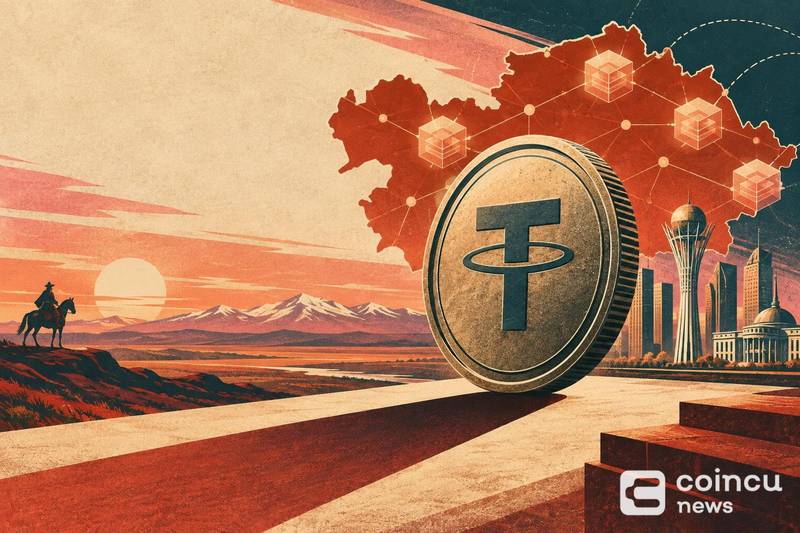
Tether signed a Memorandum of Understanding with Kazakhstan's National Bank and the Alatau City Authority on October 7, 2026, committing the three parties to jointly study stablecoin issuance models, prepare a pilot proposal for a tenge-pegged stablecoin, and develop an asset-tokenization framework, according to the official Tether announcement.
The agreement is exploratory, not operational: no stablecoin has been authorized, no tokenization product has launched, and no implementation timeline has been disclosed. What the MoU establishes is a formal collaboration structure between the world's largest stablecoin issuer by market cap and Kazakhstan's apex monetary authority, with Alatau City serving as the designated pilot zone for any future project outputs. For related coverage, see Abstract to Shut Down Dec. 15, 2026: Users Urged to Move Assets.
Three Parties, Two Workstreams, One Framework Agreement
The National Bank of Kazakhstan is the country's central bank and primary financial regulator, while Alatau City is a designated special economic zone near Almaty that Kazakhstan has been developing as a crypto-friendly hub, per CoinGeek's reporting on the country's CryptoCity initiative. The combination of central bank oversight and a sandbox jurisdiction gives the partnership a dual-track structure: regulatory study at the national level alongside live pilots in a controlled local environment. For related coverage, see USDT Linked to Iranian Shadow Banks: Senate Sanctions Risk.
The first workstream targets stablecoins directly: the parties will study international issuance models and develop a concrete pilot proposal for a stablecoin pegged to the Kazakhstani tenge. The second workstream covers asset tokenization, including a potential pilot of Tether's Hadron platform within Alatau City. Hadron is Tether's institutional tokenization infrastructure, designed to support real-world asset issuance on blockchain rails. For related coverage, see Kalshi's 15-Minute Gold Market Tops Ethereum in Contracts.
The MoU also includes educational workshops and training programs on stablecoins, reserve management, and real-world asset tokenization for Kazakhstani officials and technical specialists, per the Tether announcement.
Tether's Scale Provides the Infrastructure Baseline for Any Pilot
USDT's market capitalization stood at $184.05 billion at the time of the research fetch, making Tether the dominant stablecoin globally and the third-largest crypto asset by market cap.
USDT market capitalization
$184.05B
Research fetch context; see CoinGecko for the readable market page.
USDT's circulating supply across chains reached $184.30 billion USD-equivalent per DeFiLlama's stablecoin analytics snapshot, reflecting a near-parity between market cap and outstanding supply that signals tight reserve backing and broad cross-chain distribution.
USDT circulating supply
$184.30B
USD-equivalent snapshot from the supplied DeFiLlama stablecoin data.
For Kazakhstan, the partnership brings that infrastructure depth into a sovereign pilot context: the country's central bank gains direct access to Tether's technical stack, reserve-design knowledge, and tokenization tooling before committing to any regulatory framework. That sequencing, study before authorization, mirrors the phased approach several other emerging-market central banks have taken before issuing formal digital-currency guidance.
What the Counterparties Said
Tether CEO Paolo Ardoino framed the agreement as a milestone in sovereign-level digital-asset adoption, stating: "The use cases for digital assets are evolving into real-life applications and, ultimately, into sovereign-level financial infrastructure. Kazakhstan is taking a deliberate, forward-looking approach by exploring asset tokenization and a strategic reserve framework."
"As part of piloting tokenization projects, we intend to thoroughly study international best practices in stablecoin issuance and real-world asset tokenization. Concurrently, maintaining financial stability, transaction transparency, and robust investor protection remains the paramount priority for the National Bank." — Binur Zhalenov, National Bank of Kazakhstan, via Tether newsroom
Zhalenov's framing is significant: a central bank official explicitly naming financial stability, transparency, and investor protection as "paramount" priorities signals that Kazakhstan is approaching the tenge-stablecoin concept through a regulatory-first lens rather than a technology-first one. That positioning gives the National Bank veto authority over any design that fails its prudential tests.
Why Kazakhstan's Alatau Matters as the Pilot Venue
Alatau City is not an ad hoc selection. Kazakhstan has been building the zone as a dedicated digital-asset pilot area, and the country's stablecoin payment volumes have risen materially alongside that development, per CoinGeek's coverage of the CryptoCity initiative. Placing the Hadron tokenization pilot inside Alatau creates a legally distinct environment where novel financial products can be tested without requiring immediate nationwide regulatory changes, a structure that reduces the National Bank's systemic risk exposure during the exploratory phase.
Tether's compliance track record on USDT, including its willingness to freeze addresses linked to sanctions violations, is likely a relevant factor in the National Bank's decision to engage: a stablecoin counterparty with demonstrated freeze-and-block capability is more compatible with a central bank's AML and sanctions-compliance requirements than a fully permissionless protocol.
What Is Confirmed, What Is Still Conditional
Confirmed: Tether, the National Bank of Kazakhstan, and the Alatau City Authority signed an MoU on October 7, 2026. The agreement covers stablecoin use-case research, a tenge-pegged pilot proposal, an asset-tokenization framework, a potential Hadron pilot in Alatau, and an education program for officials.
Not confirmed: any regulatory approval for a tenge stablecoin, any launch date, any reserve design, the specific assets targeted for tokenization, the technical infrastructure choices for a pilot, or the governance structure for investor protection. The MoU is a study commitment, not an authorization.
Asset tokenization on platforms like Hadron has attracted growing institutional attention across Central Asia, where cross-border settlement friction and thin local capital markets create direct use cases for tokenized real-world assets. The expansion of financial-services platforms integrating digital assets across the region provides additional market context for why Kazakhstan's central bank is moving to formalize its exploration now rather than waiting for a finished global regulatory template.
Frequently Asked Questions About Tether's Kazakhstan Memorandum
What did Tether and Kazakhstan sign?
Tether signed a Memorandum of Understanding with Kazakhstan's National Bank and the Alatau City Authority on October 7, 2026. An MoU is a non-binding framework agreement that defines areas for joint study and pilot development; it does not constitute a commercial contract, a regulatory license, or a product launch.
What topics will the memorandum explore?
The two primary workstreams are stablecoin issuance, specifically a pilot proposal for a tenge-pegged stablecoin, and asset tokenization, including a potential pilot of Tether's Hadron platform in Alatau City. The agreement also covers educational programming for Kazakhstani officials on reserves and real-world asset tokenization.
Does the memorandum confirm a stablecoin launch in Kazakhstan?
No. The MoU explicitly frames all stablecoin work as exploratory: the parties will study international issuance models and prepare a pilot proposal, not deploy a live stablecoin. Any launch would require separate regulatory approval from the National Bank of Kazakhstan, which has not been granted.
What is still unknown about the collaboration?
Implementation dates, reserve design, the specific assets targeted for tokenization under the Hadron pilot, the governance and investor-protection framework, the blockchain infrastructure to be used, and the criteria the National Bank will apply to evaluate any pilot proposal are all unspecified in the announcement. Follow-on disclosures from either the National Bank or Tether would be the next concrete milestones to watch.
Disclaimer: This article is for informational purposes only and does not constitute financial or investment advice. Cryptocurrency and digital asset markets carry significant risk. Always do your own research before making decisions.
The post Tether and Kazakhstan Explore Stablecoins and Tokenization was initially published on Coincu.