Nigerian tech founders often sell the country’s dream with a single, seductive metric: a population of over 200 million people. That demographic dividend is rapidly becoming an illusion. Acco
Nigerian tech founders often sell the country’s dream with a single, seductive metric: a population of over 200 million people. That demographic dividend is rapidly becoming an illusion. According to the 2026 MPI Report, between 2021 and 2024, an additional 17.9 million Nigerians fell into acute multidimensional poverty. President Tinubu’s macroeconomic reforms have unfortunately taken away the purchasing power of the average citizen, leaving tech companies competing for a rapidly shrinking middle class.
The 2026 Global Multidimensional Poverty Index (2026 MPI Report) published by the Oxford Poverty and Human Development Initiative (OPHI) and the United Nations Development Programme (UNDP) paints a grim picture of policy sequencing failures. Nigeria’s national poverty incidence surged from 33.0% in 2021 to 38.7% in 2024. This reversal wiped out years of gradual gains recorded between 2018 and 2021. The total number of multidimensionally poor Nigerians is now an overwhelming 113.3 million.
For the tech ecosystem, the report requires an immediate recalibration of what constitutes a total addressable market. A population of over 200 million is often marketed as a demographic dividend. The data confirms it is currently a severe economic liability. You cannot scale a digital consumer product to a household fighting for basic economic survival.
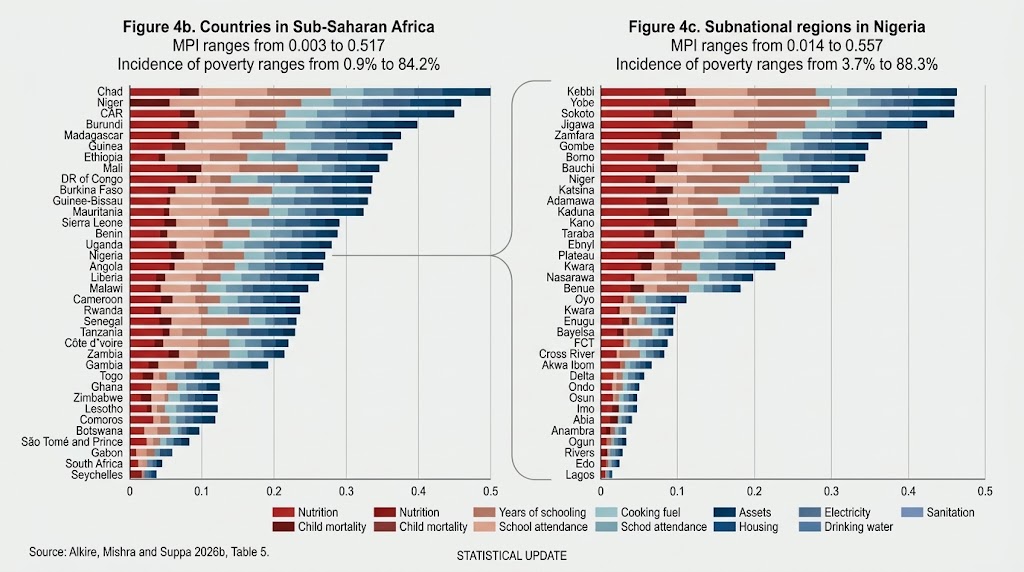
According to the 2026 MPI Report, purchasing power is contracting at an alarming rate. Standard of living deprivations account for 40.6% of Nigeria’s overall poverty index value. When nearly half the population is struggling with access to electricity, clean cooking gas, and other basic amenities, the true total addressable market for the tech founders is a fraction of the national population. Fintechs chasing unbanked rural users will hit a hard ceiling when those users lack the electricity to charge a smartphone or the disposable income to make digital transactions viable. Digital inclusion cannot outpace physical infrastructure.
Data source: The 2026 MPI Report
Tech products require physical infrastructure. Yet, the report shows 37.6% of the poor population lacks clean cooking gas, and 31.3% survive without electricity. A population deprived of basic power and sanitation cannot participate in a digital economy. When over half the country is fighting for basic survival, rolling out consumer SaaS platforms, digital lending apps, or advanced Web3 protocols to the mass market is a fundamentally flawed strategy. The true consumer base for digital products is constrained to the urban few.
2026 MPI Report: The great divide between the north and south
The subnational data exposes how fractured this market truly is. Nigeria’s aggregate poverty figures mask a stark geographic divide. In Lagos, the poverty incidence is just 3.7%. In Kebbi, it sits at 88.3%. Northern states like Sokoto, Yobe, and Zamfara record poverty rates exceeding 80%, driven by acute voids in basic infrastructure and child nutrition. Startups scaling nationwide are often just scaling across three or four affluent urban clusters.
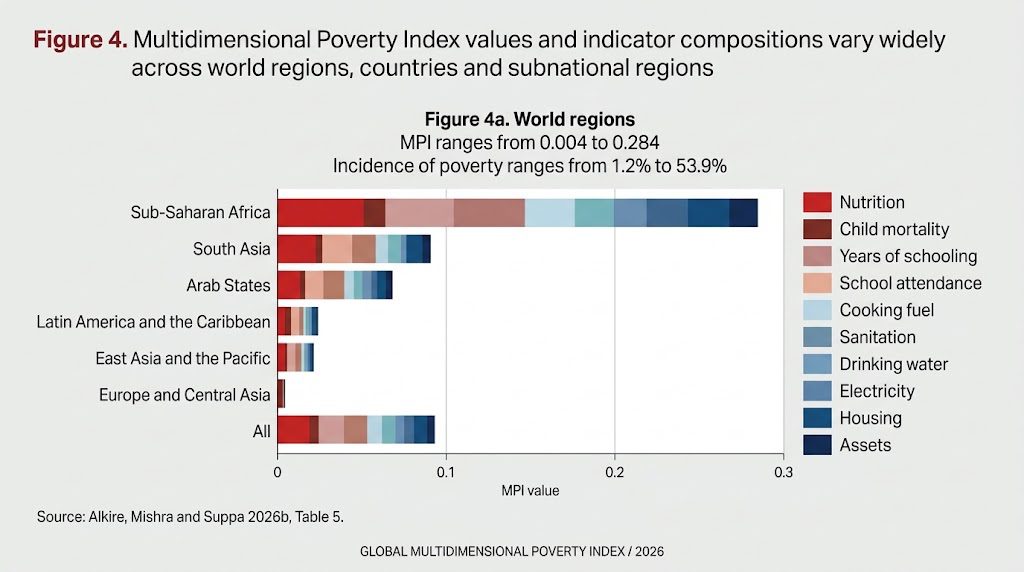
Globally, Nigeria’s regression is an outlier. Only five countries reported absolute increases in the number of poor people in their latest survey periods: Afghanistan, the Central African Republic, Guinea, Kyrgyzstan, and Nigeria. Nigeria recorded the largest absolute surge globally. While Nigeria slid backwards, 33 other nations successfully halved their MPI values within 15 years. China managed to halve its Multidimensional Poverty Index (MPI) value in just four years. Nigeria is actively moving in the opposite direction.
How tech founders must approach the Nigerian market
Tech founders operating in Nigeria must pivot from convenience to absolute utility. If a product does not directly lower the cost of living, generate immediate income, or bypass broken physical infrastructure, it will not survive contact with this consumer base. This highlights a harsh economic reality. Building tech infrastructure in a market where 113.3 million people live in acute poverty means building for a very low ceiling.
Data source: The 2026 MPI Report
Founders building for survival and scale in this landscape must rethink their architecture entirely:
- Pivot from convenience to essential utility: The market for luxury consumer tech is saturated and shrinking. Builders must focus on products that reduce the cost of living or protect purchasing power, such as embedded micro-insurance, fractional investment in essential goods, and off-grid energy tech.
- Build offline-first and asset-light ecosystems: Deprivations in electricity and living standards mean high data consumption and heavy battery usage are premium barriers. Heavy reliance on USSD interfaces, low-bandwidth protocols, and agent-led physical distribution models will capture the bottom-of-the-pyramid users that data-heavy interfaces alienate.
- Shift to B2B2C revenue streams: Extracting direct subscription fees from households actively slipping into poverty is mathematically unsustainable. Innovators need to route monetisation through corporate partners, development agencies, or agricultural cooperatives that can subsidise the end-user cost in exchange for aggregated data or supply-chain efficiency.
What the government must do
The federal government’s persistent, top-down policy interventions have demonstrably failed to halt the slide of 17.9 million people into poverty between 2021 and 2024. Abuja cannot legislate a single cure for a disease that presents entirely different symptoms across the country. Government intervention must be recalibrated to target the specific subnational drivers of poverty.
The report reveals massive structural inequalities across states. A state like Yobe battles intense challenges with child mortality and nutrition, whereas poverty in Sokoto is predominantly driven by severe deficits in drinking water and electricity. Deploying a uniform federal cash intervention across both regions wastes critical resources without addressing the root infrastructural failures keeping those populations poor.

Ikeja, Lagos
To achieve maximum impact, government interventions must be aggressively decentralised:
- Localise social registries and tech deployments: State governments must take absolute ownership of their welfare data. By localising data collection, both the states and the local governments can identify precisely which communities require off-grid solar infrastructure versus which need urgent maternal health deployment.
- Fund state-specific innovation ecosystems: Instead of national procurement contracts awarded to incumbent giants, states should fund local innovators building region-specific solutions. An agritech startup addressing post-harvest loss in Kebbi operates on a completely different model than a waste management tech startup in Lagos.
- Transition from cash handouts to targeted physical infrastructure: The data confirms that monetary handouts cannot outpace the lack of basic amenities. State policies must redirect welfare funds towards digital and physical public goods, such as skill acquisition, localised mini-grids, regional cold-storage networks, and community broadband, creating an enabling environment where micro-enterprises actually stand a chance of surviving.
If there’s anything that the 2026 MPI Report revealed, it’s that a high population only confers a real economic advantage when it is paired with human capital development, widespread digital access, and disposable income. Without these, a large population merely strains already fragile infrastructure and creates localised economic crises.