Markets5 min read
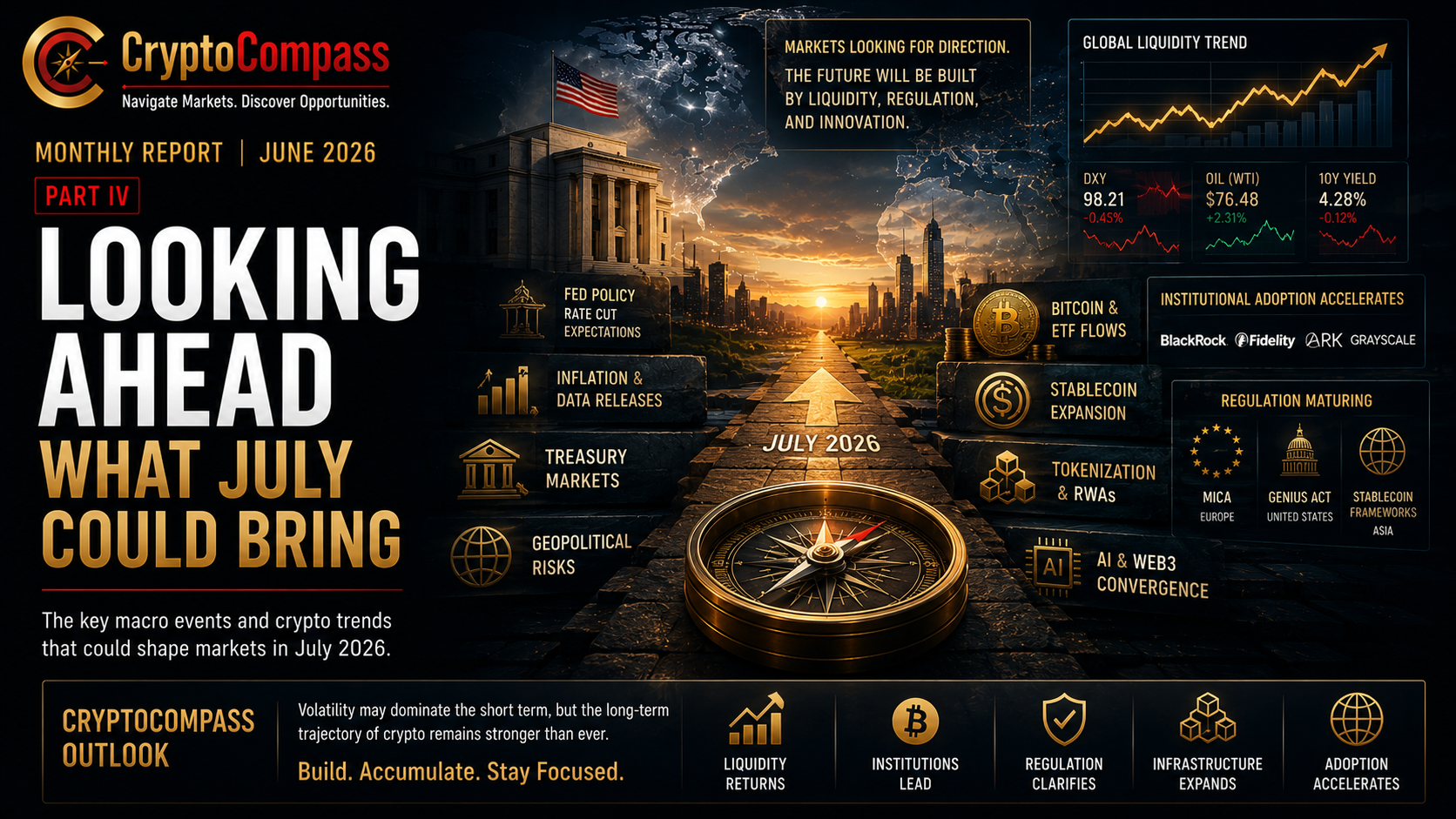
Monthly Report | Part IV — Looking Ahead: What July Could Change
Geopolitical tensions reminded investors that global markets remain vulnerable to external shocks.
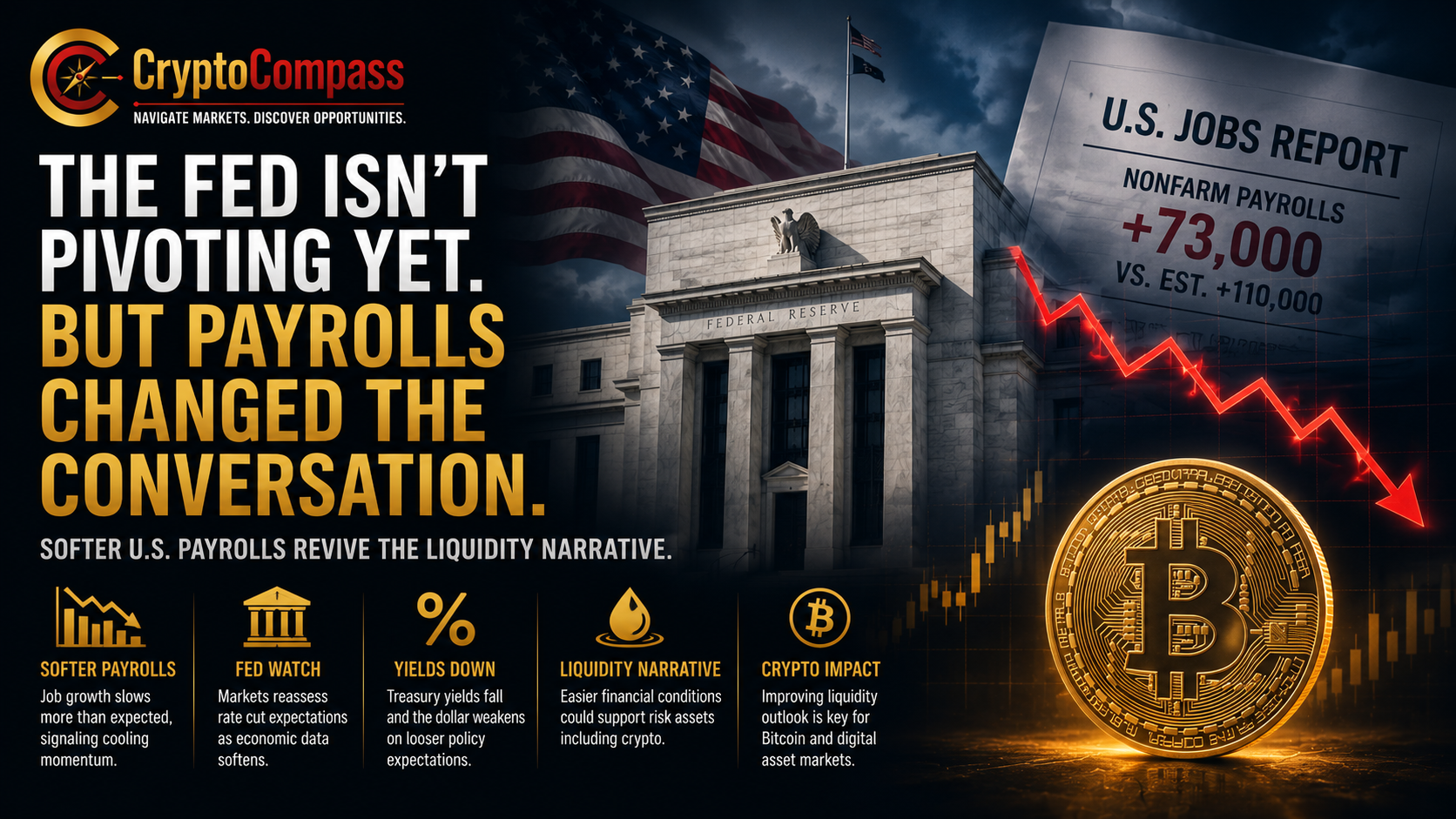
The Fed Isn't Pivoting Yet. But The Labor Market Just Changed The Conversation.
The Fed Isn't Pivoting Yet. But The Labor Market Just Changed The Conversation.
For months, financial markets have been asking the same question:
When will the Federal Reserve begin cutting interest rates?
This week, investors may have received the first meaningful clue.
The latest U.S. labor market data came in softer than expected, reinforcing the view that the American economy is gradually losing momentum after years of aggressive monetary tightening.
The report did not guarantee an imminent rate cut.
It did, however, revive something markets had nearly abandoned over recent weeks:
The liquidity narrative.
For Bitcoin, equities and virtually every risk asset, that distinction could prove significant.
Payrolls Are Slowing. The Economy Isn't Breaking.
The U.S. labor market remains healthy by historical standards.
Unemployment remains relatively low.
Job creation continues.
Consumers are still spending.
However, the pace of hiring has clearly begun to moderate.
Economists increasingly describe the current environment as a "soft landing" rather than an economic collapse.
That matters because the Federal Reserve has repeatedly stated it is seeking evidence that inflation is cooling without triggering a severe recession.
A gradually slowing labor market fits that objective almost perfectly.
The question is whether the slowdown continues.
Why Payrolls Matter More Than Investors Realize
Inflation receives most of the headlines.
Payrolls often determine monetary policy.
Employment influences:
Consumer spending
Wage growth
Service-sector inflation
Corporate earnings
Economic confidence
If companies hire fewer workers, wage pressures typically ease.
Lower wage inflation eventually feeds into lower consumer inflation.
That gives the Federal Reserve greater flexibility to reduce interest rates.
Markets therefore treat every payroll report as a forward-looking indicator of future liquidity conditions.
Liquidity Is The Real Story
Many investors mistakenly believe rate cuts alone drive asset prices.
In reality, markets respond to expectations about liquidity.
Lower interest rates generally mean:
Lower borrowing costs.
Easier financial conditions.
Higher risk appetite.
More capital flowing into equities and digital assets.
That is why Bitcoin often reacts before the Federal Reserve actually changes policy.
Markets discount future liquidity—not current liquidity.
The latest payroll report has encouraged investors to reconsider whether financial conditions could begin easing later this year.
Bitcoin Has Become Increasingly Sensitive To Macro Data
Previous crypto cycles were driven largely by retail speculation.
Today's market looks very different.
Spot Bitcoin ETFs.
Corporate treasury adoption.
Institutional custody.
Growing stablecoin liquidity.
All have connected Bitcoin more closely to traditional financial markets.
As a result, macroeconomic releases now have a much larger influence on digital assets than they did just a few years ago.
Payroll reports, inflation data and Treasury yields have become regular catalysts for crypto volatility.
The Dollar And Bond Yields Tell The Story
Following softer labor data, markets immediately reassessed expectations for Federal Reserve policy.
Treasury yields moved lower.
The U.S. dollar weakened against several major currencies.
These reactions are important because both variables influence global liquidity.
A weaker dollar often improves financial conditions worldwide.
Lower bond yields reduce the opportunity cost of holding non-yielding assets such as Bitcoin.
Neither guarantees higher crypto prices.
But together they create a more supportive macro environment than one dominated by rising yields and a strengthening dollar.
Why The Fed Still Won't Rush
Despite improving conditions, the Federal Reserve is unlikely to declare victory over inflation.
Officials remain concerned that easing policy too quickly could reignite price pressures.
Core inflation remains above the Fed's long-term target.
Services inflation has proven particularly persistent.
Policymakers are therefore expected to continue emphasizing a data-dependent approach.
One payroll report alone is unlikely to trigger an immediate policy shift.
Instead, markets will look for confirmation through:
Consumer Price Index (CPI)
Personal Consumption Expenditures (PCE)
Wage growth
Unemployment
Consumer spending
Only a consistent pattern of weaker economic data is likely to justify rate cuts.
Why Crypto Investors Should Care
For crypto markets, the implications extend well beyond interest rates.
Liquidity has historically been one of the strongest drivers of digital asset performance.
When financial conditions improve:
Institutional allocations often increase.
Venture capital becomes more active.
Stablecoin supply expands.
Trading volumes recover.
Risk appetite improves.
Bitcoin has increasingly become the first destination for new institutional capital before liquidity spreads into Ethereum and higher-risk altcoins.
That pattern has repeated throughout this cycle.
CryptoCompass View
The latest payroll report does not mean the Federal Reserve is preparing an immediate pivot.
What it does suggest is that investors are once again discussing liquidity rather than tightening.
That shift in narrative matters.
Markets rarely wait for central banks to act.
They move when expectations change.
Whether this becomes the beginning of a broader easing cycle will depend on inflation, employment and economic growth over the coming months.
For now, softer payrolls have reopened a conversation that appeared closed only weeks ago.
And for Bitcoin, that conversation could prove more important than the next interest-rate decision itself.
Author
Suttermill
CryptoCompass Editorial Desk