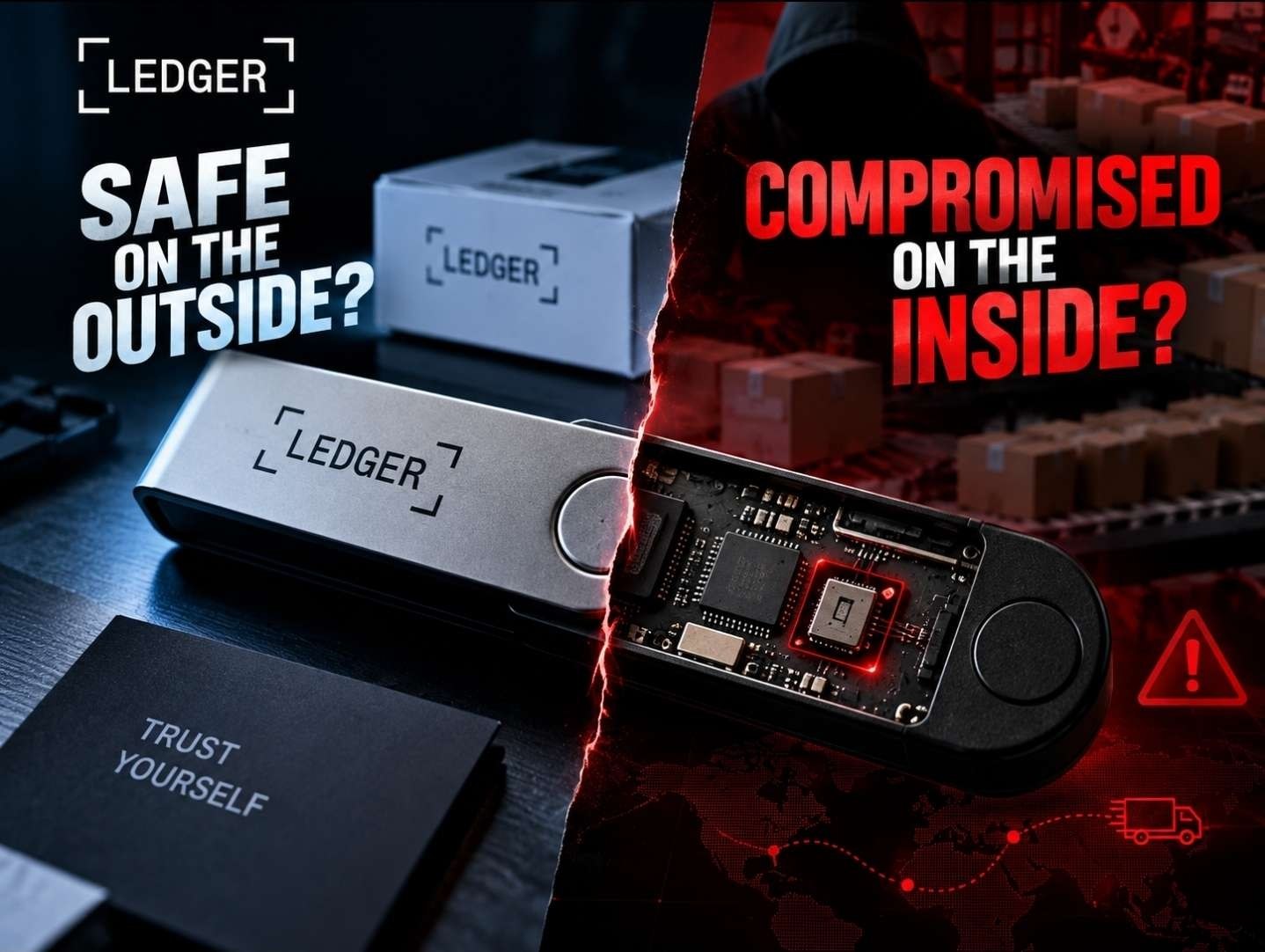
I saw the video showing a hidden chip beneath a Ledger screen, and it raised a question that deserves more attention than the viral headlines are giving it. WHAT IF YOUR HARDWARE WALLET IS CO
I saw the video showing a hidden chip beneath a Ledger screen, and it raised a question that deserves more attention than the viral headlines are giving it.
WHAT IF YOUR HARDWARE WALLET IS COMPROMISED BEFORE IT EVEN REACHES YOU?

Ledger has confirmed that at least one device linked to the ongoing investigation contained an unauthorized hardware implant. The reported cases involve devices sold through CryptoBilis, a reseller in Southeast Asia. Ledger says its own systems have not been compromised.
The distinction matters. This is not evidence that every Ledger device is compromised, and the full scope of the incident is still being investigated.
But the security implications are significant.
Hardware wallets are designed to keep private keys isolated from internet-connected devices. They reduce exposure to malware, phishing and remote attacks.
Yet security depends on more than the cryptography inside the device. It also depends on the integrity of the hardware, manufacturing process and distribution chain.
If a device is physically tampered with before reaching its owner, the user may unknowingly inherit a risk they had no reasonable way to anticipate.
That exposes a blind spot in how many people understand self-custody.
We often tell users to verify addresses, protect their recovery phrases and never sign suspicious transactions. Those precautions matter, but they cannot independently guarantee that the physical device itself has not been altered.
Even a genuine-device check has limits. Ledger's own security documentation explains that authentication cannot necessarily detect unauthorized physical modifications when the original secure element remains intact.
This is why supply-chain security deserves as much attention as software security.
The lesson is not that hardware wallets are useless. They remain an important security tool. The lesson is that no single security measure should be treated as absolute protection.
Buy through trusted channels. Follow official security guidance. Never share your recovery phrase with anyone claiming to offer support. And if your device may be affected, take the manufacturer's guidance seriously.
Self-custody gives you control over your assets, but control also means understanding the assumptions your security depends on.
Crypto has spent years trying to eliminate the need to trust financial intermediaries.
The next challenge is reducing the amount of trust users must place in the physical infrastructure protecting their keys.
Because keeping your keys offline is only part of the equation.
You must also be able to trust the device holding them.
$BTC $ETH