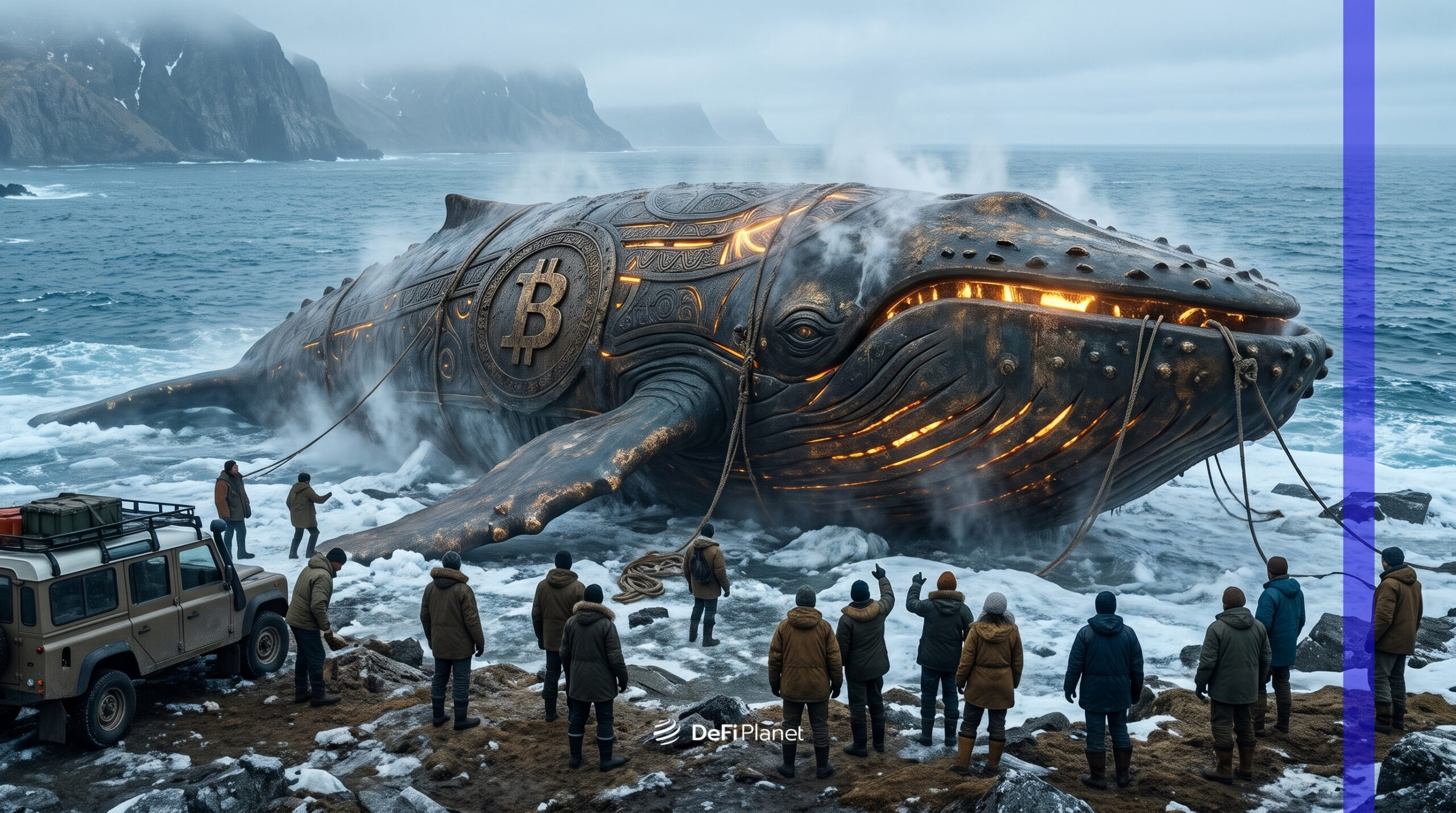
Bitcoin has a peculiar problem that traditional financial markets rarely face at this scale: nobody knows exactly how much of the asset is still controlled by people who have effectively disa
Bitcoin has a peculiar problem that traditional financial markets rarely face at this scale: nobody knows exactly how much of the asset is still controlled by people who have effectively disappeared. As of September 2026, Glassnode data shows 3.6 million BTC had not moved for more than 10 years. That represents about 17.8% of Bitcoin’s existing supply. Another 1.7 million BTC had last moved 7 to 10 years ago.
Some of those coins belong to determined long-term holders, some to people who lost their keys, and some may belong to estates, early miners, hacked entities, or owners who simply have no reason to sell. In July 2026, a Bitcoin address inactive for more than 8 years transferred 5,908 BTC (roughly $383 million) to a new, unidentified address. As of this writing, 5,908 BTC are still sitting untouched in that wallet address.
The Biggest Dormant Bitcoin Whales
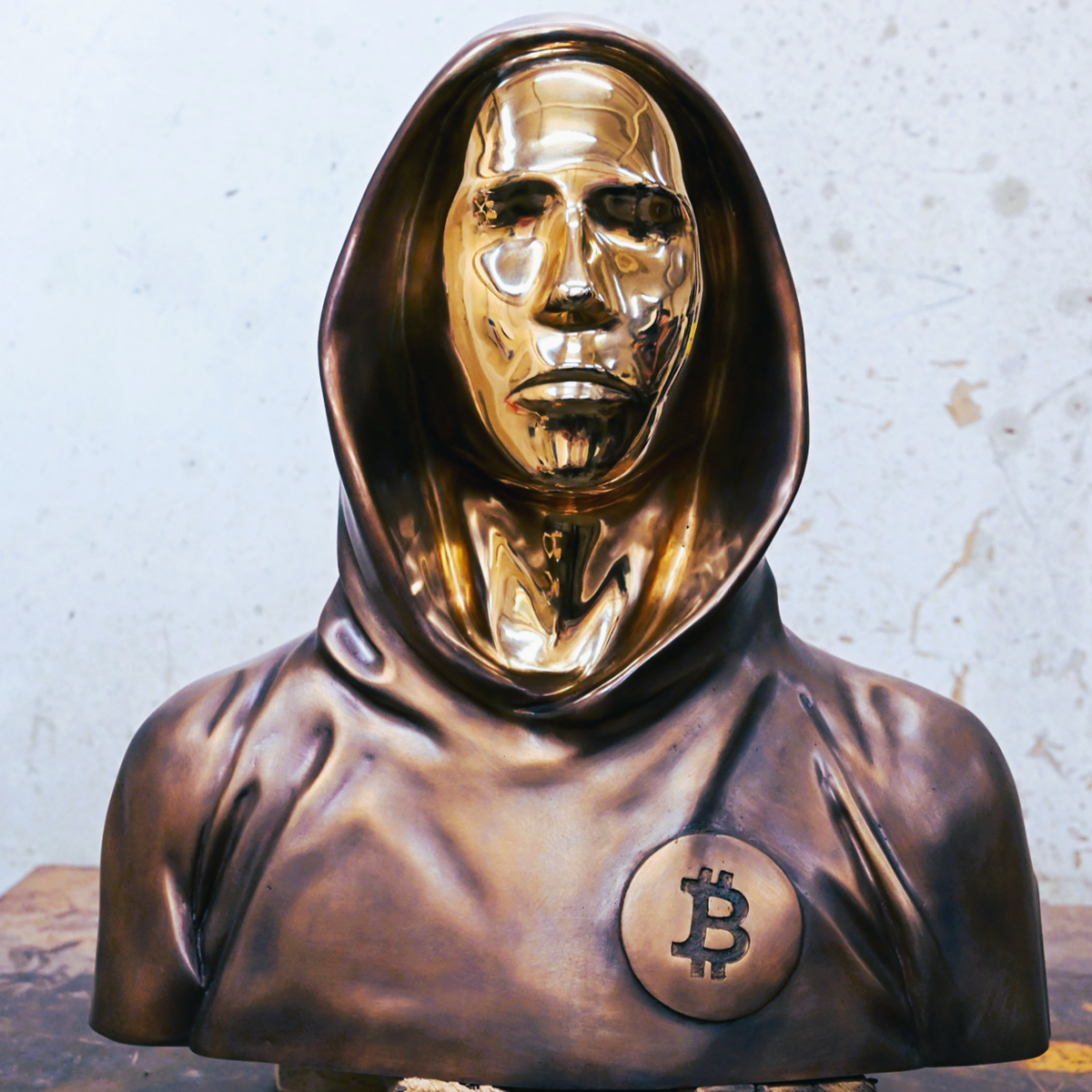
A statue representation of Satoshi Nakamoto
The most famous example is still Satoshi Nakamoto, and the latest analysis estimates that wallets associated with Satoshi’s known mining pattern contain approximately 1.096 million BTC, spread across roughly 22,000 addresses. The coins were accumulated through early mining and have remained untouched for more than 15 years, making Satoshi’s holdings unusual even among Bitcoin whale wallets.
Note that Satoshi is not one wallet containing 1 million BTC, as the estimated holdings are distributed across thousands of addresses, so this information should not be treated as holdings in a single wallet.
In May 2026, an address holding 500 BTC moved the coins after approximately 12 years of inactivity, making it one of the largest dormant Bitcoin wallets to make a move in recent times. The BTC was worth about $457,000 when received in 2013, and by the time it moved, the same 500 BTC was worth about $40.6 million, an almost 89-fold increase.
In August, six Bitcoin wallets whose coins had last moved between 2011 and 2014 transferred a combined 553.59 BTC, worth about $40 million, and five sent their coins to addresses with no known exchange links. These transactions provide an important lesson: an inactive Bitcoin wallet is not necessarily a forgotten Bitcoin wallet.
RELATED: The Story of Bitcoin
Why Whale Wallets Go Dormant
Several reasons might lead a whale to leave Bitcoin untouched for years, and the simplest is conviction. Bitcoin does not require its owner to rebalance a portfolio, pay account-maintenance fees or respond to a fund manager. Someone who bought BTC early and believes its long-term value will rise can simply leave the coins alone.
Tax and custody also matter. Moving or selling a large position can create tax consequences, attract attention and expose the holder to operational risks. Inheritance is another possibility. A Bitcoin owner can die while their private keys remain inaccessible to their family, and the blockchain will continue recording the balance indefinitely, but the economic owner may effectively be gone.
Then there is lost Bitcoin. Reports estimate “probably lost” Bitcoin using several indicators, including coins that have remained inactive since Bitcoin’s earliest years, but the reports explicitly warn that no single blockchain heuristic can prove a coin is lost. Some deeply dormant coins belong to living holders with strong convictions.
Lost or Deliberately Held?
A wallet that has not moved for 10 years could represent a lost private key, a long-term investor or an institution with extremely low turnover. Glassnode’s September 2026 data shows about 3.6 million BTC in the 10-year-plus age cohort, but that shouldn’t be described as 3.60 million “lost” BTC, since the age metric only shows when the coins last moved.
River‘s 2025 Bitcoin Adoption Report, using estimates from BitMEX Research, put lost Bitcoin at about 1.57 million BTC, or 7.5% of the eventual 21 million supply. Its estimate for Satoshi/Patoshi holdings was approximately 968,000 BTC. The numbers differ because “lost” isn’t directly observable, so analysts use several signals rather than one.
They examine coin age, spending history, known exchange relationships, address clusters, mining patterns, and whether old coins eventually reappear. A dormant address that suddenly transfers its entire balance to a new self-custody address tells us something very different from one that deposits its coins at Coinbase, Binance, or another exchange.
READ ALSO: Digital Immortality: What Happens To Our Wallets and NFTs After We Die
Satoshi-Era Bitcoin Whales Are Economically Different

Satoshi-era whale moves $8.69 billion after 14years
The oldest coins deserve special attention because their history is radically different from modern Bitcoin. A September 2026 supply breakdown shows that about 5.41% of Bitcoin’s supply originated in 2009 and another 3.72% in 2010, when Bitcoin had almost no established market price.
A 2009 miner who received thousands of BTC therefore did not necessarily make a conventional investment decision, as Bitcoin was an experimental digital currency. Mining could be done with ordinary computer hardware, and the economic opportunity cost was tiny compared with today’s prices.
That makes Satoshi-era whale wallets especially difficult to interpret, and a movement from such an address can trigger speculation because the market has almost no information about the owner. In February 2026, a fake image circulated claiming Arkham had detected a 10,000 BTC Satoshi transfer worth nearly $1 billion. Arkham subsequently said the transaction had not occurred, and its research estimated that Satoshi’s coins had remained untouched for more than 15 years. The episode demonstrates something important about dormant Bitcoin whales: their psychological impact on the market can be larger than their actual trading activity.
RELATED: Dormant Satoshi-Era Bitcoin Whale Moves $16M After 14 Years of Inactivity
Tracking Dormant Bitcoin Is More Complicated Than Counting Wallets
Bitcoin’s transparency makes this possible, but blockchain data is not a shareholder registry. One person might be able to control thousands of addresses, one exchange can control thousands of customer wallets, and an individual can split holdings across several wallets for security. That is why serious on-chain analysts use entity clustering, transaction history and known service addresses rather than simply ranking individual addresses.
Arkham’s current holder analysis, for example, groups addresses into entities and identifies Satoshi’s estimated holdings separately from individual wallet rankings. It also shows that the largest individual address can belong to an exchange rather than a private whale. This prevents one of the most common mistakes in whale analysis: assuming that every enormous address represents one person.
What Happens When a Whale Moves?
The market’s first reaction is usually speculation. A dormant whale moves 5,000 BTC and traders immediately ask whether Bitcoin is about to be dumped, but the evidence often doesn’t support that conclusion.
Consider the July 2026 transfer of 5,908 BTC. The coins moved from a wallet inactive for more than eight years to a fresh address. They were not deposited at an exchange. The movement could represent a custody change or preparation for an over-the-counter transaction rather than an immediate sale, and the same pattern appeared with the 500 BTC transfer in May. The coins moved to a new wallet, not directly to an exchange.
For analysts, the destination matters almost as much as the amount, and a useful hierarchy is:

The Market Impact of Dormant Bitcoin Whales
The biggest economic issue is not simply how much Bitcoin dormant whales own but how much Bitcoin is actually available to trade. 17.77% of BTC last moved more than 10 years ago, while another 8.38% last moved seven to 10 years ago, which means a substantial share of Bitcoin’s supply has extremely low recent turnover.
The July 2026 5,908 BTC transaction is again a good illustration. At roughly $64,800 per coin, the position represented about $383 million in value. Yet because the coins did not immediately enter an exchange, the direct market impact was very different from a $383 million market sell order.
This is why what happens when whales move depends on what happens next, and the real danger for markets is not a whale waking up. It is a whale waking up and becoming a seller, and it matters because Bitcoin’s circulating supply is not the same as its economically available supply. Coins can exist on the blockchain while remaining effectively outside the active market for years, so dormant Bitcoin represents both a supply mystery and an economic reserve.
Some of it may never return, some of it may belong to investors who are simply waiting, and occasionally a wallet everyone assumed was dead proves someone was watching the keys all along.
Disclaimer: This article is intended solely for informational purposes and should not be considered trading or investment advice. Nothing herein should be construed as financial, legal, or tax advice. Trading or investing in cryptocurrencies carries a considerable risk of financial loss. Always conduct due diligence.
Enjoyed this? BookmarkDeFi Planet, explore related topics, and follow us onTwitter,LinkedIn,Facebook,Instagram,Threads, and CoinMarketCap Community for seamless access to high-quality industry insights.
Take control of your crypto portfolio with DEFI PLANET PRO, DeFi Planet’s suite of analytics tools.
The post The Mystery of Bitcoin’s Sleeping Whales, and What Happens When They Finally Wake Up appeared first on DeFi Planet.