Panama, September 9, 2026 Trybit, a global crypto payment gateway, is drawing attention to the exchange-rate volatility that businesses face when dealing with crypto payments. When funds rema
Panama, September 9, 2026
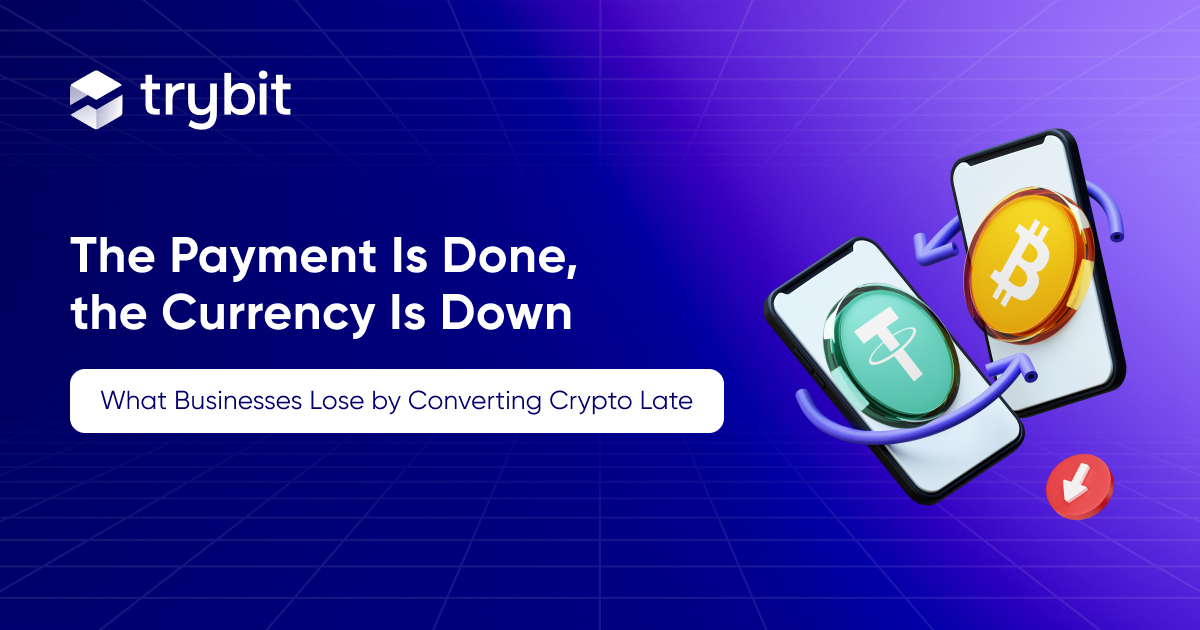
Trybit, a global crypto payment gateway, is drawing attention to the exchange-rate volatility that businesses face when dealing with crypto payments. When funds remain in a volatile asset following the completed transaction, their dollar value continues to fluctuate with the market.
Consider a $500 purchase paid in Bitcoin. If the price of BTC falls by 15% over the following days, the payment is worth just $425 by the time the business converts it. The customer paid $500, but the business is left with $75 less in dollar terms. This is not a processing error; the variance stems entirely from exchange rate movements between fund arrival and conversion.
According to Trybit’s observations, daily price swings of 2–5% are common, even for major assets such as Bitcoin and Ethereum, not to mention less liquid tokens. For businesses handling high-volume daily transactions, ranging from digital goods and subscriptions to gaming services and donations, these fluctuations can add up quickly. A 2–3% decline on a single payment may seem negligible, but it can significantly drag down revenue across hundreds or thousands of transactions each month. Yet, these losses rarely appear in financial reports as a distinct operational issue. They are typically written off as unavoidable market conditions rather than recognized as a risk that could have been mitigated.
As businesses increasingly turn to cryptocurrency and stablecoins for managing payment flows, this distinction becomes more crucial. According to a June 2025 EY-Parthenon survey of 350 corporate and financial-institution executives, 13% of companies already use stablecoins for payments and settlements, while 54% of non-users plan to adopt them within the next 6–12 months. Crypto payments remain exposed to volatility risks. The real key lies in how swiftly incoming payments are swapped for stablecoins.
Consequently, this is a technical challenge rather than a management one: crypto payments should be converted into a stable asset at the point of receipt, rather than left for the business to process later. Trybit addresses this through automatic conversion. Businesses can set a conversion rule for each incoming currency, after which every payment is automatically converted into a selected stablecoin at the rate applicable when the transaction is confirmed on the network. This frees businesses from having to convert funds manually and shortens the timeframe where incoming funds are vulnerable to market swings.
Automatic conversion is part of a broader set of tools Trybit provides for businesses operating at scale rather than accepting crypto on an occasional basis. The gateway also supports bulk payouts via API, scheduled withdrawals, static wallets for user balance top-ups, White Label solutions, and customized terms and rates for businesses with growing transaction volumes. Trybit has been operating for more than 5 years and has maintained 99.9% payment gateway uptime over the past 12 months.
“Volatility isn't an abstract crypto risk — it's real dollars a business never sees because conversion came too late. We take that decision out of the merchant's hands: the payment becomes a stable amount the moment it arrives, not whenever someone gets around to it,” said the CEO of Trybit.
Trybit is a global crypto payment gateway that ensures online businesses accept and process payments in popular cryptocurrencies and stablecoins: Bitcoin, Ethereum, USDT, and others. It solves the challenges businesses face when operating in the global market: accepting crypto payments worldwide without banking barriers, lower acquiring costs, higher conversion through convenient checkout, and protection from chargebacks.
For more information:
Contacts
Trybit Team
trybit.com/support