Fundstrat's Tom Lee has argued that Ethereum will not be cannibalized by its own Layer 2 networks and is instead positioned to become the most widely used settlement layer for finance and AI
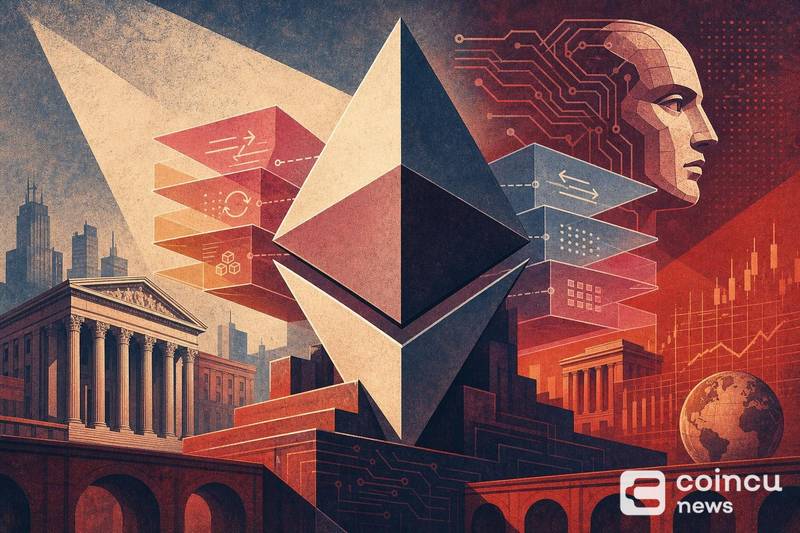
Fundstrat's Tom Lee has argued that Ethereum will not be cannibalized by its own Layer 2 networks and is instead positioned to become the most widely used settlement layer for finance and AI agents, a thesis that reframes L2 growth as a support for Ethereum rather than a threat to it.
The core of the argument, attributed to Lee through Fundstrat's public commentary on X, is a distinction between where users transact and where value ultimately settles. Being "cannibalized by L2" would mean that activity migrating to faster, cheaper Layer 2 rollups drains Ethereum's base layer of relevance. Lee's position is the opposite: that Ethereum's role sits beneath those rollups, not in competition with them. For related coverage, see Ethereum Foundation Says AI Found Node Risks: What Verification Operators Need to Know.
Why Settlement and User Activity Are Not the Same Thing
The distinction matters because a network can lose visible, user-facing activity while gaining importance as the layer where transactions are finalized and secured. Layer 2 rollups execute transactions off-chain, but they anchor their data and security back to Ethereum. Under that structure, more L2 usage can translate into more demand for Ethereum settlement rather than less. For related coverage, see Here’s When You Should Be Ready to Buy Crypto, Says Arthur Hayes, as This Altcoin Rises 12,000%.
This is the mechanism Lee's thesis leans on: security, finality, and data anchoring flowing back to the base layer. It is a conceptual argument about value capture, and it should be read as a forecast about Ethereum's structural role, not as a confirmed measurement of current network economics. For related coverage, see Trader Says Long-Term Bitcoin Holder Losses Exceed FTX Era.
Where Finance and AI Agents Enter the Picture
Lee extends the thesis into two adoption domains. On the finance side, the pitch is that institutions and automated financial rails would favor a neutral, programmable base to settle on, where programmable settlement matters more than any consumer-facing brand. Lee has separately framed crypto as the only viable way to tokenize assets in an AI-driven world, a view that dovetails with the settlement-layer argument.
The AI agent case is distinct. Autonomous agents transacting with one another would need a shared, composable venue to move value without a trusted intermediary, and Ethereum's neutrality is the property Lee points to. Both use cases are forward-looking. They describe expected demand, not confirmed usage today.
Lee's constructive stance on Ethereum is not new. He has said his firm's ETH accumulation pace has held steady even amid large stock buybacks, and reporting has tied his outlook to an aggressive long-term price scenario, with CoinDesk noting his call for ETH reaching $250,000 as corporate validators take on network control.
What the Current Evidence Does and Does Not Confirm
Readers should weigh this thesis against a thin evidence base. The available research on this specific claim is partial, with no verified network statistics, no measurable adoption data, and no direct quote context isolating Lee's exact wording on the L2 point.
What is supported is the attribution of the settlement-layer thesis to Lee and its framing around finance and AI agents. What is missing is proof of the mechanism at scale: the numbers on L2 settlement demand, validator behavior, and institutional usage that would validate or undercut the argument. Those are the metrics worth tracking as the thesis is tested.
FAQ
Do Layer 2 networks reduce Ethereum's importance? Under Lee's argument, no. Because rollups settle back to Ethereum for security and finality, more L2 activity can increase demand for the base layer rather than hollow it out.
Why would finance and AI agents use a settlement layer at all? The case is that both need a neutral, programmable venue to finalize transactions without a trusted intermediary, where composability outweighs consumer branding.
What should readers watch to judge the thesis? Concrete data on L2 settlement demand, validator control, and institutional adoption, none of which is confirmed in the current evidence set.
Additional source references: source document 1.
Disclaimer: This article is for informational purposes only and does not constitute financial or investment advice. Cryptocurrency and digital asset markets carry significant risk. Always do your own research before making decisions.
The post Tom Lee Says Ethereum Won't Be Cannibalized by L2s as Finance, AI Settlement Layer was initially published on Coincu.