Why Stable, Monad, and Base Crypto Are Leading Top Blockchain by TVL The latest Top Blockchain by TVL rankings reveal how different blockchain networks have performed based on their 30-day To
Why Stable, Monad, and Base Crypto Are Leading Top Blockchain by TVL
The latest Top Blockchain by TVL rankings reveal how different blockchain networks have performed based on their 30-day Total Value Locked (TVL) growth. Simply the total amount of crypto assets sitting inside a blockchain's DeFi protocols, lending markets, and liquidity pools. When it jumps sharply over a short window like 30 days, it usually points to something specific happening on that chain, a new integration, a product launch, or a wave of fresh capital moving in.
Top Chains Ranked by 30-Day TVL Growth
Chain
30D TVL Growth
What It Is
Stable
+185%
Tether-backed Layer 1 built for stablecoin payments
Monad
+78.77%
High-speed, EVM-compatible Layer 1
Gnosis
+44.72%
Payments-focused Ethereum sidechain
Mezo
+27.69%
Bitcoin-native DeFi and lending layer
Base
+9.04%
Coinbase's Ethereum Layer 2
Ethereum
+7.21%
The largest smart contract platform
Vaulta
+5.93%
Formerly EOS, now focused on Web3 banking
Optimism
+5.83%
Ethereum Layer 2, OP Mainnet
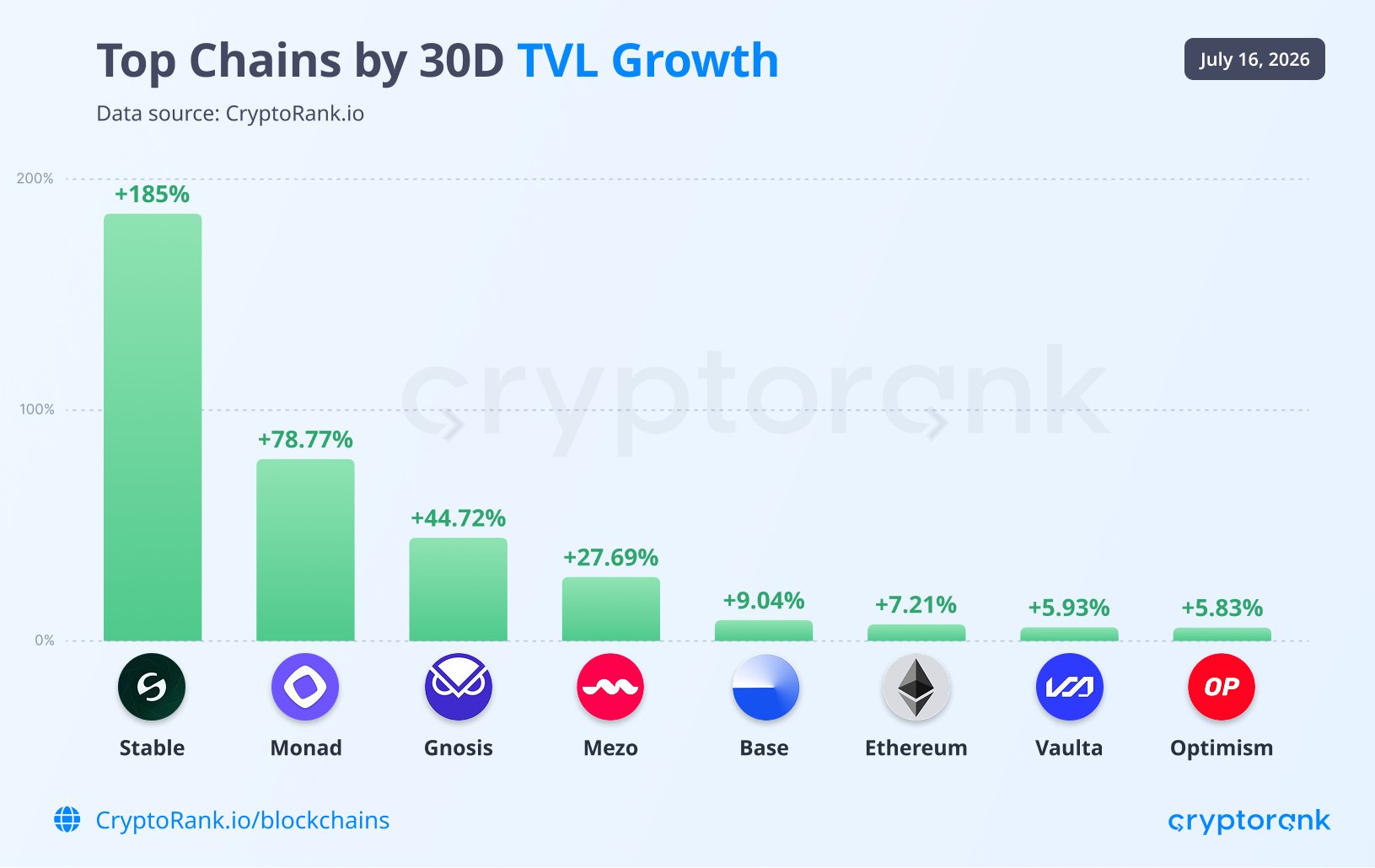
Source: Official CryptoRank chart
Worth noticing here: the chains growing fastest in percentage terms are almost all smaller, newer networks. That's normal in crypto. A chain with a small starting TVL only needs a modest amount of fresh capital to post a huge percentage jump, while a giant like Ethereum needs billions of dollars just to move its growth rate by a few points.
Stable
Stable is a Layer 1 blockchain built specifically around stablecoin payments, with USDT used directly as the native gas token instead of a separate volatile coin.
It's backed by Tether, the company behind USDT, giving it direct institutional credibility in the stablecoin space.
The mainnet went live on December 8, 2025, making it one of the newest chains on this entire list.
CoinEx was the first Tier 1 exchange to list the STABLE token, doing so on launch day itself.
STABLE's market cap sits around $838 million, even though the chain's actual TVL is still fairly small, which is part of why a modest amount of new deposits can produce such a large percentage jump.
Why it's on top: At +185%, Stable's growth is more than double the next chain on this list. That gap only makes sense on a chain this new and this small, where a base of just a few million dollars in TVL means even one large stablecoin deposit can nearly triple the total in a month.
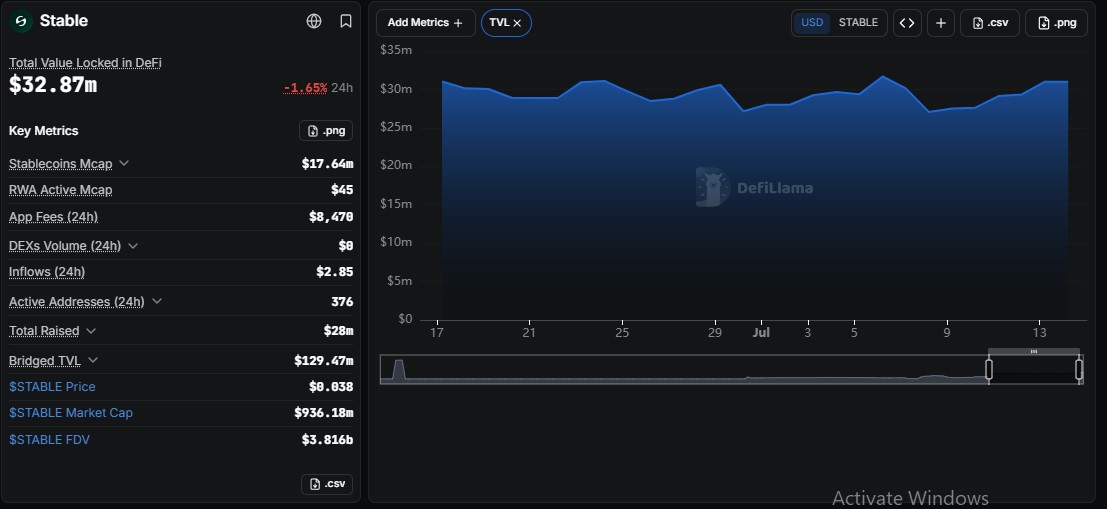
Source: defillama data
Monad
Monad is a Layer 1 blockchain built to be fully compatible with Ethereum's tools and smart contracts while aiming for much faster transaction speeds through parallel processing.
Its mainnet went live in late November 2025, so it's also a fairly new network.
Market cap sits around $266 million, with a circulating supply of roughly 11.8 billion MON tokens out of a 100 billion total supply.
Recent official activity includes MetaMask launching a yield-earning "Money Account" feature built on Monad and Aave deploying its lending markets directly on the chain with backing from the Monad Foundation.
Two major integrations landing around the same time likely explains a good chunk of this growth.
Why it's on top: Monad's +78.77% is less than half of Stable's number but still more than double the third-place chain. That scale fits a network with real, sizeable TVL already (over $450M) rather than a near-empty chain, meaning this growth reflects genuine new capital from MetaMask and Aave rather than just a thin base amplifying small deposits.
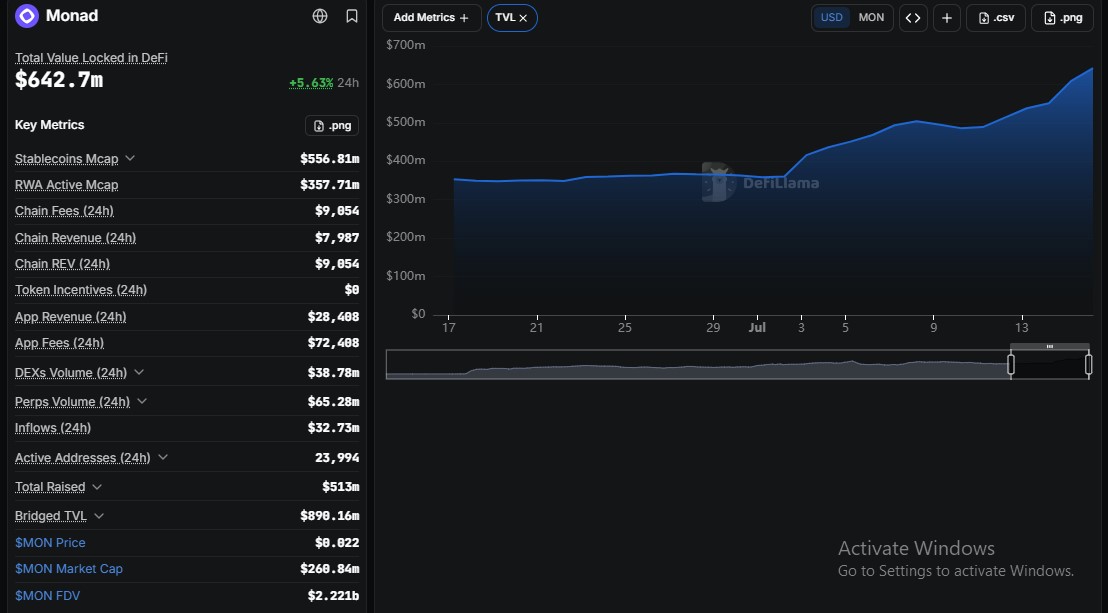
Source: defillama monad data
Gnosis
Gnosis Chain has actually existed since 2015, originally incubated as part of ConsenSys, and has long focused on making decentralized payments genuinely usable.
Its ecosystem includes Gnosis Pay, a card-linked payments product, along with Circles and Metri, both aimed at open-banking-style use cases.
The GNO token's market cap sits around $277 million.
Because Gnosis has been positioning itself around real payments infrastructure for years rather than speculative DeFi, this growth spike likely reflects renewed activity in that payments-focused niche.
Why it's on top: At +44.72%, Gnosis sits well behind Monad but comfortably ahead of Mezo in fourth place. That mid-pack number fits a chain that isn't brand new, it already has real TVL and an established user base, so this growth looks less like a low-base spike and more like a genuine pickup in payments activity.
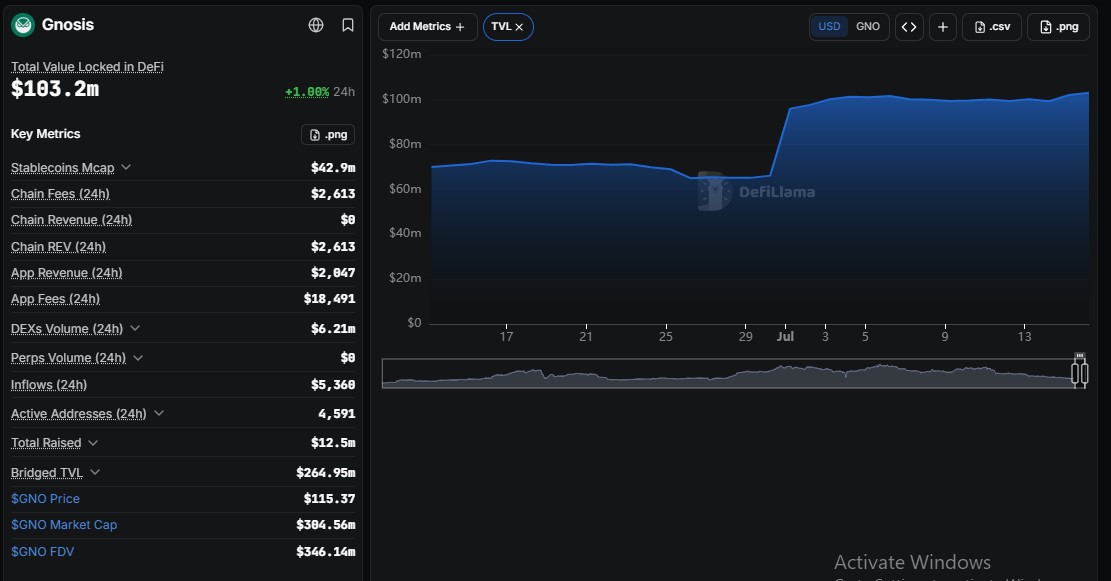
Source: defillama Gnosis data
Mezo
Mezo is a Bitcoin-native DeFi layer, built to let BTC holders borrow, lend, and earn yield without selling their Bitcoin or relying on wrapped tokens.
Users lock BTC to receive a position called veBTC, and yield comes from real activity inside the ecosystem, like bridging and swap fees, rather than pure token emissions.
The project is backed by well-known crypto investors, including Pantera Capital and Multicoin Capital.
MEZO, the native coordination token, launched publicly in January 2026 and is still early-stage, so its market cap isn't as widely established yet as the more mature chains on this list.
Given how new the ecosystem is, this kind of fast percentage growth is consistent with a small base attracting its first wave of real deposits.
Why it's on top: Mezo's +27.69% is roughly a third of Gnosis's growth but still nearly triple the next chain on the list. That drop-off after the top three suggests Mezo is past its earliest near-zero-base phase, but still small enough that steady early deposits into a new Bitcoin DeFi product can move the percentage meaningfully.
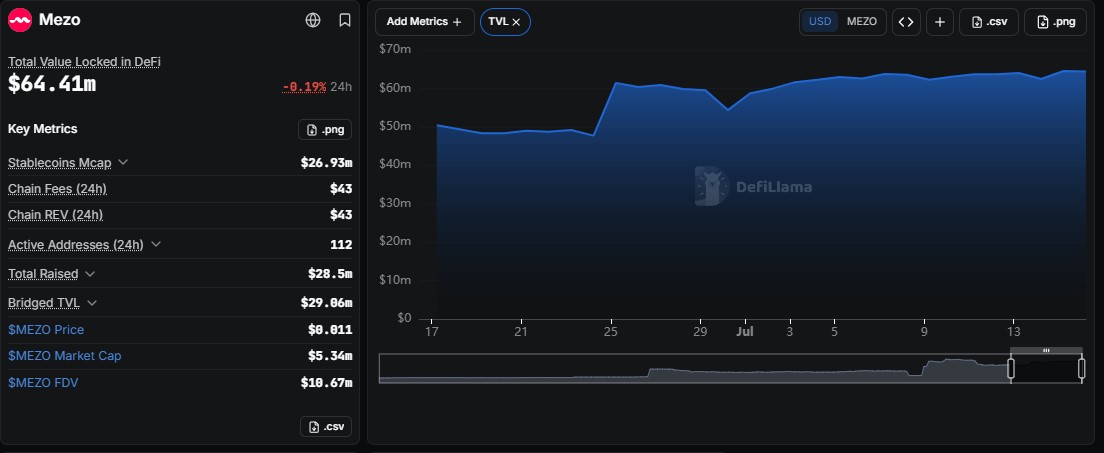
Source: defillama Mezo data
Base
Base is Coinbase's own Ethereum Layer 2 network, and unlike most chains on this list, it doesn't have a separate native token; it uses ETH for gas.
It has become one of the most active Ethereum scaling networks since launching in 2023, with billions of dollars in TVL today.
Base recently shifted toward running more of its own independent technology stack rather than depending entirely on Optimism's shared toolkit, giving it more control over its own upgrade pace.
A steady stream of new apps and stablecoin activity has kept deposits climbing on Base, and this growth suggests that trend hasn't slowed.
Why it's on top: There's a sharp drop from Mezo's +27.69% down to Base's +9.04%, which is where this list shifts from small, early-stage chains to large, mature ones. On a chain already holding well over $4 billion in TVL, a single-digit percentage still represents hundreds of millions of dollars in new deposits, a very different scale of growth than the smaller chains above it.
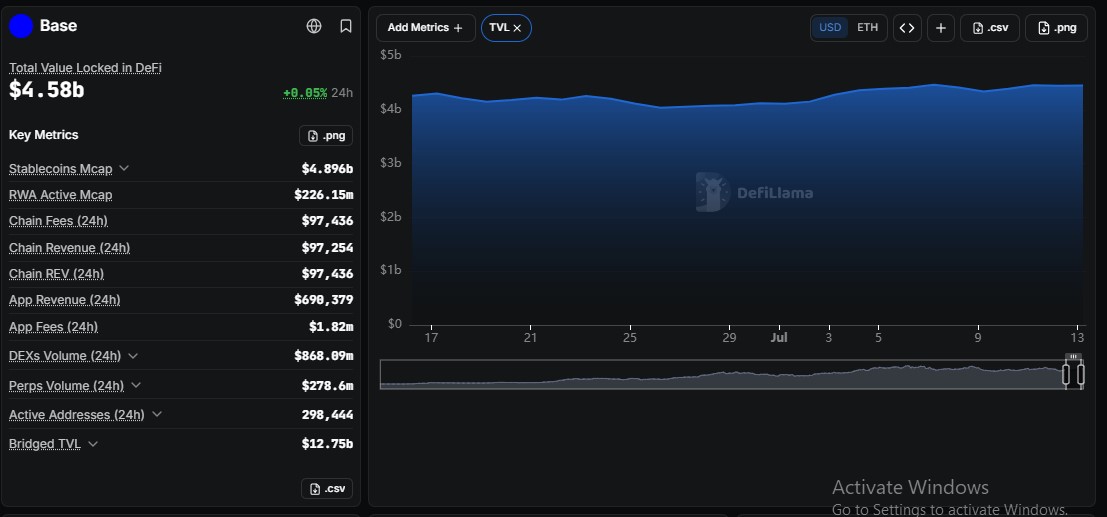
Source: defillama base data
Ethereum
Ethereum remains the largest smart contract platform by a wide margin, both by TVL and by market cap.
Its market cap sits around $230 billion, keeping it the second-largest cryptocurrency overall behind Bitcoin.
A steady flow of institutional products continues to anchor Ethereum's position, including tokenized funds from major asset managers that settle directly on its mainnet.
The network also has a series of technical upgrades in progress aimed at improving scalability and reducing centralization risk.
Even a 7.21% growth rate here represents a genuinely large amount of new capital, simply because of how much TVL Ethereum already holds.
Why it's on top: Ethereum's +7.21% is barely below Base's number, but it's applied to a TVL base nearly ten times larger, close to $40 billion. That's what makes this entry deceptive if you only look at the percentage: in raw dollars, Ethereum likely added more new capital this month than every other chain on this list combined.
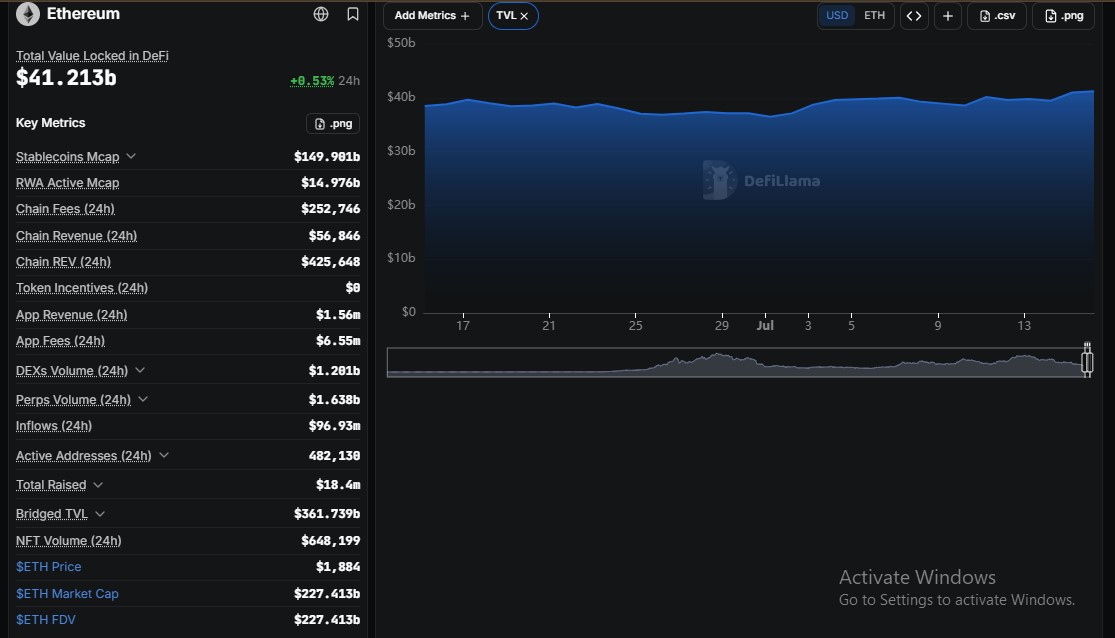
Source: defiLlama Ethereum data
Vaulta
Vaulta is the rebrand of EOS, one of the older Layer 1 blockchains, which shifted its entire focus toward Web3 banking starting in 2025.
The rebrand included a 1:1 token swap from EOS to Vaulta's new token, alongside a pivot toward wealth management, consumer payments, portfolio management, and insurance as its core focus areas.
Vaulta integrates with exSat, a Bitcoin-native virtual chain, letting BTC be used in yield and lending products without wrapped tokens or external bridges.
Total token supply is capped at $123.85 m, with a halving-style emission schedule roughly every four years.
As a rebranded, repositioned network still building out its Web3 banking pitch, this growth may reflect renewed attention following its strategic shift.
Why it's on top: Vaulta's +5.93% sits just above Optimism at the bottom of this list, both in the 5-6% range. That places it with the more established, larger-cap networks rather than the near-empty new chains at the top, meaning this growth reflects a real but modest pickup in activity rather than a low-base effect.
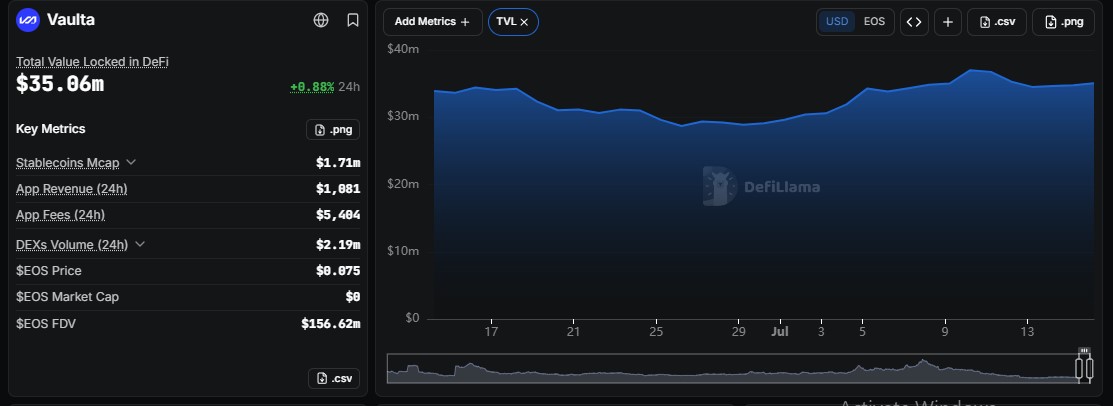
Source: defillama Vaulta data
Optimism
OP Mainnet is the original Ethereum Layer 2 built by the Optimism team, and its OP token is used for network governance.
Market cap sits around $229 million.
Optimism governance approved a plan where half of new revenue from its broader Superchain network of partner chains gets used to buy back OP tokens on an ongoing basis.
The ecosystem also saw a notable shift recently, with Base, its largest and most active partner chain, choosing to move toward its own independent technology stack.
Even with that change, OP Mainnet's own TVL has still posted positive 30-day growth, suggesting activity on the core chain itself remains steady.
Why it's on top: At +5.83%, Optimism posts the smallest number on this entire list, only a fraction of a point behind Vaulta. For an established Layer 2 with hundreds of millions in TVL already, that's a genuinely modest but still positive growth rate, consistent with a mature network holding steady rather than either shrinking or seeing a fresh capital wave.
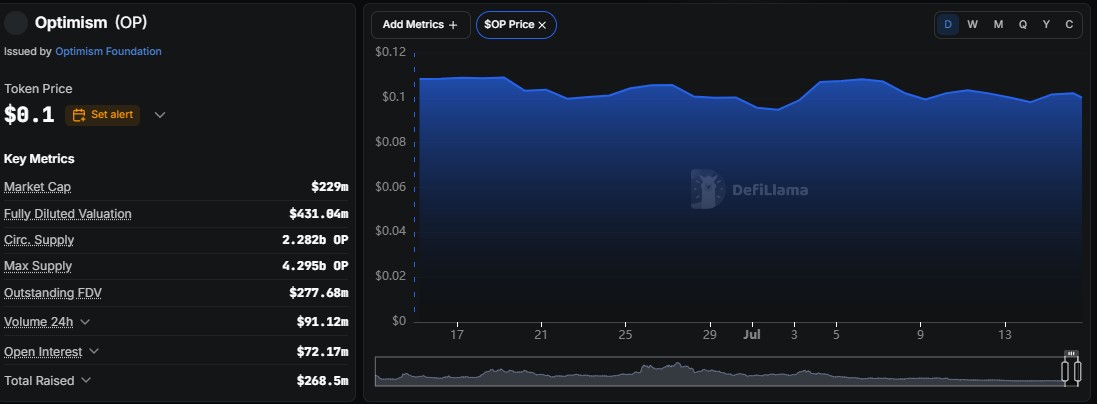
Source: defillama optimism data
Conclusion
Looking at this list side by side, the fastest-growing chains all have a common thread they're either brand new, recently repositioned, or serving a narrow, specific use case rather than trying to be everything at once. Stable and Monad are benefiting from being genuinely new networks picking up their first major integrations. Gnosis and Vaulta are both older projects seeing renewed activity tied to a payments or banking-focused pivot. Mezo is an early-stage Bitcoin DeFi project still finding its footing. Base, Ethereum, and Optimism round out the list with steadier, more modest growth that reflects their status as larger, more established networks.
None of this tells you which chain will perform best going forward, since TVL growth reflects what has already happened, not what comes next. But it's a genuinely useful, real-time signal of where capital and developer attention are concentrated right now, which is a different picture than simply looking at total market cap alone.
Disclaimer
This article is for educational and informational purposes only and should not be considered financial or investment advice. Cryptocurrency markets are volatile, and TVL figures can change quickly. Always do your own research using official sources before making any investment decisions.