Which Cryptocurrencies Are Worth Researching Before 2027? Bitcoin, Ethereum, Solana, XRP, Dogecoin, Pepe, Hyperliquid, Bittensor, NEAR Protocol, and Render Top Cryptocurrencies 2027 cover dif
Which Cryptocurrencies Are Worth Researching Before 2027?
Bitcoin, Ethereum, Solana, XRP, Dogecoin, Pepe, Hyperliquid, Bittensor, NEAR Protocol, and Render Top Cryptocurrencies 2027 cover different parts of the crypto market.
These include store of value, smart contracts, payments, meme coins, on-chain trading, and decentralized AI. Their risks differ by supply, liquidity, and adoption. The list isn't ranked by expected returns.
Why Are Readers Searching for These Coins Now?
"The Top Cryptocurrencies 2027" is a search term that keeps growing as readers look for direction in a slow crypto market. Prices sit below earlier highs, and many want to know which projects still have a clear story behind them. That curiosity makes sense. A coin's price alone says very little about its future.
Researching a coin isn't the same as recommending it. This article explains what each project says it does, what the supply data shows, and where the risks sit. Every price and supply figure comes from a market data platform snapshot dated November 26, 2026, and prices can change within minutes.
How Were These 10 Crypto Projects Selected?
The list is curated, not the ten largest coins by market cap. Stablecoins and several other large assets are left out on purpose. Each pick represents a different narrative: Bitcoin for store of value, Ethereum for smart contracts, Solana for speed, XRP for payments, Dogecoin and Pepe for meme demand, Hyperliquid for on-chain trading, Bittensor and NEAR for AI themes, and Render for GPU computing.
Each coin was checked on four points: market cap, circulating supply, daily trading volume, and the gap between market cap and FDV. Market cap is the price multiplied by circulating supply, which is the number of tokens already trading. Fully diluted valuation, or FDV, assumes every future token already exists. A wide gap between the two means many tokens are still waiting to enter the market, and that can add selling pressure later.
Top 10 Cryptocurrencies: Price, Market Cap, and Supply
Coin
Price
Market cap
FDV
Circulating supply
Main narrative
Bitcoin (BTC)
$60,799.89
$1.22T
$1.27T
20.11M
Store of value
Ethereum (ETH)
$1,699.97
$207.82B
$207.84B
122.25M
Smart contracts
Solana (SOL)
$71.02
$42.06B
$45.33B
592.18M
Fast blockchain
XRP
$0.9553
$60.67B
$95.58B
63.51B
Cross-border payments
Dogecoin (DOGE)
$0.05664
$8.88B
$8.88B
156.9B
Meme community
Pepe (PEPE)
$0.000003533
$1.46B
$1.46B
413.77T
Meme speculation
Hyperliquid (HYPE)
$61.44
$15.48B
$58.43B
251.99M
On-chain trading
Bittensor (TAO)
$183.09
$2.14B
$3.85B
11.73M
Decentralized AI
NEAR Protocol (NEAR)
$3.06
$4.02B
$4.02B
1.31B
AI agents, chain abstraction
Render (RENDER)
$1.30
$727.83M
$840.87M
556.87M
GPU computing
All ten coins were up in the 24 hours shown, from 1.94% for Pepe to 6.87% for NEAR. One day of data says little about direction, and the same moves can reverse quickly.
Top 10 Cryptocurrencies to Buy Before 2027: Coin by Coin
1. Bitcoin (BTC)
Bitcoin trades near $60,877.42 with a market cap of $1.22T. Around 20.11M of the 21M coins already exist, and that fixed cap is the basis of its scarcity argument. The main growth story is institutional adoption and its role as a store of value, meaning an asset held to keep wealth over time. Daily volume of $40.3B shows deep trading.
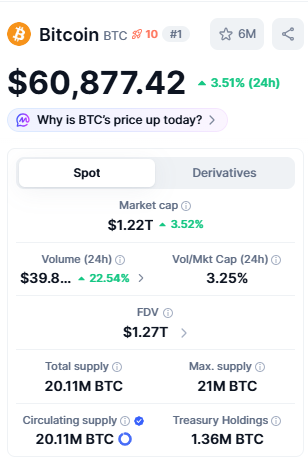
Source: Coinmarket cap, 26 November 2026, 03:15 UTC.
The data platform also lists 1.36M BTC under treasury holdings. Definitions vary, since company-only counts and wider institutional counts give different totals. Readers should confirm the scope before relying on that number.
2. Ethereum (ETH)
Ethereum trades near $1,702.44 with a market cap of $208.13B. Supply stands at 122.25M ETH, with no fixed cap. Its growth story covers DeFi, tokenization, and smart contracts, which are programs that run automatically on a blockchain. Tokenization means putting real assets like bonds or funds on a blockchain.
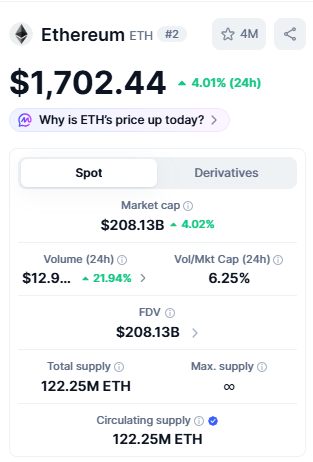
Network use and token value aren't the same thing. A busy network can still leave the token price flat if demand for ETH doesn't rise with it. Daily volume of $13.2B shows active trading even with the price well off earlier peaks.
3. Solana (SOL)
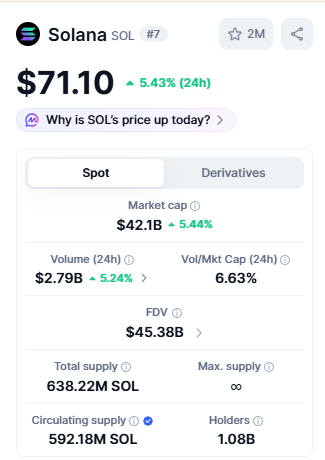
Solana trades near $71.10 with a market cap of $42.1B. Circulating supply is 592.18M out of 638.22M SOL, so most tokens are already out. The pitch is a fast network with low fees and a growing app ecosystem. Speed helps. But it doesn't guarantee users, and apps must keep choosing the chain over rivals such as Ethereum.
4. XRP
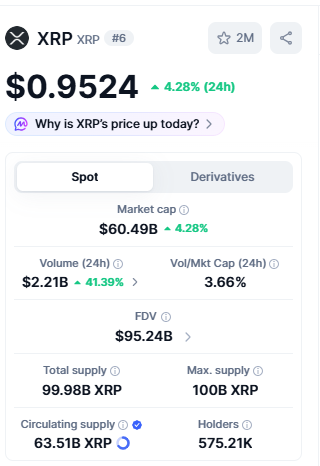
XRP trades near $0.9524 with a market cap of $60.49B and an FDV of $95.58B. Circulating supply is 63.51B out of a 100B maximum. The main story is cross-border payments, where the coin is meant to move value between countries quickly. Since about 36B tokens remain outside circulation, supply releases deserve attention. So does the amount of real payment volume the network handles.
5. Dogecoin (DOGE)
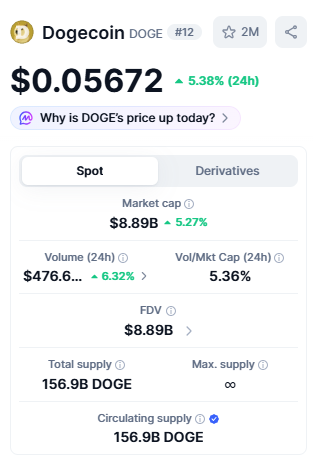
Dogecoin trades near $0.05672 with a market cap of $8.89B. Supply is 156.9B DOGE, with no maximum, which means new coins can keep entering. The list gives it no technical growth story. Demand mostly follows community attention and market mood, and both can fade as fast as they arrive.
6. Pepe (PEPE)
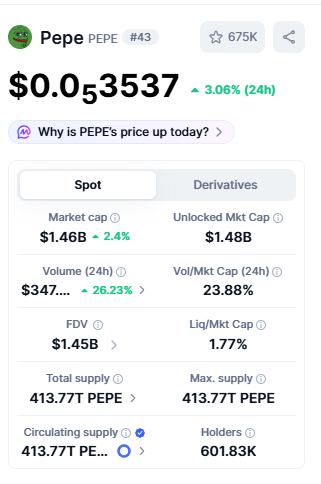
Pepe trades near $0.053537 with a market cap of $1.46B. All 413.77T tokens are in circulation, so no future unlock is waiting. As a meme coin, price depends heavily on sentiment. The platform lists liquidity at 1.77% of market cap, meaning trading depth is small compared with the coin's value, so larger orders can move the price more than expected. The exact contract and official project identity should be verified before any interaction.
7. Hyperliquid (HYPE)
Hyperliquid trades near $61.49 with a market cap of $15.49B. FDV, however, is $58.43B, almost four times higher. Only 251.99M of 949.32M HYPE circulate. The focus is on-chain trading and decentralized derivatives, which are contracts that track an asset's price without owning it. The release schedule for the remaining tokens is the key point to check in the official documentation.
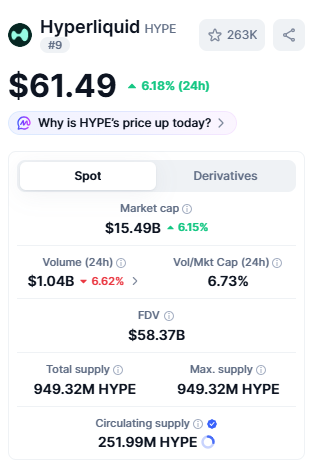
Source: Coinmarketcap Data, 26 November 2026, 03:15 UTC.
8. Bittensor (TAO)
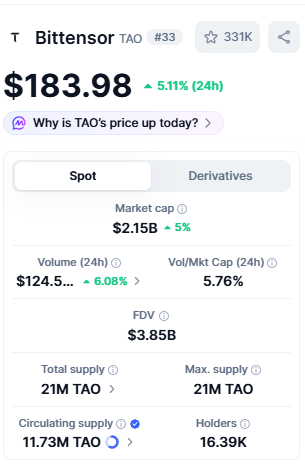
Bittensor trades near $183.98 with a market cap of $2.15B and an FDV of $3.85B. Supply tops out at 21M TAO, with 11.73M circulating. The theme is decentralized AI, where networks reward contributors for machine learning work through separate task groups called subnets. It's a fresh idea. And fresh ideas often need years to prove real demand.
9. NEAR Protocol (NEAR)
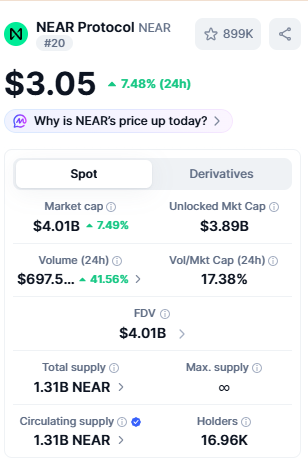
NEAR Protocol trades near $3.05 with a market cap of $4.01B. Supply is 1.31B NEAR, with no maximum. Its focus is AI agents and chain abstraction, which hides the complexity of moving between blockchains from users. The idea is that people shouldn't need to know which chain an app runs on. Adoption will decide whether that vision holds up.
10. Render (RENDER)
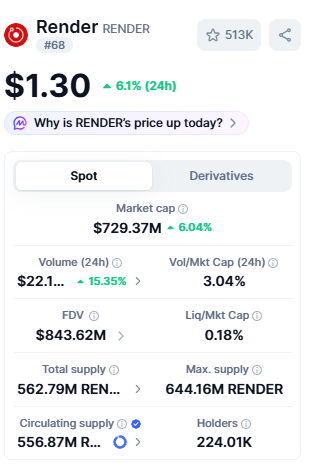
Render trades near $1.30 with a market cap of $729.37M and an FDV of $840.87M. Circulating supply is 556.87M out of a 644.16M maximum. The story is decentralized GPU computing, where owners rent graphics power for rendering and AI work. Real demand from paying customers matters more than the wider AI trend, and it's the smallest coin on the list by market cap.
Which Coins Carry the Most Supply Pressure?
Coin
Circulating
Total or max supply
Share circulating
Hyperliquid
251.99M
949.32M
About 26.5%
Bittensor
11.73M
21M
About 56%
XRP
63.51B
100B
About 64%
Render
556.87M
644.16M
About 86%
Solana
592.18M
638.22M
About 93%
Hyperliquid stands out, Only about a quarter of its supply circulates, so token unlocks could matter far more there than for Solana. Unlock dates and amounts weren't part of the supplied data, so the official tokenomics pages should be checked for current schedules.
Tokens still locked or unreleased don't disappear. They tend to reach the market eventually, and that can weigh on price if demand doesn't grow alongside them.
What Are the Main Cryptocurrency Investment Risks?
Price swings come first. A coin that gains 5% in a day can lose as much just as fast, and that's normal for crypto even if it surprises first-time buyers. Smaller coins such as Render and Pepe tend to move harder on modest orders because trading depth is thin.
Rules are another risk. Regulation differs by country, and a change can reach any coin quickly. Readers should check local rules on trading, taxes, and which exchanges are allowed where they live.
Concentration and unproven demand complete the picture. When a few holders own large shares, one sale can move the price. And growth stories are still claims. Decentralized AI and GPU sharing are early themes, and adoption can lag valuations for years.
How Can Readers Check a Coin Before Researching It?
Anyone researching the Top Cryptocurrencies 2027 should start with the supply page. Total supply, circulating supply, and any unlock schedule show how much new selling pressure may arrive. Then comes liquidity. Pepe's 24-hour volume equals 23.86% of its market cap, which makes it easy to trade but also points to heavy speculation.
Next, read the official documents linked above. Whitepapers and project docs explain how the token works and who holds it, though they only show what a project says about itself. Adoption, fees earned, and active developers need separate checks on block explorers and live market data.
And crypto portfolio diversification, meaning spreading money across several assets, lowers the damage if one coin fails. Risk never vanishes, but position size can keep one bad call from hurting everything.
What Does the Data Say About the Top 10 Cryptocurrencies to Buy Before 2027?
The stronger signal is scale. Bitcoin's $40.3B in daily volume and $1.22T market cap place it far ahead of the group, and Ethereum follows with a $207.82B market cap, though its price sits well below earlier peaks. These two have the deepest markets and the clearest purposes.
The AI coins are small by comparison. Bittensor's $2.14B and Render's $727.83M market caps are tiny next to Ethereum's, so each could move sharply on small shifts in demand. So what happens if the AI narrative cools?
The biggest unknown is real usage. Fees earned, active developers, and payment volume matter more than price charts. Pepe and Dogecoin sit apart from the rest, since neither lists a technical growth story and price mostly tracks mood. That places both in a higher risk tier.
Final Thoughts
The Top Cryptocurrencies 2027 cover very different ideas, from Bitcoin's store of value role to AI networks and meme coins. Some have deep markets and clear purposes.
Others rely on stories that haven't been tested. Supply schedules, liquidity, and real usage deserve the closest check, because prices alone say little. What happens next in Top Cryptocurrencies 2027 is uncertain, and readers should verify every figure on official sources before making any decision.
Disclaimer
This article is for informational purposes only and isn't financial advice. Crypto assets are volatile, and losses can be total. Readers should research independently and consult a licensed adviser before investing.