The Trump administration is preparing to announce a crackdown on overseas crypto scam networks that have been targeting Americans. The move signals a sharper enforcement posture toward the tr
The Trump administration is preparing to announce a crackdown on overseas crypto scam networks that have been targeting Americans. The move signals a sharper enforcement posture toward the transnational fraud operations that have drained billions from U.S. victims in recent years.
What the Trump Administration Is Targeting
The reported action focuses specifically on foreign-operated networks running crypto scams against American victims, according to CoinGape. That distinction matters: overseas operations present a fundamentally different enforcement challenge than domestic fraud, requiring cross-border coordination, foreign government cooperation, and often diplomatic pressure to disrupt. For related coverage, see Jay Clayton Super Intelligence Force: Trump’s Pick.
Crypto scam losses have become one of the fastest-growing categories of financial crime reported to U.S. authorities. The FBI’s Internet Crime Complaint Center published its 2025 annual report tracking complaint data that has consistently shown crypto fraud among the highest-loss categories for American consumers.
The administration has already signaled a broader interest in aligning crypto policy with national security priorities. Earlier this year, Trump met with SEC, CFTC, and crypto executives at the White House, a meeting that touched on regulatory direction for the entire digital asset sector.
How Crypto Scam Networks Operate Across Borders
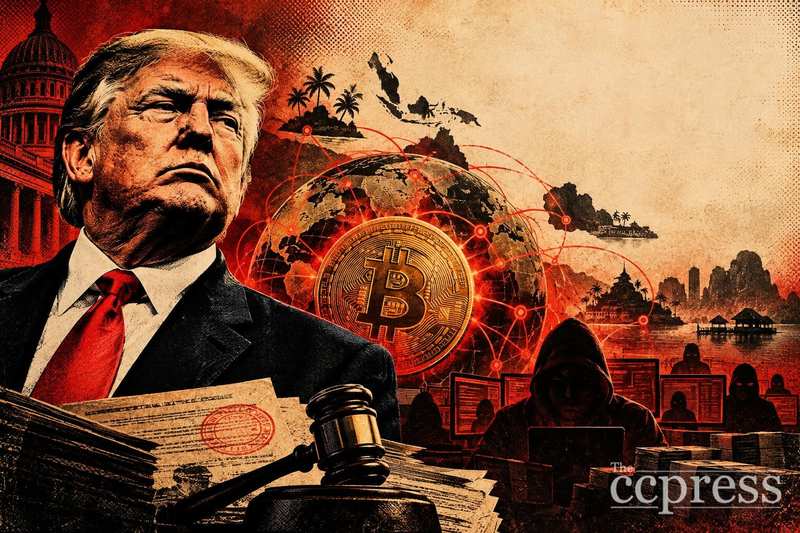
The most damaging overseas crypto scam operations typically fall into a category known as “pig butchering,” where fraudsters build trust with victims over weeks or months before convincing them to invest in fake crypto platforms. These schemes are often run from compound operations in Southeast Asia, staffed partly by trafficked workers.
Cross-border enforcement against these networks is slow by design. Scam operators deliberately structure their infrastructure, banking, and communications across multiple jurisdictions to fragment legal accountability. Tracing crypto proceeds once they pass through mixers or foreign exchanges adds another layer of difficulty for U.S. investigators.
The U.S. has pursued some foreign crypto asset seizures. A separate action under review involves the U.S. considering seizure of over $1 billion in Iran-linked crypto assets, illustrating the scale at which the government is now prepared to operate in the cross-border crypto enforcement space.
Jurisdiction is the core problem. A scam network headquartered in a country with no extradition treaty and limited regulatory infrastructure can operate with near-impunity against American victims. Any administration-level crackdown would need to address that structural gap, either through sanctions, international pressure, or targeting the financial rails that let stolen funds flow back out.
What the Action Could Mean for Crypto Enforcement
An administration-level announcement carries weight that individual agency actions do not. If the White House formally designates overseas crypto scam networks as a priority target, it can coordinate resources across the DOJ, Treasury, State Department, and intelligence community in ways that no single agency can manage alone.
For the broader crypto industry, tighter enforcement against scam networks is generally viewed as a net positive. Fraud erodes public trust in digital assets and provides regulators with politically convenient ammunition for heavy-handed oversight. Separating legitimate crypto activity from criminal misuse of crypto infrastructure has been a long-standing industry ask.
The regulatory picture is already shifting. The CFTC has proposed new crypto rules that could affect how exchanges handle suspicious transactions, and any expanded enforcement mandate from the White House would likely intersect with those compliance frameworks.
Trump’s broader legislative push adds further context. His backing of a crypto bill that includes stablecoin provisions suggests the administration wants to build a regulated U.S. crypto sector, not dismantle it. Targeting overseas scam networks fits that framing: going after foreign bad actors while leaving legitimate domestic industry room to operate.
What remains uncertain is the enforcement mechanism. A formal executive order, a Treasury sanctions designation, a joint DOJ-State Department task force, or a diplomatic initiative would each carry different reach and timelines. The specific agencies, countries, and legal tools involved will determine whether this becomes a landmark enforcement shift or a headline without lasting operational impact.
Will foreign governments cooperate, or will the crackdown stall at the border the moment extradition becomes the question?
Disclaimer: This article is for informational purposes only and does not constitute financial or investment advice. Cryptocurrency and digital asset markets carry significant risk. Always do your own research before making decisions.
The article Trump Administration Targets Overseas Crypto Scam Networks first featured on theccpress.com.