The United States of America and China are the world's leading superpowers, and both trade goods and services worth billions of dollars each year. Yet they rarely see eye to eye. Both economi
The United States of America and China are the world's leading superpowers, and both trade goods and services worth billions of dollars each year.
Yet they rarely see eye to eye.
Both economies have engaged in a brutal trade war involving tariffs for years now, and other countries like Canada and India have also gotten caught in the crossfire.
Related: U.S. makes shocking move to counter China’s de-dollarization push
But an unlikely subject has given the U.S. and China some common ground despite having sharply divergent viewpoints and approaches.
More on TheStreet Roundtable:
Diametrically opposed approach to crypto regulation
The crypto market has polarized the world since its beginning in the late 2000s.
The launch of Bitcoin (BTC) gave hope that the cross-border movement of money could become truly independent of the control of countries.
But governments across the world intervened as crypto was getting huge and untameable.
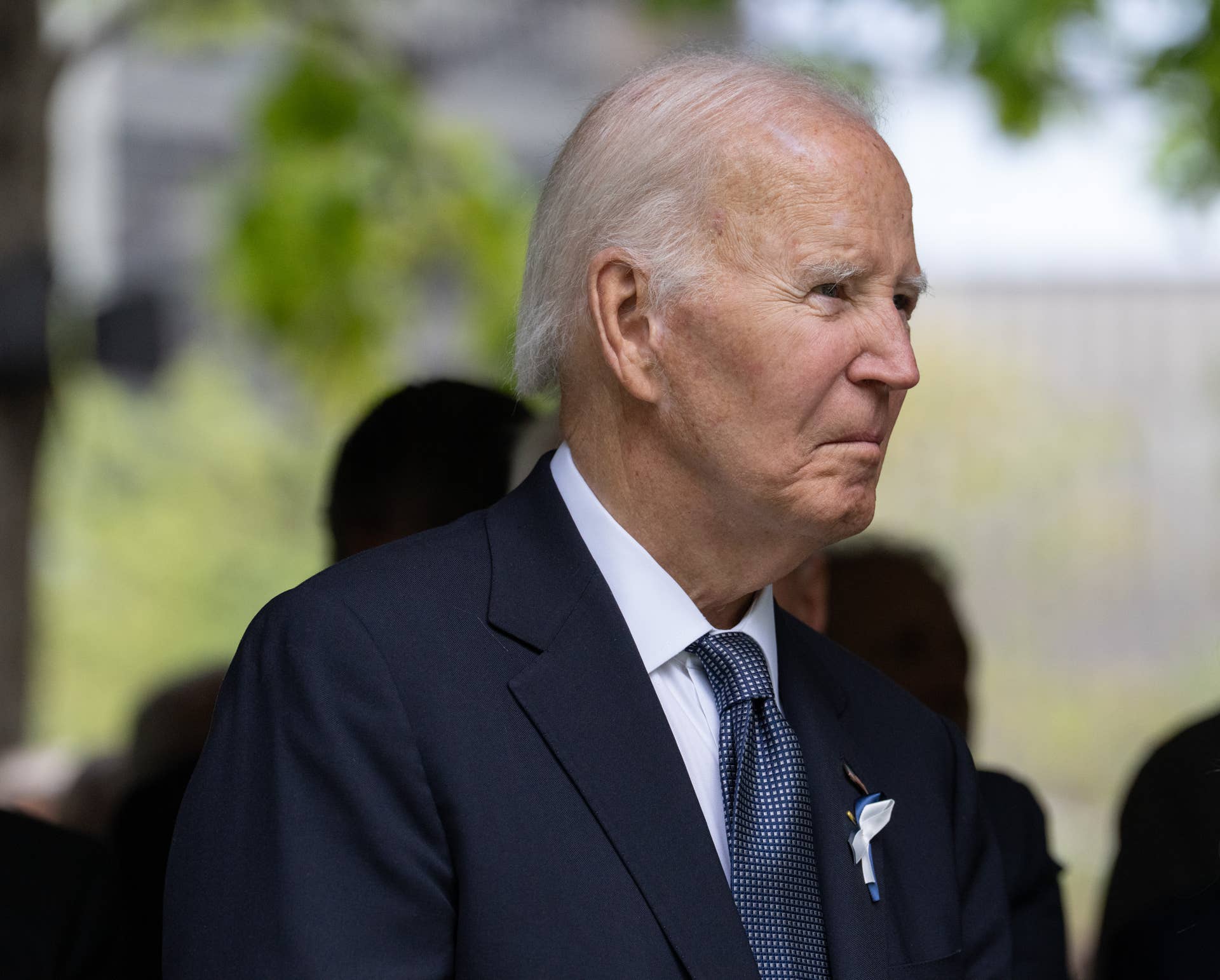
Former U.S. President Joe Biden attends a ceremony to commemorate the 25th anniversary of the September 11th terrorist attacks on the World Trade Center at the National 9/11 Memorial & Museum on September 11, 2026, in New York City.
Getty Images
Under the Joe Biden administration, the U.S. took an extremely cautious approach to cryptocurrencies.
The country's chief securities regulator, the Securities and Exchange Commission (SEC), went after top crypto companies like Binance, Coinbase Global, and Ripple for allegedly selling unregistered crypto securities.
The companies protested the move, arguing that cryptocurrencies aren't securities. The industry accused the Biden administration of pursuing a "regulation by enforcement" approach toward cryptocurrencies.
The tussle went on for years until Donald Trump returned to the White House in January last year. His administration took a pro-crypto approach as the SEC droppedlawsuits against most companies.
HIVE chairman Frank Holmes says U.S. Bitcoin reserve could trigger ‘exponential’ shift (1:17)
The Trump administration has taken measures like signing the Guiding and Establishing National Innovation for U.S. Stablecoins Act into law and promising a strategic crypto reserve just like gold at Fort Knox.
The president is also behind several crypto ventures, drawing sharp criticism for alleged conflicts of interest.
China has seen no change of power for years. Xi Jinping has remained the country's president since 2012.
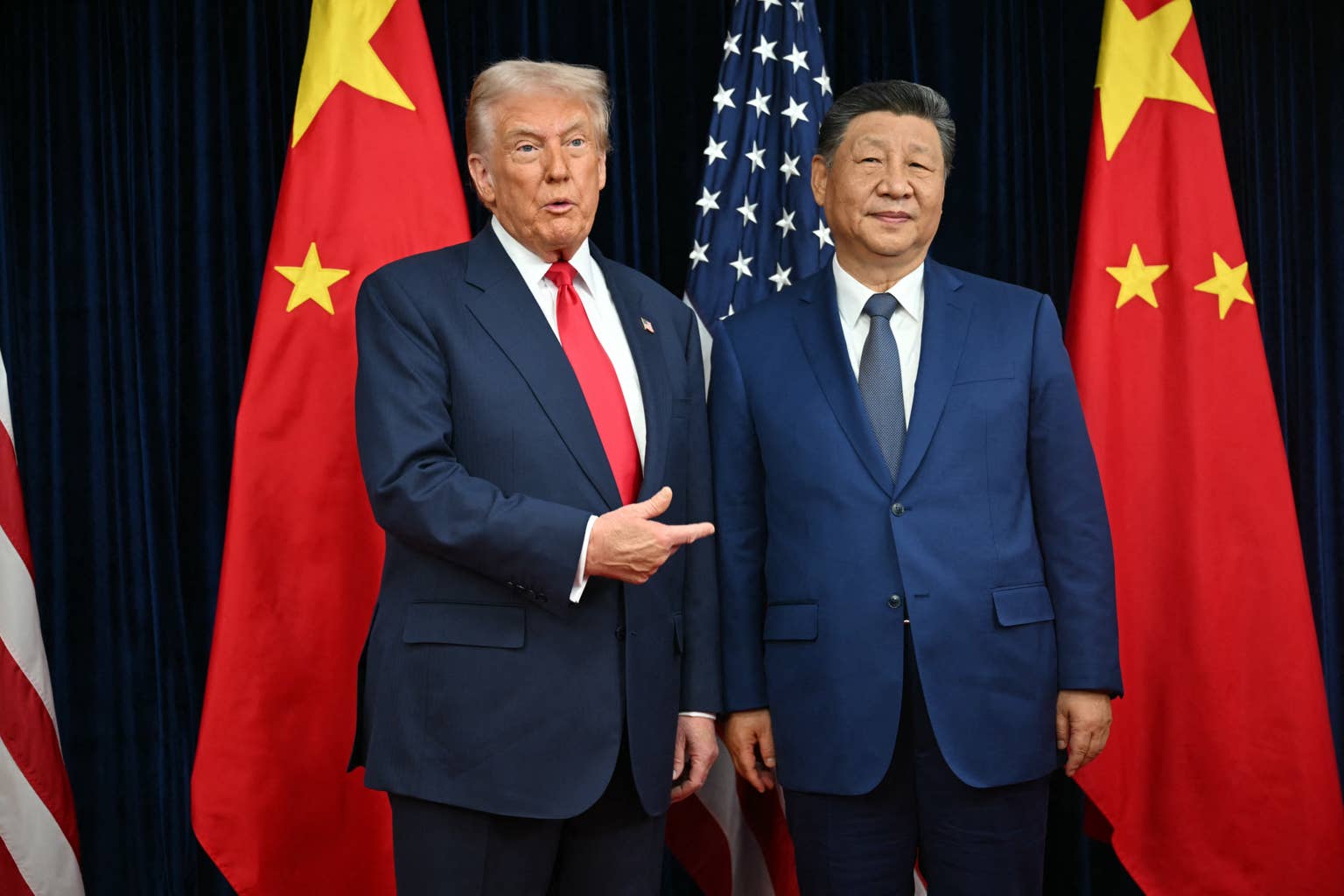
US President Donald Trump (L) and China's President Xi Jinping greet each other as they arrive for talks at the Gimhae Air Base, located next to the Gimhae International Airport in Busan on October 30, 2025.
In September 2017, China banned initial coin offerings (ICOs) — the crypto industry's version of initial public offerings (IPOs).
The way a publicly listed company raises money by selling its shares to investors, a crypto project raises money by selling its tokens to investors.
But there is an important distinction: a crypto project is not a publicly listed company.
Even the U.S. administration earlier took an approach similar to China. While the U.S. government filed lawsuits, China just banned ICOs for allowing "unauthorized and illegal public fundraising." The Asian country also banned crypto exchanges facilitating these ICOs the same year.
China didn't stop there and banned Bitcoin mining — the method of creating new BTC coins over a global network — and crypto trading in September 2021. The move effectively banned all crypto-related activity in the country.
However, China has been working toward launching a central bank digital currency (CBDC) for some years now. A CBDC is a state-controlled digital fiat currency developed by a country's central bank.
In simple words, China wants to issue the yuan on a blockchain. This way, its national currency goes digital on a blockchain, and the country can trace its movement on the chain.
The U.S opted for a different route. Under Trump's leadership, the House of Representatives passed the CBDC Anti-Surveillance State Act to block the Federal Reserve from issuing or testing a CBDC without explicit congressional approval in July last year.
The Republicans signaled the move as their opposition to state surveillance. The bill is still pending and is yet to become a law.
More on U.S.-China:
Common ground on crypto crackdown
The two countries share a similar concern: political advisories, whether state or non-state actors, using crypto to raise funds or to fulfil other purposes.
In comparison to traditional financial rails, the crypto network offers more anonymity, and it's often difficult to trace transactions. But it hasn't stopped authorities in either country from cracking down on adversarial crypto networks.
For instance, the U.S. authorities have repeatedly frozen crypto platforms used by Iran's Islamic Revolutionary Guard Corps and Palestine's Hamas. In fact, Treasury Secretary Scott Bessent boasted in April this year that the U.S. has seized approximately $500 million in Iranian crypto assets.
Related: U.S. Treasury attacks Iran's Hormuz 'extortion' network
Now, China's top intelligence and security agency has issued a warning to its citizens. Overseas intelligence agencies might claim crypto is hard to trace while recruiting them as spies. But the agency says anonymity of crypto transactions is a “false proposition” and an “illusion.”
The South China Morning Post reported last week that the Ministry of State Security (MSS) said cryptocurrencies facilitated money laundering activities and cyberattacks. It also claimed that “overseas anti-China hostile forces” used crypto to disrupt financial order and harm national security.
Cryptocurrencies also served as “accomplices” in espionage. But real identities of crypto users are hard to hide because fiat-to-crypto conversions and interactions with other payment interfaces can be traced on a blockchain, the MSS warned.
Related: Fed finds a silver lining as China sells U.S. Treasuries