The U.S. Treasury has withdrawn a proposed set of rules that would have required certain crypto services, including digital wallets and mixing tools, to report transaction data to federal reg
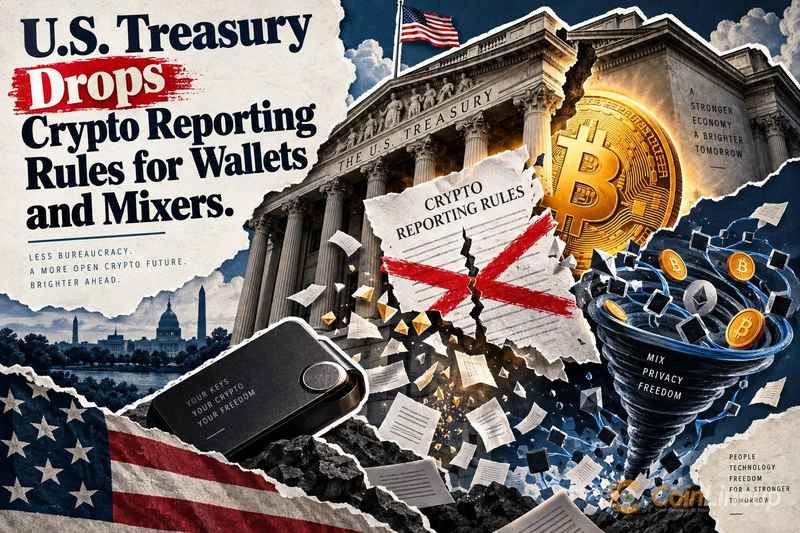
The U.S. Treasury has withdrawn a proposed set of rules that would have required certain crypto services, including digital wallets and mixing tools, to report transaction data to federal regulators. The decision removes a significant compliance burden that had been pending over a wide range of crypto businesses and users.
What the Treasury Proposed and Then Dropped
The Treasury Department had put forward reporting requirements aimed at crypto wallet providers and mixer services. Wallet providers are companies or applications that let people store and send cryptocurrency. Mixers, sometimes called tumblers, are tools that blend multiple transactions together to obscure the trail of funds on a public blockchain. For related coverage, see Ripple Launches Crypto Treasury Platform for Corporates.
Under the proposed rules, these services would have faced obligations to collect and report user transaction data, similar to how banks report certain transfers to regulators. The Treasury has now decided not to move forward with those requirements as proposed. For related coverage, see Public Firm's BERA Treasury Drops From $70.2M to $16.4M, Raising Nasdaq Delisting Risk.
It is important to note that dropping this specific proposal does not erase other existing legal obligations for crypto businesses. Anti-money-laundering rules, existing Bank Secrecy Act requirements for licensed exchanges, and other federal guidelines remain in effect. For related coverage, see Alpha Modus Share-for-Bitcoin Deal Targets 3,170 BTC as Stock Drops 25%.
Why Wallets and Mixers Were Targeted
Regulators had focused on wallets and mixers because both can be used to move funds without the identity checks that licensed exchanges must perform. A crypto wallet, at its most basic, is like a digital bank account that anyone can open without showing ID. A mixer takes that privacy a step further by pooling funds from many users so that the origin of any single transfer becomes harder to trace. For related coverage, see Top Crypto News for April 11: World Liberty Financial Leads.
From a regulatory standpoint, these tools sit at the boundary between financial privacy and potential misuse. Governments and law enforcement agencies have argued that mixers in particular can be used to launder money or move funds tied to illegal activity. Privacy advocates counter that most users have legitimate reasons to protect their financial data. For related coverage, see Bitcoin Mining Difficulty Drops 7.7% to 133.79 Trillion — Sharpest Decline Since February.
The proposed rules attempted to extend reporting obligations beyond licensed exchanges, reaching into self-custody tools and privacy-enhancing services. That scope made the proposal controversial across the crypto industry, touching on questions about how crypto treasury tools and infrastructure should be regulated at the federal level.
What This Means for Crypto Users and Businesses
For everyday crypto holders, the immediate practical effect is that wallet apps and mixer services will not face new mandatory data-collection rules tied to this proposal. If you store Bitcoin or other tokens in a self-custody wallet, your reporting obligations as an individual user are unchanged by this decision.
For businesses building wallet infrastructure, the withdrawal reduces one layer of compliance uncertainty. Companies that had been planning for the new rules will need to reassess their compliance roadmaps, though existing obligations under current law still apply.
The decision does not signal the end of regulatory scrutiny for mixers. Separate enforcement actions against specific mixer services have proceeded through other legal channels, and the Treasury has used existing authorities to sanction mixer platforms it linked to illicit finance. This withdrawal affects only the proposed reporting rule, not those enforcement tools.
Regulatory uncertainty around privacy tools and self-custody wallets is likely to continue. Future administrations or rule-making processes could revisit similar requirements. For now, crypto users and businesses have one fewer pending compliance obligation to plan around, but the broader question of how far reporting rules should extend into decentralized and self-custody crypto services remains open.
Additional source references: source document 1, source document 2.
Disclaimer: This article is for informational purposes only and does not constitute financial or investment advice. Cryptocurrency and digital asset markets carry significant risk. Always do your own research before making decisions.
Read original article on coinlineup.com