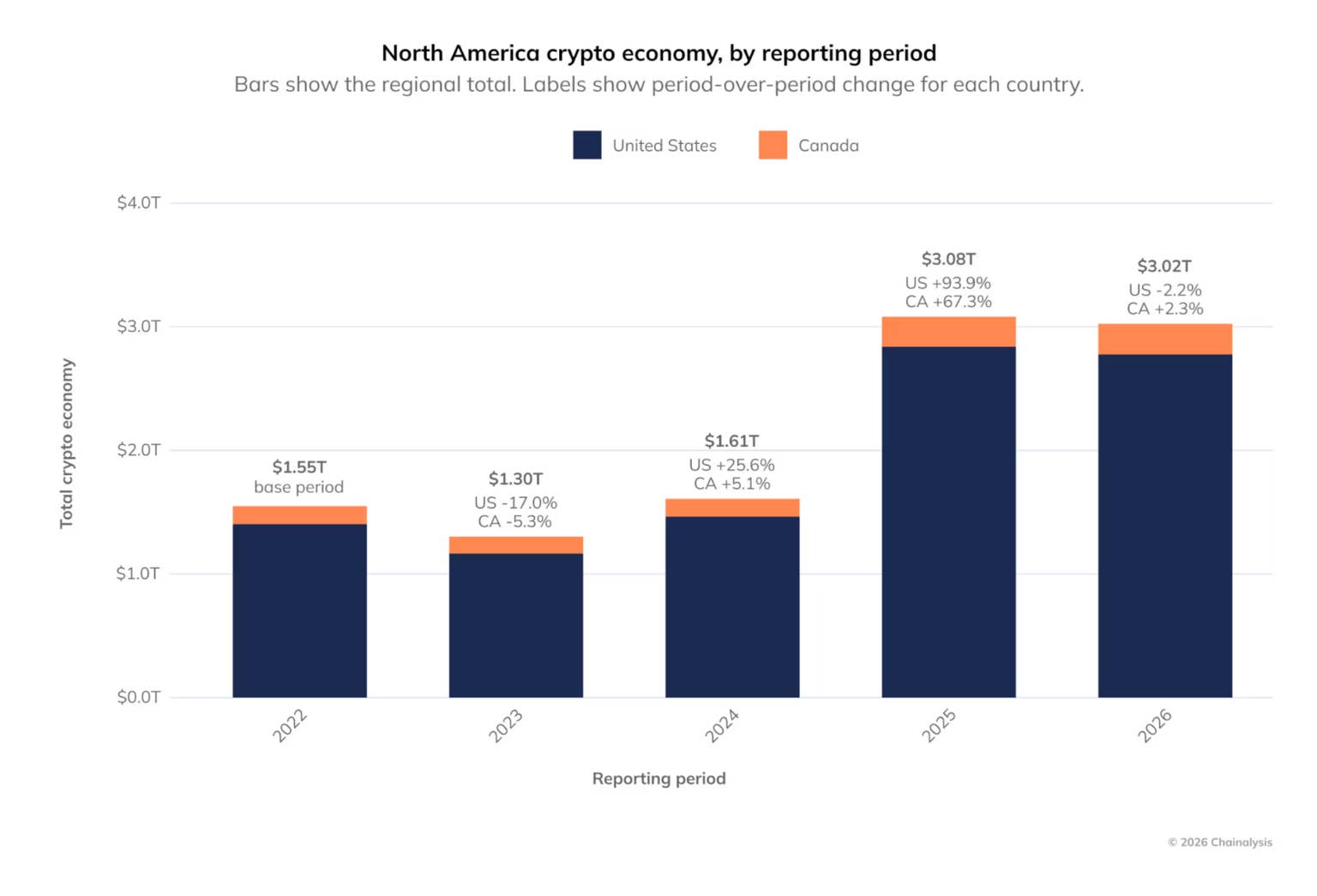
For most of the past few years, Bitcoin has been slowly leaving the U.S. Retail traders shipped coins to offshore exchanges, and a sizeable portion of the world’s crypto trading happened outs
For most of the past few years, Bitcoin has been slowly leaving the U.S.
Retail traders shipped coins to offshore exchanges, and a sizeable portion of the world’s crypto trading happened outside American borders. That trend has now flipped.
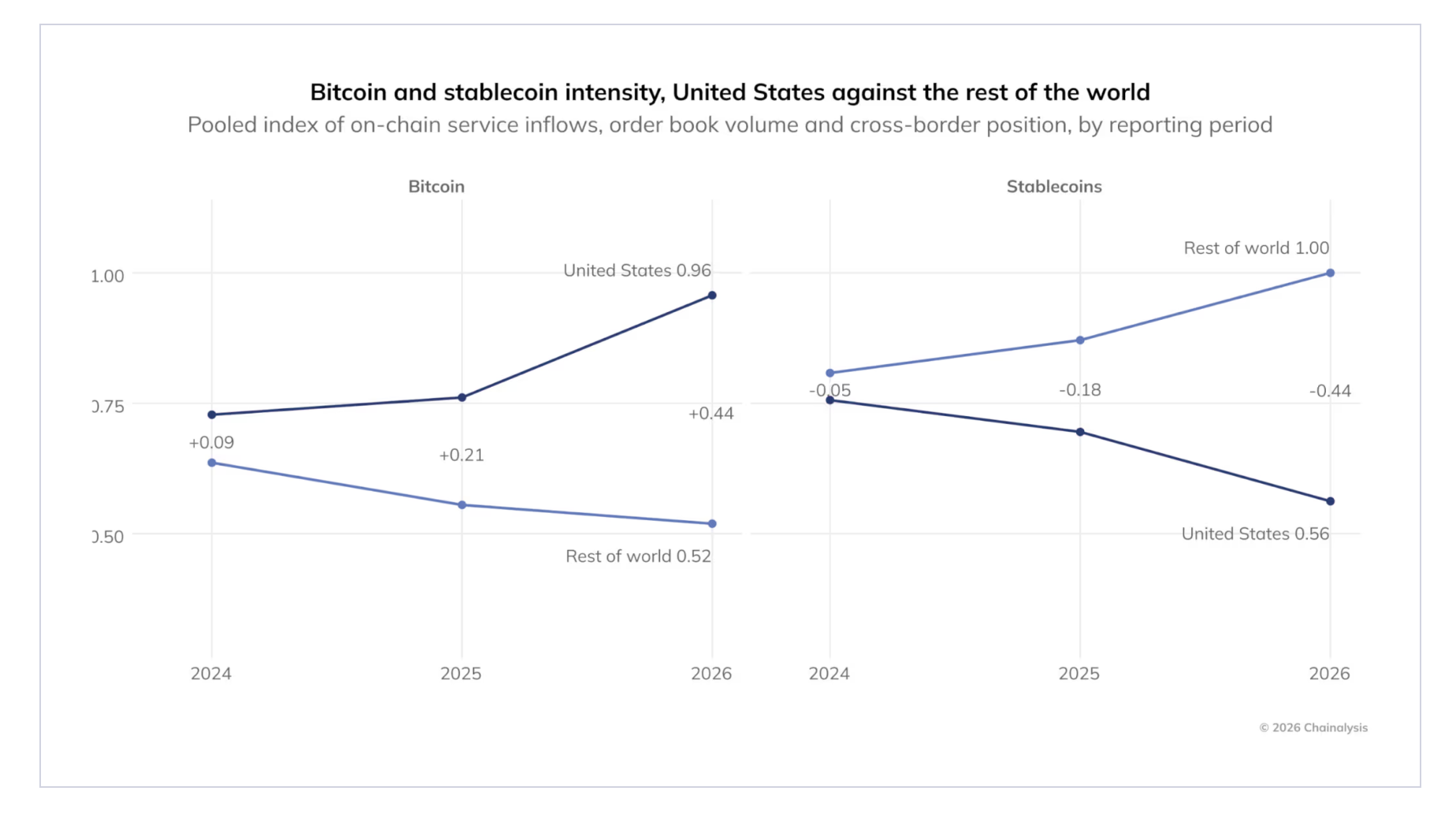
The U.S. became a net importer of Bitcoin in 2026 for the first time since 2022, according to a new report from Chainalysis.
Chainalysis is a blockchain analytics firm that tracks how cryptocurrency moves between wallets, exchanges and countries.
Being a net importer means more Bitcoin flowed into U.S.-based platforms, funds and investors than flowed out. Chainalysis’ data covers July 2025 through June 2026.
It's important to note that the government is not the buyer here. The data reflects the combined activity of everyone in the country who holds Bitcoin.
Related: BlackRock CEO warns one move could sink U.S. economy
Million-dollar transfers tip the balance
The reversal was driven by the largest transfers.
Transfers worth more than $10 million brought a net 53,200 Bitcoin into the U.S. during the period, Chainalysis found.
Smaller holders moved the other way. Transfers under $10,000 ran net outbound in every period the firm measured.
Data from
Chainalysis report 2026.
In other words, everyday users kept sending Bitcoin abroad, but the largest players brought in more than enough to outweigh them.
The report frames this as a split between retail and institutional money. Institutions are large investors such as funds, asset managers and corporations.
A steady climb since the ETF launch
The shift didn’t happen overnight. It follows a trend that began in January 2024, when spot Bitcoin exchange-traded funds launched in the U.S.
An exchange-traded fund, or ETF, is a fund that trades on the stock market like a regular share. A spot Bitcoin ETF holds actual Bitcoin, which lets investors gain exposure through a normal brokerage account without buying the coins directly.
Since those funds went live, the U.S. share of global Bitcoin activity has risen in every reporting period, according to the report. Chainalysis does not say the ETFs caused the increase, but the climb began with their launch.
Popular on TheStreet Roundtable:
ETF flows were uneven this year, though.
The report cites BlackRock’s Will Su, the managing editor and head of digital assets research. He says Bitcoin funds saw outflows in the first half of 2026 as artificial intelligence pulled investor money away from digital assets. Those outflows reversed into inflows in the third quarter.
 Data from Chainalysis report 2026.
Washington’s reserve adds a quieter source of demand
Government policy may also be playing a role.
Chainalysis says the federal Strategic Bitcoin Reserve has added “implicit sovereign demand” alongside private buying, even though there is no explicit government purchase program.
President Donald Trump created the reserve by executive order on March 6, 2025, according to a White House fact sheet. It is funded with Bitcoin the government already owns from criminal and civil asset forfeitures.
The order allows officials to acquire more only through “budget-neutral” strategies that add no cost to taxpayers, and it bars the government from selling Bitcoin held in the reserve.
A smaller market, a bigger share
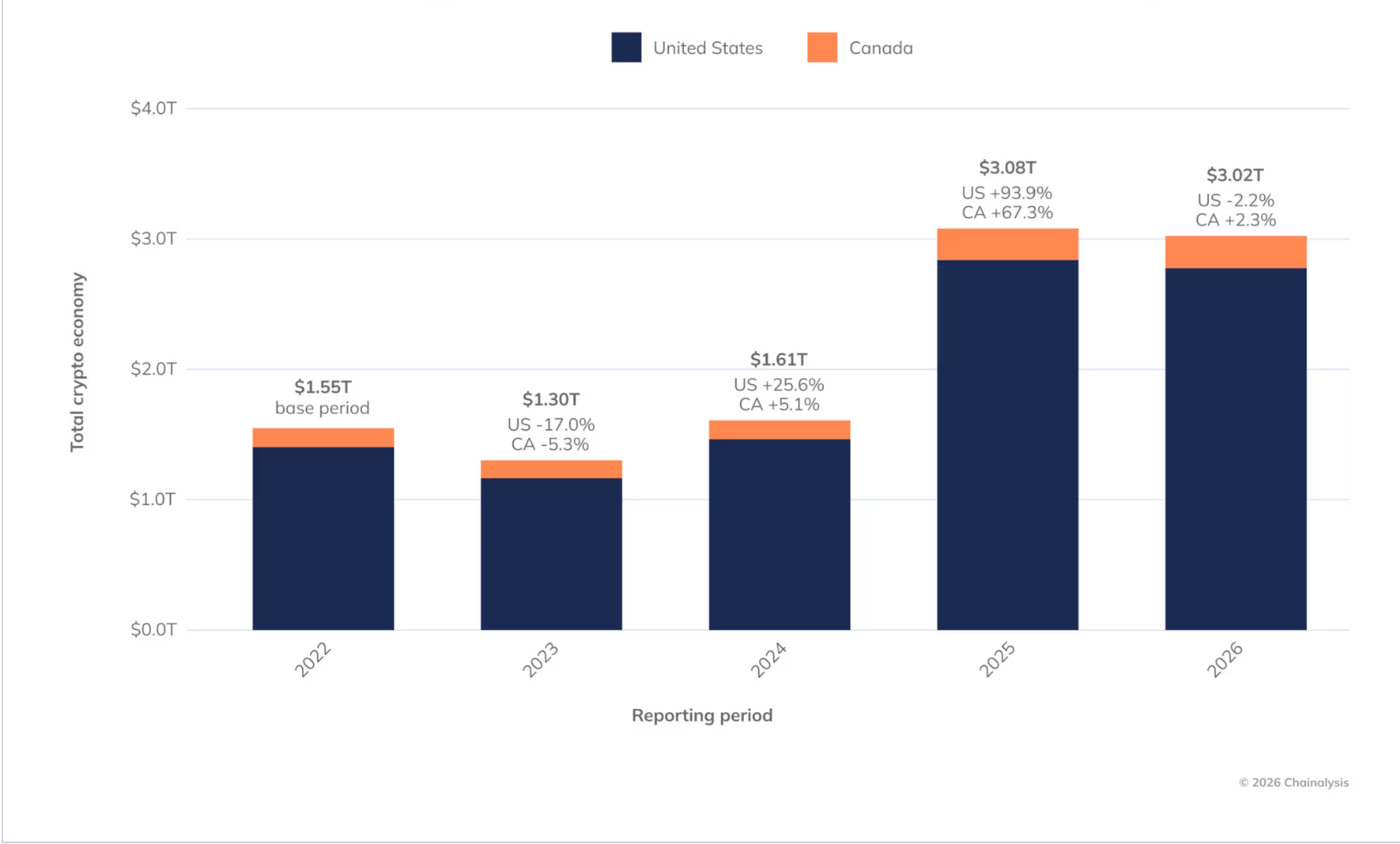
The inflow comes even as the broader market cooled. The U.S. crypto economy totaled $2.78 trillion over the period, down 2.2% from the prior year, which Chainalysis links to a bear market.
A bear market is a stretch of falling prices.
Source:
Chainalysis
Even so, the U.S. held on to most of the near-doubling in activity it posted the year before.
Combined with Canada, North America’s crypto economy reached $3.02 trillion, topping the firm’s ranking for large-scale crypto activity.
For now, the data points to Bitcoin consolidating in the U.S., carried by large investors while smaller holders keep moving their coins elsewhere.
Related: U.S. government moves more than $1 billion in Bitcoin