BitcoinWorld Ukraine Postpones Parliament Review of Crypto Tax Bill Ukraine’s Verkhovna Rada postponed its review of a bill to regulate and tax crypto on November 24, 2026, a day after the fi
BitcoinWorld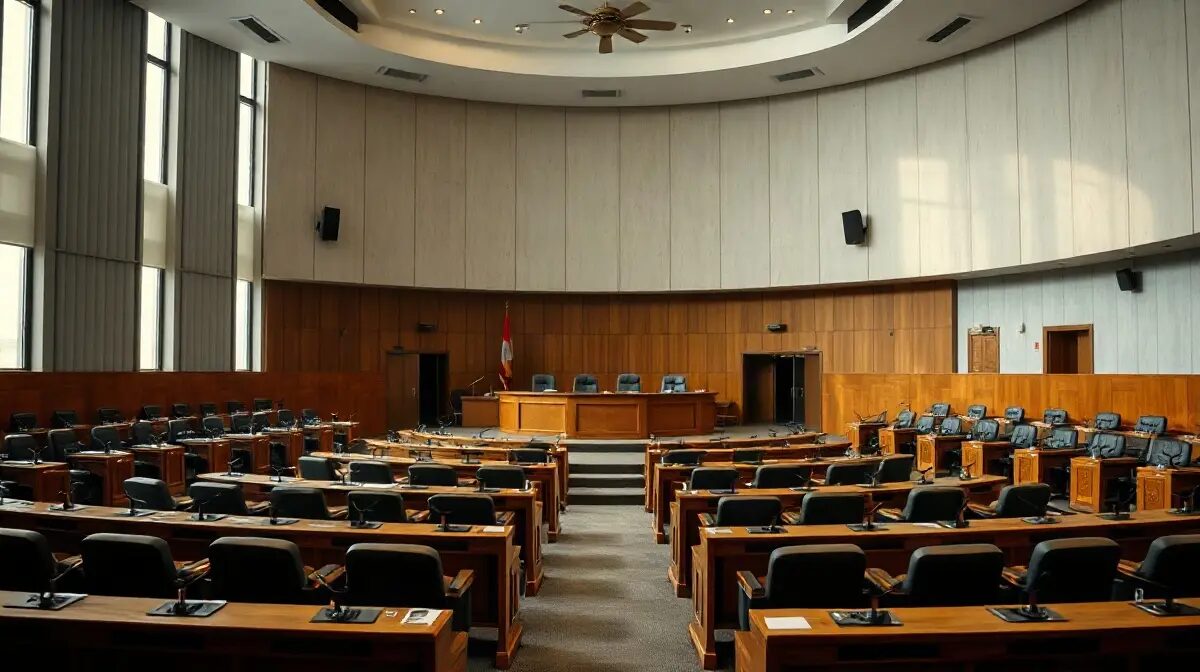 Ukraine Postpones Parliament Review of Crypto Tax Bill
Ukraine’s Verkhovna Rada postponed its review of a bill to regulate and tax crypto on November 24, 2026, a day after the finance, tax and customs policy committee renewed its recommendation that lawmakers pass the revised measure, according to Crypto.news. Bill No. 10225-d remains at the second-reading stage, and the Rada’s record gives no replacement date for the debate.
Ukraine’s parliament postponed its November 24, 2026 review of Bill No. 10225-d, leaving the crypto regulation and tax measure at the second-reading stage. The draft would tax individuals on annual crypto profits, exempt crypto-to-crypto swaps, and apply a temporary 5% rate to qualifying existing holdings through the end of 2028.
Key facts
- The Rada published the second-reading comparison table on November 24, the same day consideration was postponed.
- The finance, tax and customs policy committee backed the bill on November 4 and returned to it on November 23 after further talks with the National Bank of Ukraine.
- The bill cleared its first reading in September 2025 with 246 votes in favor.
- The securities commission said the draft drew on the European Union’s Markets in Crypto-Assets regulation and forms part of Ukraine’s commitments to the EU and the International Monetary Fund.
- Per PANews, the bill provides a transition period with reduced penalties so exchanges and custodians can adapt to the reporting and authorization requirements.
How the tax would work
The revised draft would generally require individuals to pay personal income tax on their positive financial result from virtual-asset transactions for the year, meaning the tax is based on the profit the individual ends the year with from covered transactions.
An exchange of one virtual asset for another would be exempt, so swapping Bitcoin for Ether would not, by itself, trigger the tax. The draft also provides a transition period through the end of 2028, during which a preferential 5% personal income tax rate would apply to qualifying existing holdings — a provision that matters to people who bought crypto before the new rules take effect and later decide to sell. Profit within a threshold tied to one minimum wage, and tokens received free of charge, would also be exempt.
Exchanges and custodians would face separate obligations: providers would need authorization and would have to report annually on transactions involving Ukrainian residents. The proposed reporting rules are also a step toward applying international standards for sharing information on crypto transactions. A swap can be exempt from income tax even as a platform remains subject to reporting requirements.
Who would supervise the market
The securities commission said it agreed on the main regulatory arrangements with the central bank before the committee’s renewed recommendation. The commission would decide which providers can enter the market, issue licenses and supervise platforms, and it would be able to seek a court order to block services operating without authorization.
The National Bank of Ukraine would monitor how virtual assets affect the hryvnia and the banking system, overseeing transactions between the hryvnia and virtual assets and regulating certain digital payment tokens and foreign exchange operations. The agreement follows the central bank’s earlier objections to the draft, which Crypto.news reported included concerns about foreign-issued tokens and the risk of market concentration.
Why it matters
The postponement leaves Ukrainian residents and crypto businesses without a settled tax and authorization framework, even though the committee has twice recommended passage. For individuals, the tax applies to the year’s net profit rather than to turnover, which softens the burden compared with per-transaction levies, while the 2028 transition window preserves a lower rate for pre-existing holdings.
The proposed division of authority between the securities commission and the central bank would place platform licensing and currency-linked oversight in separate hands — the same structure the commission says follows the EU’s MiCA model. PANews, citing legislative records, noted the bill’s authorization and reporting duties carry a transition period with lower penalties, a detail intended to give providers time to prepare.
What to watch
The next formal step is a second-reading vote in the Verkhovna Rada, which lawmaker Yaroslav Zhelezniak said after the committee meeting he hoped would come during the week; the bill as drafted would take effect on July 1, 2027, if passed.
Market snapshot
Bitcoin traded at $58,962 (₹5,464,070) on November 25, 2026 at 02:40 UTC, down 1.4% over 24 hours and 8.4% over seven days, with a market cap of $1.19 trillion, according to CoinPaprika data. Ethereum changed hands at $1,652 (₹153,122), down 1.6% in 24 hours and 8.3% over the week.
Frequently Asked Questions
What is the status of Ukraine’s crypto tax bill?
Bill No. 10225-d remains at the second-reading stage after the Verkhovna Rada postponed its November 24, 2026 review. Lawmakers received the second-reading comparison table the same day, and the record gives no replacement date.
How would individuals be taxed on crypto in Ukraine?
Under the revised draft, individuals would generally owe personal income tax on their positive annual financial result from virtual-asset transactions. Crypto-to-crypto swaps would be exempt, and a 5% preferential rate would apply to qualifying existing holdings through the end of 2028.
Which regulators would oversee Ukraine’s crypto market?
The securities commission would handle market access, licensing and supervision of platforms, while the National Bank of Ukraine would monitor how virtual assets affect the hryvnia and the banking system.
When would the bill take effect if passed?
The securities commission said the bill would take effect on July 1, 2027, if parliament passes it.
This post Ukraine Postpones Parliament Review of Crypto Tax Bill first appeared on BitcoinWorld.