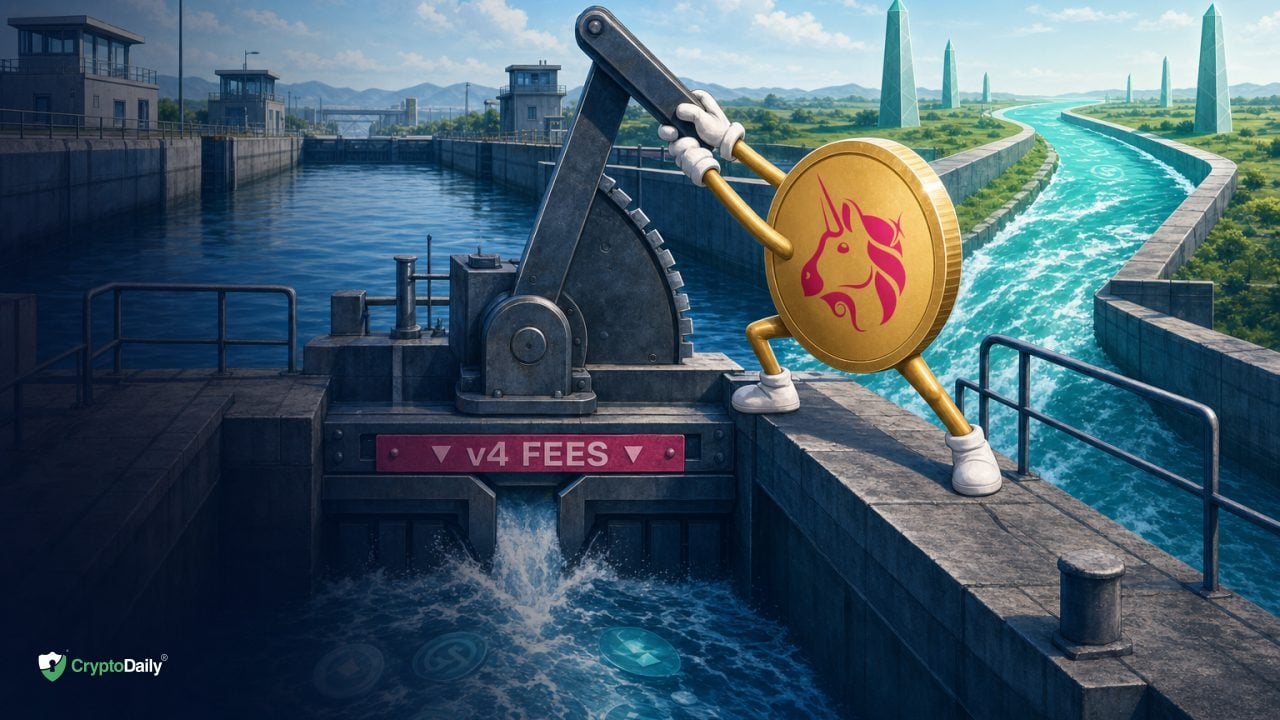
Uniswap governance just lined up two moves that could reshape how the protocol captures value and where it expands next. One is about actually turning on v4 protocol fees. The other brings Un
Uniswap governance just lined up two moves that could reshape how the protocol captures value and where it expands next. One is about actually turning on v4 protocol fees. The other brings Uniswap’s fee framework to Robinhood Chain.
Both proposals have hit the final on-chain stage. That alone is a shift: fee debates at Uniswap have dragged for years without a switch flip. Now, we’re staring at real implementation details and real timelines.
If you LP, market-make, trade through aggregators, or simply hold UNI, this is one of those moments where a governance headline can bleed into your PnL. Let’s unpack the votes, the early data on Robinhood Chain, and what changes if the fee switch finally moves.
Point Details What’s being voted Two on-chain proposals: Activate v4 Protocol Fees (Part 1/2) and Protocol Fee Expansion: Robinhood Chain, both entering final voting on July 19, 2026 (Uniswap Agora). Timing specifics Agora lists the Robinhood Chain proposal starting ~4:17 pm and the v4 fees proposal starting ~4:31 pm on July 19, 2026 (Uniswap Agora). Robinhood Chain traction Uniswap v2/v3/v4 deployed at mainnet launch on July 1; forum temp-check cited over $1B cumulative swaps by July 10, 2026 (Uniswap Governance forum). Conflicting volume figures Independent coverage put Robinhood Chain’s Uniswap volume past $6B as of July 10 and roughly $3.1B in first-week DEX volume overall (The Block). Sentiment check The v4 fees temperature-check Snapshot reportedly closed with ~93% support and ~13.9M UNI voting yes in early July (Blockchain Posts).
What exactly is on the ballot?
There are two parallel votes on Uniswap governance right now, both visible on the official vote portal (Uniswap Agora):
- Activate v4 Protocol Fees (Part 1/2)
- Protocol Fee Expansion: Robinhood Chain
Per the portal, both entered final on-chain voting on July 19, 2026, with listings showing a ~4:17 pm start for the Robinhood Chain item and ~4:31 pm for the v4 fees item. The split format (part 1/2) is key. Governance is sequencing this so that the community can confirm the concept, then handle configuration details (like parameters and operational limits) in a follow-up.
In short, the community is being asked two questions at once: should v4 fees be activated, and should the fee framework extend to Robinhood Chain?
How v4 protocol fees work in practice
Protocol fees in Uniswap are separate from the swap fees LPs set and collect. When enabled, a portion of the value from swaps is redirected to the protocol instead of 100% going to LPs. In earlier versions, this mechanism was specified but largely left off. The new votes signal a willingness to use it in v4.
Two things to keep in mind:
- Part 1/2 likely greenlights activation at a framework level, not the final numbers. Expect a second vote to define specifics like which pools, what rates, and how collection and custody are handled.
- Distribution is a governance choice. Historically, Uniswap’s protocol fees accrue to the protocol, and governance can decide whether they fund development, security, grants, or other mechanisms. Any talk of buybacks or burns is still just that — talk — until a binding vote states otherwise.
What this could mean for LPs
If the protocol fee turns on, LP take-home returns on affected pools may get trimmed by whatever share is directed to the protocol. The flip side is that fees routed to the protocol can support tooling, audits, or incentives that attract flow back to those same pools. It’s a trade-off, and the outcome depends on the final parameters and how liquidity responds.
What this could mean for traders
Traders generally see the blended cost that aggregators compute across pools and chains. If protocol fees raise effective costs on a pool, routing could shift toward lower-cost venues unless slippage, gas, or MEV dynamics offset it. In other words, the market will arbitrage around any fee change quickly.
Pro tip: If you’re an LP or active trader, run a few backtests with small positions on pools likely to be affected. You’re not predicting the vote — you’re pressure-testing your assumptions about fee sensitivity.
Robinhood Chain: early numbers and why they matter
Uniswap deployed v2, v3, and v4 to Robinhood Chain when the network launched on July 1, 2026. That’s not a rumor; it’s written into the governance thread that followed, which also cited over $1.0 billion of cumulative swap volume by July 10 (Uniswap Governance forum).
Then came a higher figure from independent reporting. As the proposals moved closer to a vote, coverage pointed to the same window and put Uniswap’s Robinhood Chain deployments over $6 billion in cumulative volume by July 10, and roughly $3.1 billion in first-week DEX volume for the chain overall (The Block).
So which number should you anchor on? I wouldn’t treat either as gospel without the exact methodology. Forum counts can be conservative. Media roundups sometimes pull from dashboards with different filters (native pools vs. routed flow, stable-only vs. all pairs, inclusion of failed swaps, etc.). What matters is the direction: Robinhood Chain showed fast, material usage right out of the gate, and Uniswap is positioned at the center of it.
Why that matters for the fee vote
If governance expands protocol fees to Robinhood Chain and if volume stays meaningful there, the protocol’s take could be non-trivial. Even modest rates on significant throughput add up. This is where fee design meets strategy: turning on fees where the flow is, and refining parameters as liquidity fragments across chains.
LP and MM checklist before parameters drop
You don’t need the final fee rate to start preparing. A few low-effort checks can save you headaches later:
- Pool exposure map: List the v4 pools you’ve provided to. Note which ones are most sensitive to fee changes (thin spreads, low volatility pairs) vs. those that can absorb a little more friction (volatile pairs with wider fee tiers).
- Routing awareness: If you run custom routers or interact through an aggregator, review how it reprioritizes pools when effective pricing shifts. Backtest with a small basket of trades.
- Inventory windows: If protocol fees reduce realized APR, you may want shorter rebalance windows or different tick ranges to keep net returns stable.
- Gas and hooks: v4’s hook system can change per-swap costs at the pool level. If you’re in a hook-heavy pool, protocol fees stack on top of that reality. Model all-in costs, not just the protocol slice.
- Robinhood Chain specific: Fresh chains have evolving MEV, latency, and endpoint reliability. Size positions accordingly and use rate limits till you see stable behavior.
Pro tip: If a pool you love becomes fee-affected, don’t rush to yank liquidity. Watch how volume responds over a few days. Sometimes, traders stick because price improvement or gas offsets a slightly higher fee, and APRs normalize.
UNI holders should read the fine print
UNI often trades on narratives: fee switch on, fee switch off, buyback here, burn there. The reality is more procedural. The current v4 proposal is labeled Part 1/2 for a reason, and any revenue destination or burn mechanic would need further explicit approval.
Still, it’s fair to say the market is paying attention. The v4 fee Snapshot reportedly tallied roughly 93% in favor, with about 13.9 million UNI voting yes (Blockchain Posts). And headline writers are already gaming out how protocol revenues could support token economics, including the angle that “UNI burn [is] poised to grow” if certain follow-on steps happen (The Block).
What should a holder actually do with that? Separate what’s live from what’s aspirational. Live: on-chain votes that may turn on v4 protocol fees and extend fees to Robinhood Chain. Aspirational: any downstream decision that directs revenues to token-centric mechanics.
Governance sets the dial, not sentiment. Until a revenue-use vote passes, treat all token incentive talk as a scenario, not a baseline.
Timeline: what happens after the vote
Assuming the votes pass, here’s the practical sequence to expect:
- On-chain tallies finalize and the proposals are executed.
- Follow-up governance work specifies exact parameters: which pools, rates or caps, exemptions (if any), and technical rollout plans.
- Front ends, routers, and analytics update to reflect the new economics. You’ll see it in APR dashboards and routing preferences within hours to days.
- Iteration. If some pools bleed volume, governance or pool creators may tweak settings, hooks, or incentives to rebalance.
Want a leading indicator on sentiment? That early-July Snapshot showing roughly 93% support for v4 fees (Blockchain Posts) wasn’t binding, but it sets expectations that the on-chain stage could follow the same arc. Keep watching the official portal for final numbers (Uniswap Agora).
Risks and blind spots worth flagging
Nothing about this is risk-free, and it’s better to spell it out:
- Parameter risk: Without final fee rates, LPs can’t model exact APR impact. Prepare ranges, not point estimates.
- Liquidity migration: If a fee turns on one venue and not another, liquidity can hop chains or pool types quickly. Migration cuts both ways.
- Smart contract and hooks complexity: v4’s flexibility is powerful, but hooks add moving parts. More parts, more surface area.
- Cross-chain infra on Robinhood Chain: RPC stability, MEV tooling, and explorer quirks are still maturing. Slippage and failed swaps may spike at odd hours.
- Regulatory overhang: Any change that increases protocol revenues tends to invite harder questions from regulators. That’s not a prediction, just pattern recognition.
- Data inconsistency: As the $1B vs. $6B discrepancy shows, volume metrics vary by source and filter. Cross-check before you bet size on a headline.
Pro tip: Don’t just track TVL. Watch realized volume per pool and per chain, then compute fees earned after costs. That tells you more about cash flows than static TVL snapshots.
How to track the votes and the rollout
This doesn’t have to be time-consuming. A simple routine works:
- Bookmark the official portal for live voting and execution status (Uniswap Agora).
- Skim the forum thread for Robinhood Chain to see how contributors frame implementation details and volume reporting (Uniswap Governance forum).
- Cross-reference independent coverage for alternative datasets and interpretations (The Block).
- Set alerts on key pools you LP in. If routing or realized APRs move, you’ll see it first there.
If you want a plain-English recap as this evolves, we cover these votes and their knock-on effects regularly at Crypto Daily.
Frequently Asked Questions
Does activating v4 protocol fees mean LP returns will drop across the board?
Not necessarily. It depends on which pools, what rates, and how traders react. Some pools might see slightly lower take-home APRs. Others could hold steady if volume and pricing power offset the change. Wait for the final parameters before you redo every position.
Are protocol fees also coming to Uniswap on Robinhood Chain?
That’s exactly what the second proposal is about. The “Protocol Fee Expansion: Robinhood Chain” item is in final on-chain voting alongside the v4 activation proposal, per the official portal (Uniswap Agora).
Why are there different Robinhood Chain volume numbers floating around?
Methodology. The Uniswap forum referenced over $1B of cumulative swap volume as of July 10, 2026 (Uniswap Governance forum), while independent coverage cited more than $6B for roughly the same window and about $3.1B in first-week DEX volume (The Block). Filters and data sources can differ.
What happens after Part 1/2 of the v4 fee vote passes?
Expect a follow-up process to specify parameters and rollout. You’ll want to read those details closely: they dictate which pools are affected, what the fee slices are, and any exemptions or caps. Then watch front ends and dashboards; they’ll reflect actual fee flows soon after execution.
Will protocol fees be used to buy back or burn UNI?
That would require a separate governance decision. Some analysis pieces have explored that scenario, but it’s not automatic. Until the community passes a binding proposal on revenue use, treat it as a possibility, not a promise.
Is this financial advice?
No. This is context to help you understand the votes and their potential effects. The market is volatile, governance can change direction, and parameters matter. Size positions based on your own models and risk limits.
Does this affect Uniswap v2 and v3?
The current headline vote concerns v4 activation and Robinhood Chain expansion. Any changes to older versions would need their own proposals. Keep an eye on governance for anything beyond v4.
Disclaimer: This article is provided for informational purposes only. It is not offered or intended to be used as legal, tax, investment, financial, or other advice.