BitcoinWorld US Industrial Production Edges Up 0.2% in July, Missing Forecasts US industrial production rose by 0.2% in July, falling short of the 0.3% increase economists had forecast, accor
BitcoinWorld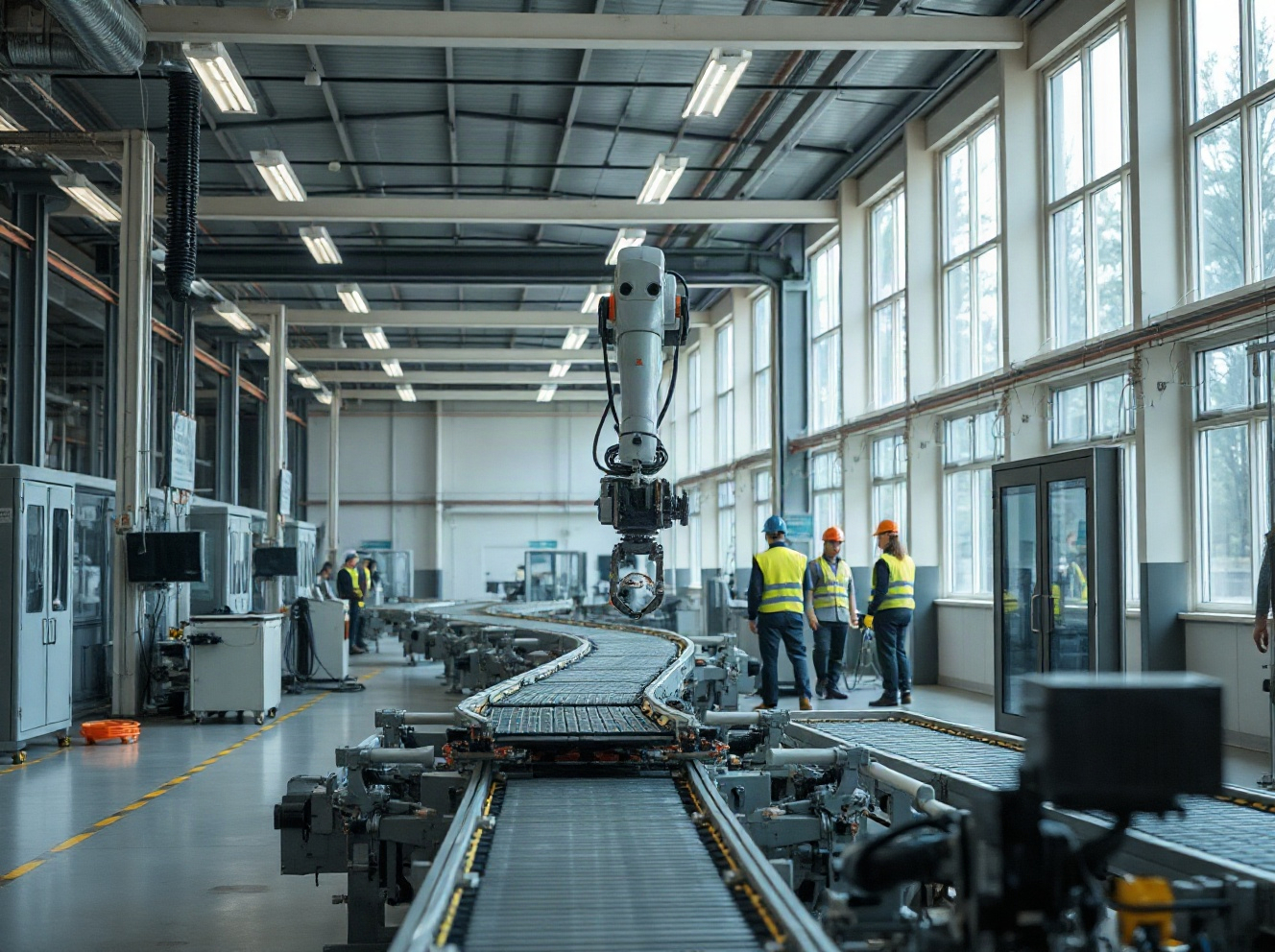 US Industrial Production Edges Up 0.2% in July, Missing Forecasts
US industrial production rose by 0.2% in July, falling short of the 0.3% increase economists had forecast, according to data released by the Federal Reserve. The modest gain signals that the manufacturing sector continues to navigate a mixed economic environment, with output supported by steady consumer demand but constrained by lingering supply chain pressures and higher borrowing costs.
What the Latest Data Shows
The Federal Reserve’s monthly report, which tracks output at factories, mines, and utilities, indicated that manufacturing output specifically increased by 0.3% in July, while mining and utilities saw more subdued gains. The overall industrial production index now stands at 102.5% of its 2017 average, reflecting gradual but uneven progress across major sectors.
Compared with a year earlier, total industrial production was up 1.2%, a slowdown from the stronger growth rates seen earlier in the year. Capacity utilization, a measure of how fully the nation’s factories are being used, edged up to 78.9% in July from 78.8% in June, remaining slightly below its long-run average of 79.6%.
Why It Matters for the Economy
Industrial production is a closely watched indicator because it provides insight into the health of the manufacturing sector, which accounts for about 11% of US GDP. The July figures suggest that factories are still expanding, but at a pace that reflects the broader slowdown in economic growth. The miss against forecasts could influence expectations for the Federal Reserve’s monetary policy, as policymakers balance the need to curb inflation with supporting economic activity.
For businesses, the data reinforces a picture of resilient but moderating demand. While consumer spending on goods has remained relatively strong, higher interest rates have made capital investment more expensive, and export markets have been uneven. The modest increase in production aligns with recent surveys from regional Federal Reserve banks, which have shown softer but positive manufacturing activity.
Sector Breakdown and Regional Trends
Within manufacturing, durable goods production rose 0.4%, led by gains in machinery and transportation equipment, while nondurable goods output increased 0.2%. Mining output was flat, and utilities rose 0.1% as mild weather reduced demand for air conditioning. Regionally, the Federal Reserve’s Beige Book has noted that manufacturers in the Midwest and South have seen steady orders, while the Northeast has experienced some softening.
These variations highlight the uneven recovery across industries. For instance, the automotive sector has been hampered by ongoing semiconductor shortages, while aerospace and defense have benefited from strong backlogs. The data also reflects the ongoing transition toward cleaner energy, with utilities investing in grid upgrades and renewable capacity, which could influence future production patterns.
Outlook and Market Reaction
Following the release, US stock index futures remained slightly higher, while Treasury yields dipped, suggesting that investors interpreted the data as reducing the likelihood of an aggressive interest rate hike at the Fed’s next meeting. However, the overall impact was muted, as the report was broadly in line with recent economic trends.
Looking ahead, economists expect industrial production to continue growing at a modest pace, though risks remain. A potential government shutdown, renewed trade tensions, or a sharper slowdown in global demand could weigh on output. Conversely, easing supply chain bottlenecks and a potential pause in rate hikes could provide a boost.
Conclusion
July’s industrial production report underscores the resilience of the US manufacturing sector, even as it falls slightly short of expectations. The data points to an economy that is still growing, but at a more moderate pace, as businesses and consumers adapt to higher borrowing costs and global uncertainties. For market participants and policymakers, the figures offer a nuanced picture of an economy in transition.
FAQs
Q1: What is industrial production?Industrial production measures the output of the manufacturing, mining, and utility sectors. It is a key indicator of economic health, reflecting how much goods are being produced by factories, mines, and power plants.
Q2: Why did the July figure miss forecasts?The 0.2% increase was below the 0.3% expected by economists, likely due to a combination of factors, including higher interest rates, supply chain constraints, and moderate consumer demand. The miss is not dramatic but indicates a slower pace of expansion.
Q3: How does this affect the Federal Reserve’s interest rate decisions?While the Fed primarily focuses on inflation and employment, industrial production data provides context on economic momentum. A weaker-than-expected reading could support a more cautious approach to rate hikes, but the overall impact is limited given the modest deviation.
This post US Industrial Production Edges Up 0.2% in July, Missing Forecasts first appeared on BitcoinWorld.