Stablecoins are supposed to be the boring corner of crypto. On Saturday, November 28, the USD1 stablecoin, the dollar-pegged token issued through World Liberty Financial, the crypto venture b
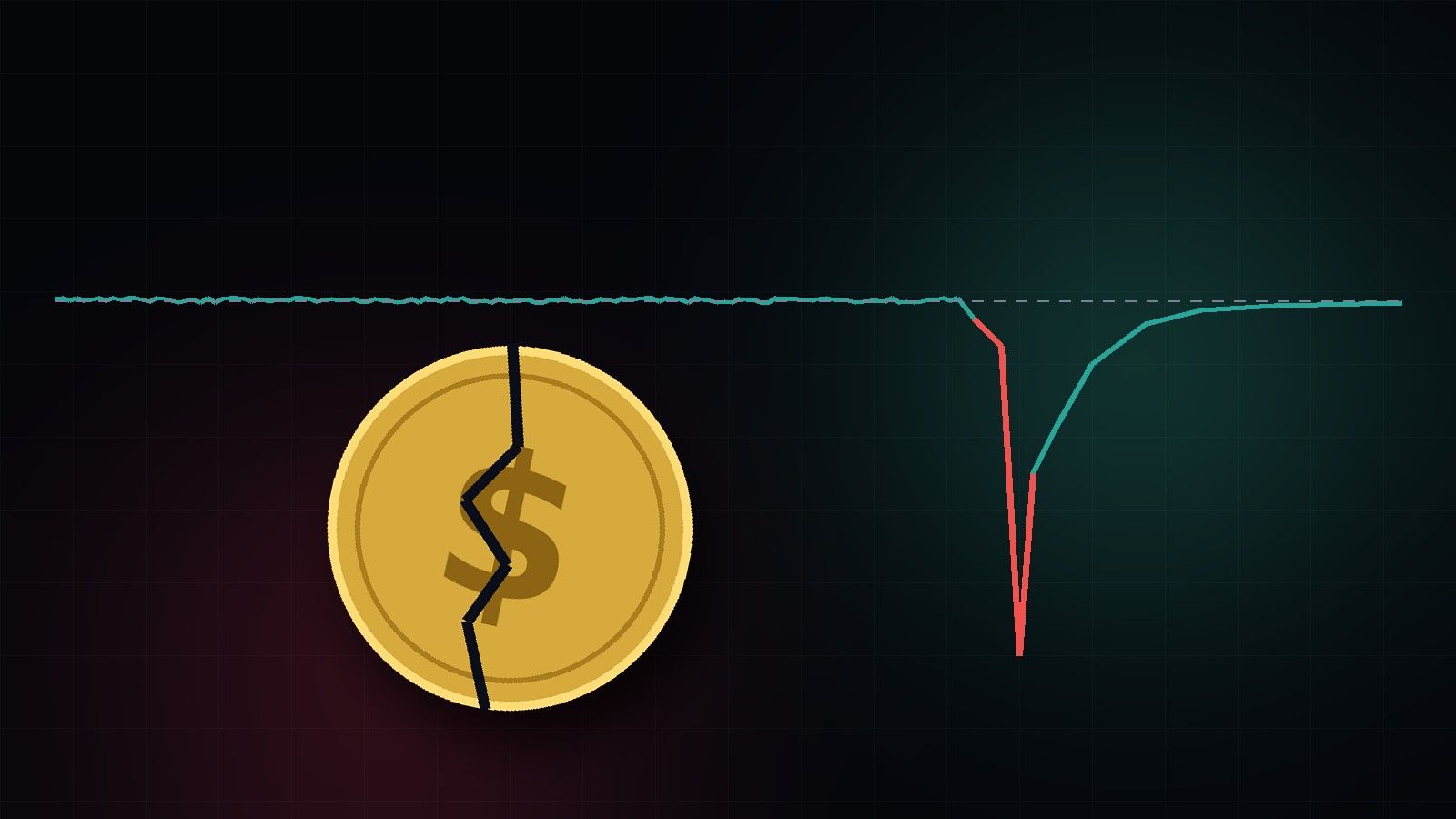
Stablecoins are supposed to be the boring corner of crypto. On Saturday, November 28, the USD1 stablecoin, the dollar-pegged token issued through World Liberty Financial, the crypto venture backed by the Trump family, proved otherwise. In a matter of hours the coin slid from its $1 peg to around $0.94 on Binance, a drop of roughly 6%, before traders snapped it back up.
By late morning UTC, USD1 was trading back near $0.997, but the scare has reopened an old question for anyone parking cash in stablecoins: how safe is that digital dollar really? You can follow live stablecoin and coin prices on our crypto prices page.
What Happened to the USD1 Price on November 28?
For most of Friday, USD1 traded in a tight band right at $1. Shortly after 04:00 UTC on Saturday, the USD1 price started to bleed lower, and selling accelerated over roughly two and a half hours. On Binance's USD1/USDT pair, the stablecoin printed a low of about $0.94, with one sharp wick plunging well below the rest of the candles.
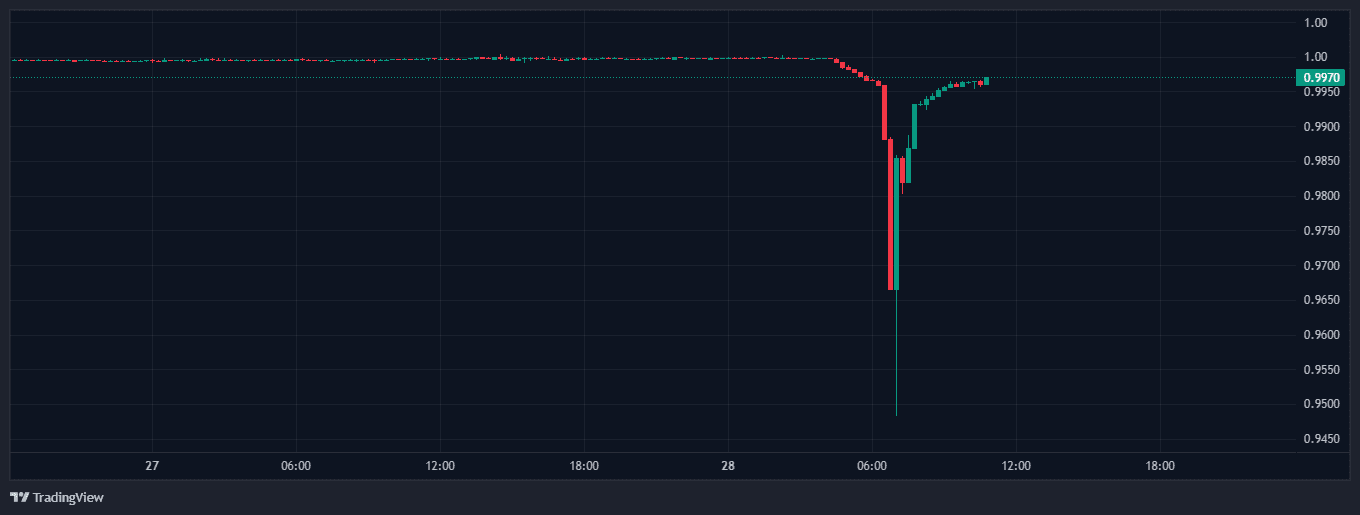
USD1 price chart during the November 28 depeg
The recovery came almost as fast as the fall. Within a few hours the price climbed back above $0.99, and at the time of writing USD1 is hovering just under its peg around $0.997. On Coinbase the move was far milder, with prices reportedly holding around $0.997, a sign that the crash was concentrated on specific trading pairs where liquidity dried up.
Why Did USD1 Lose Its Dollar Peg?
No official explanation has been given yet: World Liberty Financial had not published a statement on the stablecoin depeg at the time of writing. On-chain data, however, points to heavy selling linked to the project itself.
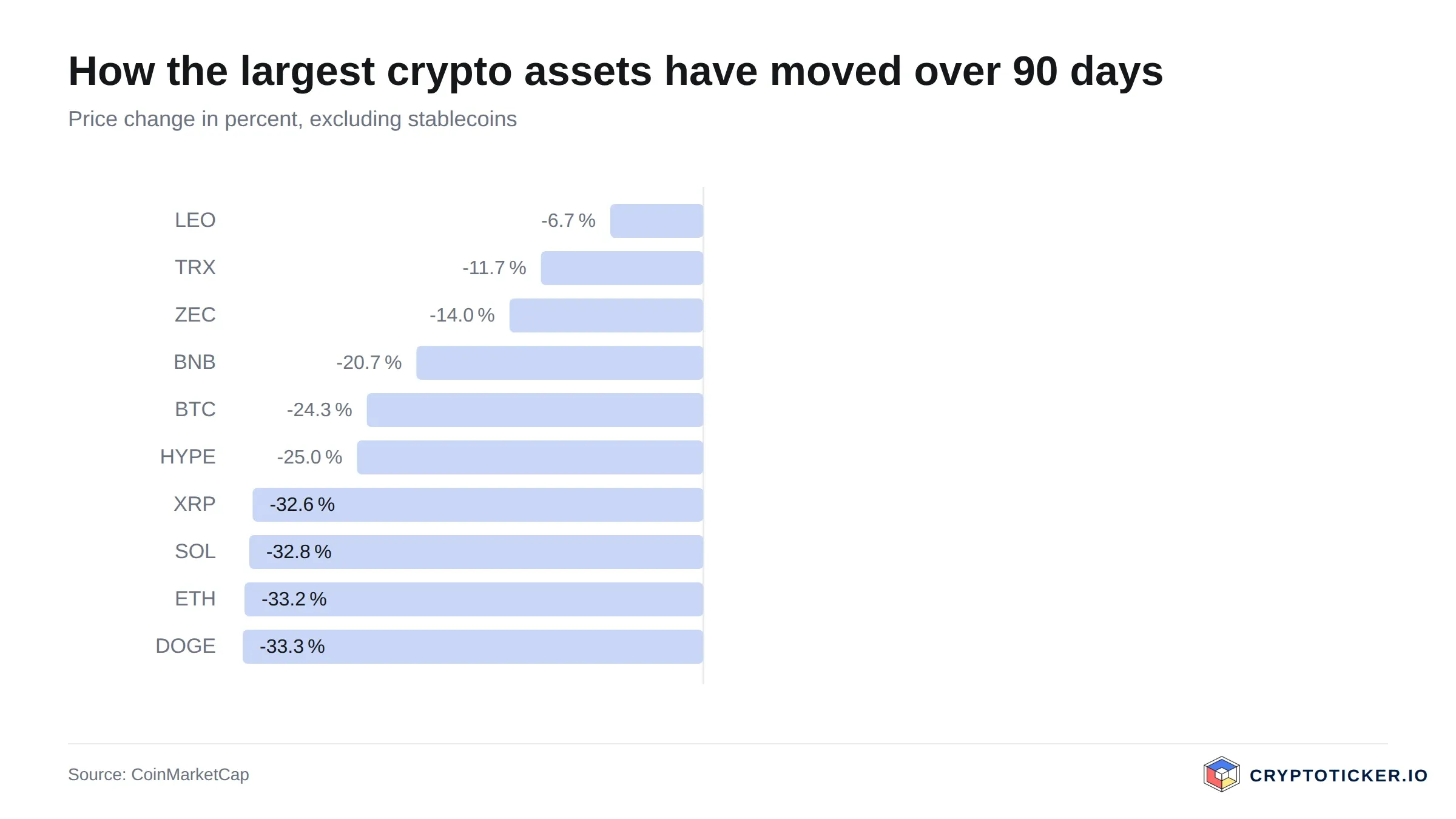
The largest crypto assets compared over 90 days, according to CoinMarketCap data
According to blockchain data, a wallet tied to WLFI's strategic reserve sold 12,121 $Ethereum at an average of around $1,655 shortly before the drop. The sale brought in roughly $17.6 million in USDC and about 2.48 million USD1. That ETH had reportedly been bought at an average of about $3,244, meaning the reserve booked a loss of around $19 million, close to half its original value. Whether this sale directly triggered the depeg has not been confirmed, but it landed at the worst possible moment.
The timing matters because USD1 has been under pressure for months. Its supply dropped by about $385 million in just nine days in October as large holders redeemed tokens, and Justin Sun's HTX exchange suspended its USD1 trading pairs back in June after a public dispute over frozen addresses. Sun, who has been feuding with WLFI, has reportedly called for exchanges to delist both WLFI and USD1, though this has not been confirmed by any exchange.
How Did Traders Profit From the USD1 Depeg?
Where there is a broken peg, there is an arbitrage trade. On-chain data shows that Jump Crypto withdrew about 43.26 million USD1 from exchanges within roughly an hour of the crash. The likely play: buy USD1 below $1 on exchanges, then redeem it with the issuer for a full dollar each. Jump has not commented on the moves.
This buying pressure is exactly what a fiat-backed stablecoin relies on. As long as large players trust that every token can be redeemed 1:1, they step in during a crash, and their purchases push the price back toward $1. That is largely what happened on Saturday.
How Are Exchanges Reacting to the USD1 Crash?
Gate was among the first exchanges to respond. The platform said it would fully cover losses users suffered from USD1-related liquidations during the depeg, and that customers would not have to repay any resulting negative balances. Gate added that USD1 withdrawals continue to work normally, that it is adjusting the margin discount rate it applies to USD1, and that it is in contact with the USD1 team about the cause.
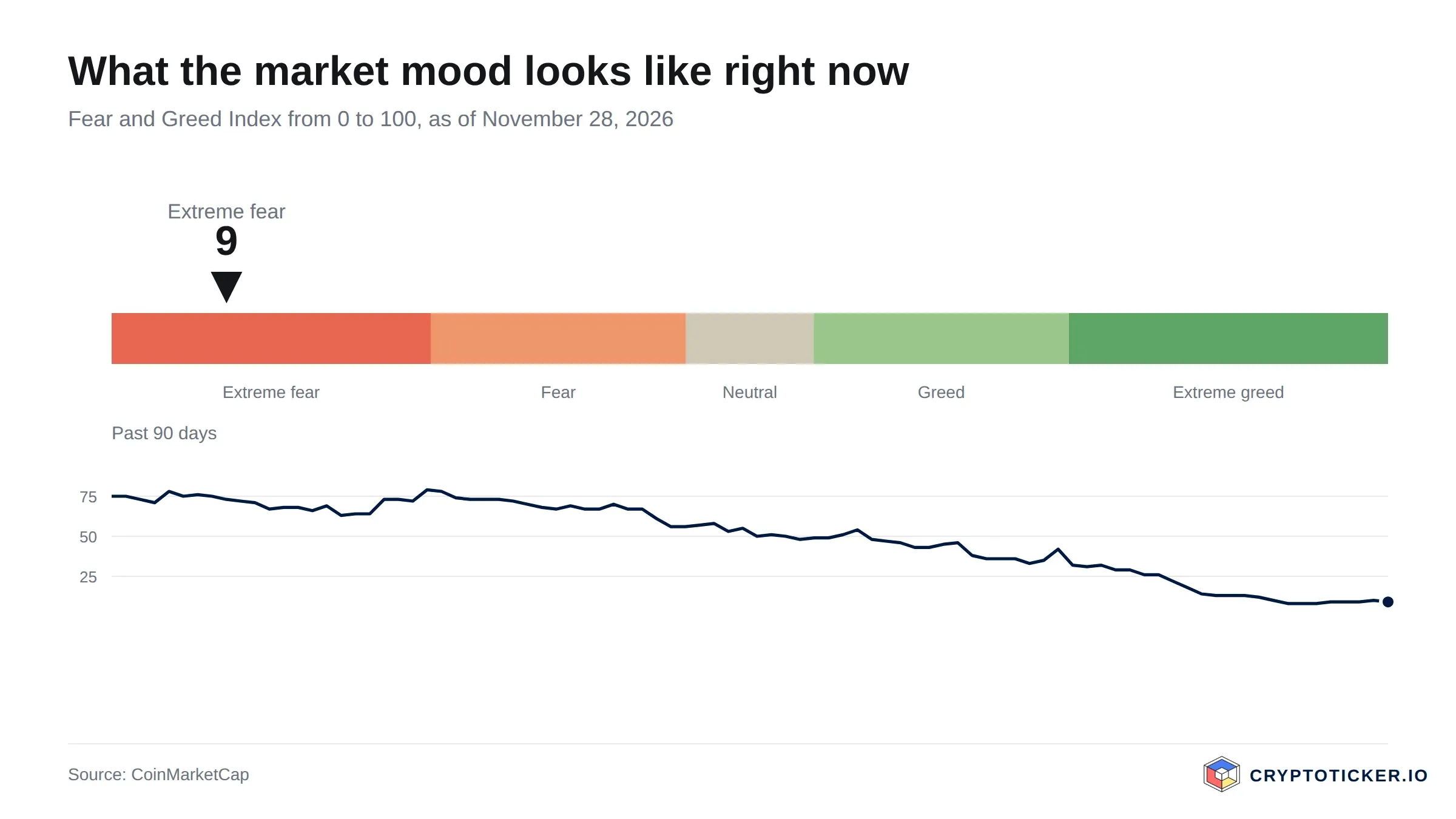
The Fear and Greed Index places market sentiment between extreme fear and extreme greed
That last point matters for traders who use stablecoins as collateral. When a stablecoin loses even a few cents, leveraged positions backed by it can be liquidated in seconds, which is why a 6% move in a "stable" asset can hurt so much.
Is USD1 Safe? What Backs the Trump Stablecoin?
According to World Liberty Financial's official documentation, USD1 is redeemable 1:1 for US dollars and is backed by cash, US government money market funds and other cash equivalents. The reserves are held by BitGo, which also handles minting, custody and redemptions. WLFI itself does not issue or hold USD1 directly.
There is an important catch: only eligible BitGo customers can redeem directly with the issuer. Everyone else depends on exchanges and other platforms to swap USD1 at fair value. In a panic, that gap between institutional and retail access is exactly where a depeg can open up, even if the reserves are fully intact. A temporary price drop on one exchange is not, on its own, evidence that reserves are missing.
Supply tells a story too. USD1 had roughly $4 billion in circulation in mid-October, down from more than $4.2 billion at the end of August. Shrinking supply means holders are cashing out, and fewer tokens in circulation can mean thinner liquidity on exchanges when stress hits.
What Does the USD1 Depeg Mean for Crypto Markets?
For now, the damage looks contained. The peg recovered within hours, redemptions appear to be working, and no exchange has reported a halt in withdrawals. But the episode adds to a rough stretch for the wider market, which is already dealing with a deep sell-off in Bitcoin and Ethereum. You can keep an eye on market-wide stress indicators on our crypto charts page.
The bigger lesson is about trust. A stablecoin is only as stable as the confidence that every token can be turned back into a dollar on demand. When large holders sell, retail users cannot redeem directly, and liquidity sits on a handful of pairs, even a fully backed token can wobble. If you hold stablecoins, it pays to spread them across issuers and platforms rather than relying on a single one.