Vitalik Buterin, co-founder of Ethereum, has generated extensive debate in the digital currency and AI industries by initiating what many are dubbing the Ethereum Anonymity Challenge. The eff
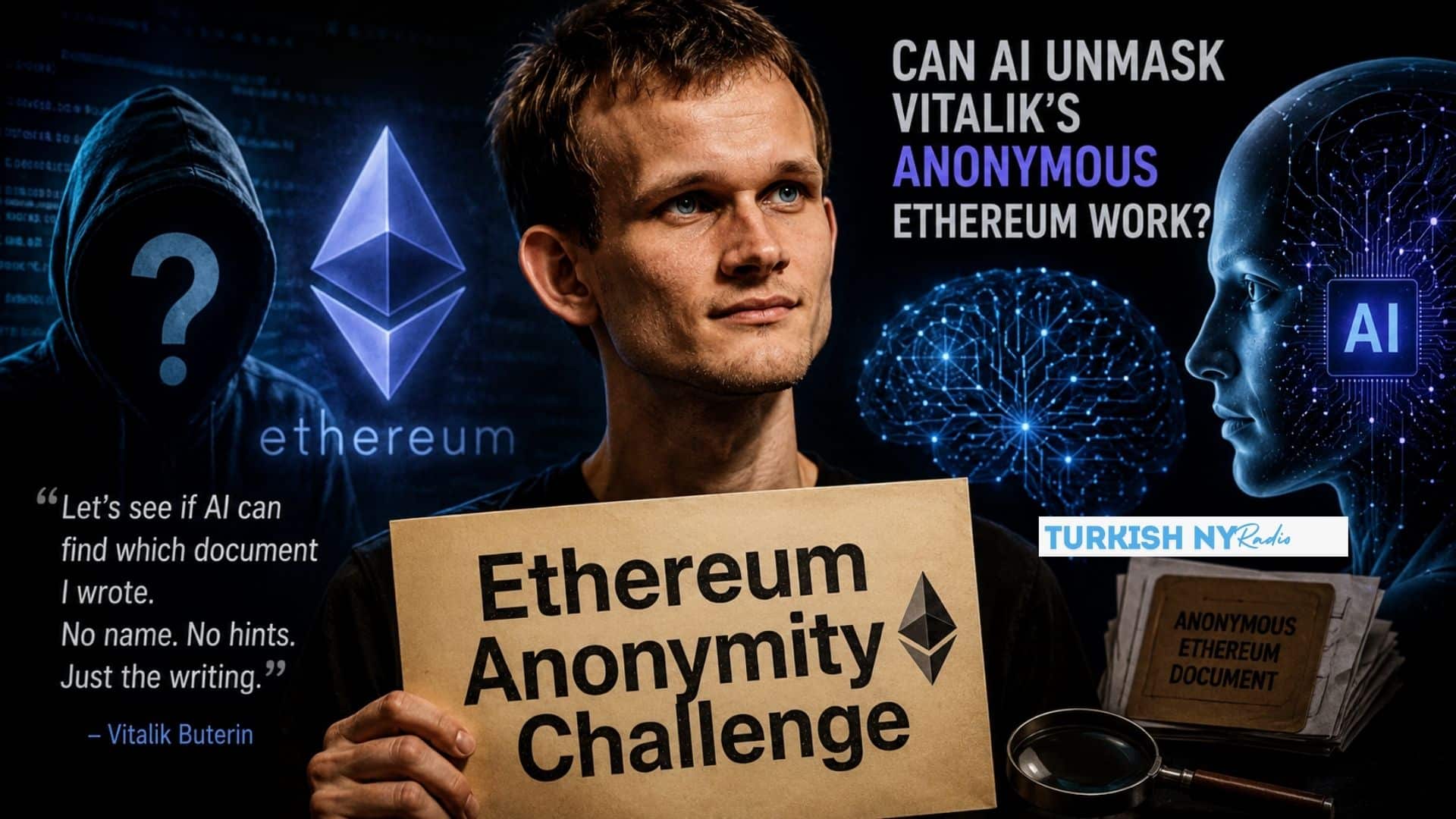
Vitalik Buterin, co-founder of Ethereum, has generated extensive debate in the digital currency and AI industries by initiating what many are dubbing the Ethereum Anonymity Challenge. The effort challenges investigators, developers, and AI aficionados to identify a privately written Ethereum-related text that Buterin purports to have produced without revealing his identity.
The Ethereum Anonymity Challenge occurs at a time when breakthroughs in artificial intelligence raise concerns over online confidentiality and the future of anonymous online involvement. Buterin’s goal in putting AI-powered authorship identification to the test is to see if current technology can successfully identify the identities of anonymous writers.
AI and the Rise of Authorship Detection
The Ethereum Anonymity Challenge revolves around a simple but important question: Will AI correctly identify who created a piece of material based purely on literary style?
Recent advances in machine learning techniques have allowed computers to assess sentence structure, vocabulary, grammatical patterns, and other language features. These techniques, known as stylometry, are becoming more commonly used to identify the writers of anonymous manuscripts.
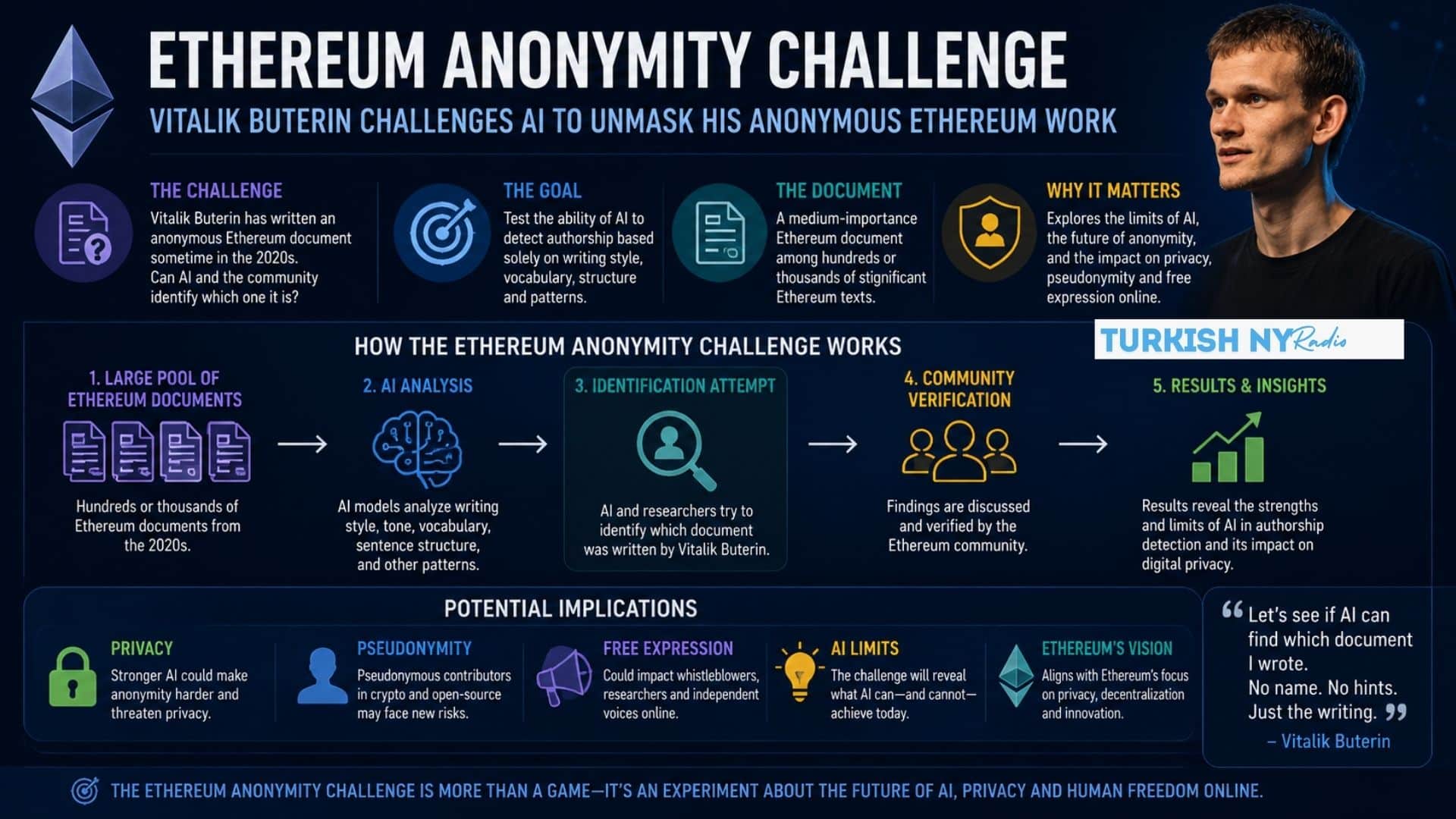
As noted by Buterin, the work in question is neither obscure nor significant. Instead, it is a medium-importance Ethereum document hidden among hundreds or even thousands of related publications. The Ethereum Anonymity Challenge is therefore designed to measure how effective AI tools truly are when faced with a large pool of potential candidates.
A Test of Digital Privacy
The Ethereum Anonymity Challenge has far-reaching ramifications beyond Ethereum. Many individuals use anonymity or pseudonyms when contributing to open-source programs, providing research, or engaging in public conversations.
If AI systems can consistently identify anonymous writers, privacy safeguards may be dramatically weakened. Critics believe that such technology may prevent whistleblowers, governmental academics, and anonymous contributors from openly expressing their opinions.”Anonymity has always played a major part in online social networks,” stated various observers on the topic. The Ethereum Anonymity Challenge demonstrates how fast growing AI capabilities might transform the environment.
What Does This Indicate for Ethereum?
Besides its technological ramifications, the Ethereum Anonymity Challenge reaffirms Ethereum’s fundamental commitment to privacy, decentralized governance, and creativity. This study is also consistent with Buterin’s wider interest in assessing the societal implications of developing technology.
The conclusion of the Ethereum Anonymity Challenge might give vital insights into whether secret participation is still feasible in a world dominated by machine learning.
Conclusion
The Ethereum Anonymity Challenge is more than just a game of guesswork. It is a real-world experiment that investigates the intersection of artificial intelligence, confidentiality, and online identities. As AI improves, issues like as confidentiality and authenticity are likely to become increasingly important. Whether AI successfully or not identifies Buterin’s unlabeled work, the topic has sparked significant discussion about the prospects of digital secrecy.
Summary
Vitalik Buterin announced the Ethereum Anonymity Challenge to see if artificial intelligence could detect a surreptitiously written Ethereum agreement made by him. This research initiative focuses on artificial intelligence-powered copyright verification and its consequences for privacy, anonymity, and online participation. The idea has sparked considerable interest in the cryptocurrency and artificial intelligence industries, underlining rising worries about internet privacy. Regardless of the outcome, the project gives valuable information regarding the evolving relationship among AI and personal security.
Glossary of Key Terms
Ethereum: An autonomous blockchain technology that enables intelligent contracts and decentralized apps.
Vitalik Buterin: A co-founder of Ethereum and a notable player in the digital currency business.
Artificial intelligence (AI): Systems of computers designed to accomplish activities that normally need intelligence from humans.
Stylometry: The study of written style to recognize or authenticate an individual.
Pseudonymity: The utilization of a fictitious name or identification while keeping a constant online identity.
FAQs for Ethereum Anonymity Challenge
1. What constitutes Ethereum Anonymity Challenge?
It is an effort undertaken by Vitalik Buterin to see if AI can recognize an unidentified Ethereum document he alleges to have created.
2. For what reason did Vitalik Buterin start this challenge?
The challenge intends to assess the efficacy of artificial intelligence-driven content identification and its consequences for privacy.
3. What’s known as stylometry?
Stylometry is the study of language patterns used to identify the most likely author of a document.
4. Why is anonymity crucial in cryptocurrency communities?
Anonymity enables participants to offer ideas, research, and comments without disclosing their true names.
5. What could the challenge reveal about AI?
It may demonstrate both the strengths and limitations of AI systems when identifying authors through writing style analysis.
Sources