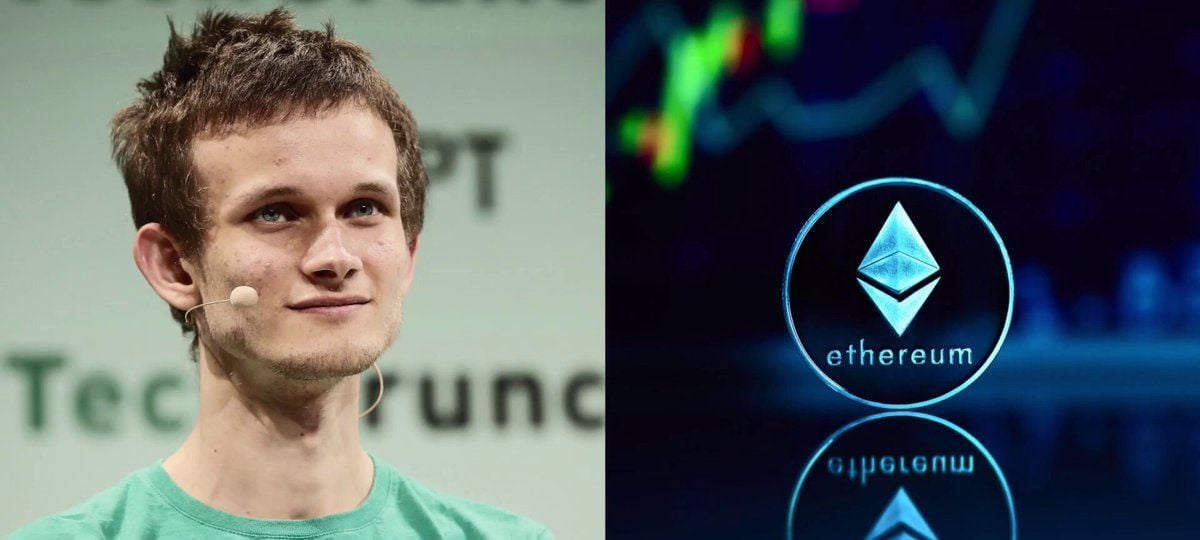
Ethereum (@ethereum) $ETH co-founder Vitalik Buterin (@VitalikButerin) says EIP-8288 could let users verify cryptographic computations without putting all the underlying data on-chain. The ap
Ethereum (@ethereum) $ETH co-founder Vitalik Buterin (@VitalikButerin) says EIP-8288 could let users verify cryptographic computations without putting all the underlying data on-chain. The approach would have users create STARK proofs locally and submit them through recursive aggregation, a method Buterin argues can support many cryptographic techniques without bloating the Ethereum blockchain.
Why Buterin says precompiles and the EVM fall short
In a post on X on October 19, Buterin argued that precompiles and the Ethereum Virtual Machine (EVM) are "the wrong place to put most cryptography support" in Ethereum, according to Gokhshtein Media. His reasoning is that both operate on data that must be included in a block as calldata, and that space is limited, with a practical cap of around 8 MB/s even with PeerDAS and blocks-in-blobs.
Instead, he pointed to what he called "EIP-8288 maximalism." Under that model, heavy computation is performed and STARK-proven on the client side, with only the proof pushed to the Ethereum chain.Users would generate arbitrary signatures locally, prove them via STARK and submit them through a STARK aggregator, removing the need for calldata on-chain and for Ethereum to add new precompiles, according to a ChainCatcher report.
What EIP-8288 proposes
EIP-8288 was authored by Buterin and Tomas Koratje and created in June 2026.It extends EIP-8141 with a new frame type that allows cryptographic signatures and STARK proofs to be aggregated off-chain, then verified with a single recursive STARK, without storing all the original data in the block.Each dependency is declared in a frame of an EIP-8141 transaction and checked by nodes before forwarding, while each block carries a single recursive STARK proving all its dependencies are valid.
The design is aimed at cutting costs. According to CoinDesk, citing Buterin's figures, quantum-resistant signatures typically need about 150,000 to 200,000 gas to verify, and a well-designed privacy transaction costing roughly 300,000 gas would rise to about 10 million gas if quantum resistance is also required.With EIP-8288, costs for both types of transactions could fall to the low tens of thousands of gas.Each block would carry an extra 100 to 300 KB STARK and 96 bytes of data per statement, per PANews.
The proposal could also affect Ethereum's choice of instruction set. In a September speech at ETHShanghai 2026, Buterin said EIP-8288 is likely to become the first scenario on Ethereum to truly introduce RISC-V or a similar instruction set.
The proposal is still early. It remains in the draft stage, and Buterin has said he hopes it can be included in the I-Star upgrade that follows Hegota. Any inclusion would depend on further review by Ethereum developers.
Sources:
Gokhshtein Media: EIP-8288 maximalism for Ethereum cryptographyEthereum Research: Exposing an ISA for post-quantum proofs on EthereumPANews: Vitalik introduces EIP-8288