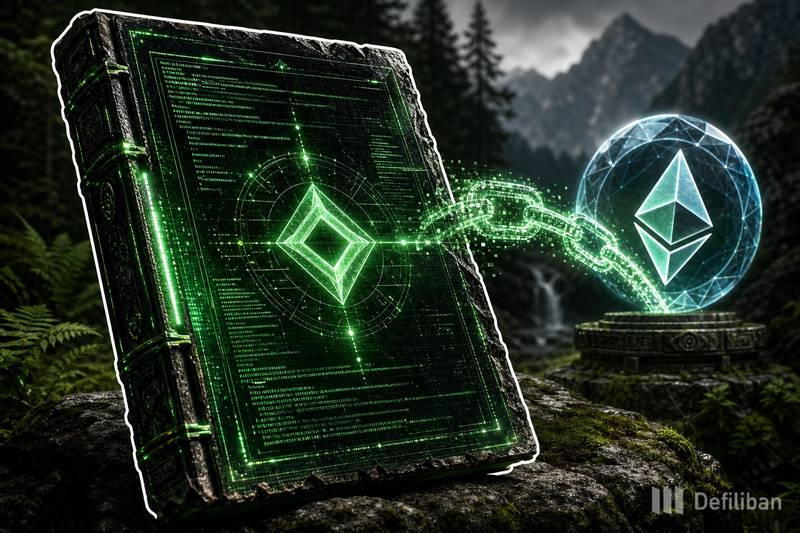
Vitalik Buterin has published a new long-form essay titled "Obfuscation: Building the Final Boss of Cryptography (Part I)," signaling a deep dive into one of the most challenging frontiers in
Vitalik Buterin has published a new long-form essay titled "Obfuscation: Building the Final Boss of Cryptography (Part I)," signaling a deep dive into one of the most challenging frontiers in cryptographic research.
The essay, posted on June 29, 2026, appeared on Buterin's personal blog. The title frames obfuscation as a pinnacle challenge in the field, one that Buterin considers significant enough to warrant a multi-part treatment. For related coverage, see Hyper Foundation Allocates $10 Million in Grants to Support USDH Migration.
What Buterin Published and How It Fits His Writing Pattern
The full title, "Obfuscation: Building the Final Boss of Cryptography (Part I)," positions the topic as both technically demanding and foundational. The "Part I" label indicates Buterin intends to explore the subject across multiple installments. For related coverage, see FHFA Directs Fannie Mae and Freddie Mac to Develop Proposals.
Obfuscation in cryptography refers broadly to techniques for making the internal workings of a program hidden while preserving its functionality. The concept has long been considered one of the hardest open problems in the field, which aligns with Buterin's "final boss" framing. For related coverage, see Chun Wang Withdraws 4,950 ETH From Binance as Total Outflows Reach 91,945 ETH.
Buterin has a history of using his blog to introduce complex cryptographic and protocol-level concepts to a broader audience. His previous writings have covered topics ranging from Ethereum's technical roadmap to broader philosophical questions about decentralization. This publication follows that pattern, with the Ethereum co-founder once again turning attention to deep infrastructure-level research rather than market commentary.
For readers following Buterin's broader influence on the Ethereum ecosystem, his past actions, including large ETH transactions and public advocacy for algorithmic stablecoins, have historically moved both technical discussion and market sentiment.
Why the Publication Matters to the Broader Crypto Discussion
The choice of obfuscation as a topic signals that Buterin sees it as increasingly relevant to the future of blockchain technology. Cryptographic obfuscation, if made practical, could enable new categories of applications where program logic remains private even while executing on public infrastructure.
The essay's publication was noted by crypto exchange Phemex in its coverage, reflecting immediate industry attention to the piece. When Buterin writes about a technical primitive at this level of depth, it often foreshadows areas where Ethereum development resources may eventually concentrate.
The topic sits at the intersection of privacy, computation, and verification, three pillars that underpin much of the current work in zero-knowledge proofs and secure multi-party computation. Buterin framing obfuscation as the "final boss" suggests he views it as a harder, more general problem than these adjacent techniques.
What to Watch After a Part I Publication
The explicit "Part I" label sets expectations for at least one follow-up installment. Buterin has not indicated a timeline for subsequent parts, but his multi-part series have historically appeared over weeks rather than months.
Readers should watch for how the crypto research community responds to the technical arguments in Part I, as that reception often shapes the direction of later installments. Developer forums, Ethereum research channels, and academic cryptography circles are the most likely venues for early reactions.
Whether obfuscation moves from theoretical discussion to practical protocol consideration will depend on the specific constructions and feasibility arguments Buterin presents as the series continues.
Disclaimer: This article is for informational purposes only and does not constitute financial or investment advice. Cryptocurrency and digital asset markets carry significant risk. Always do your own research before making decisions.
Read original article on defiliban.io