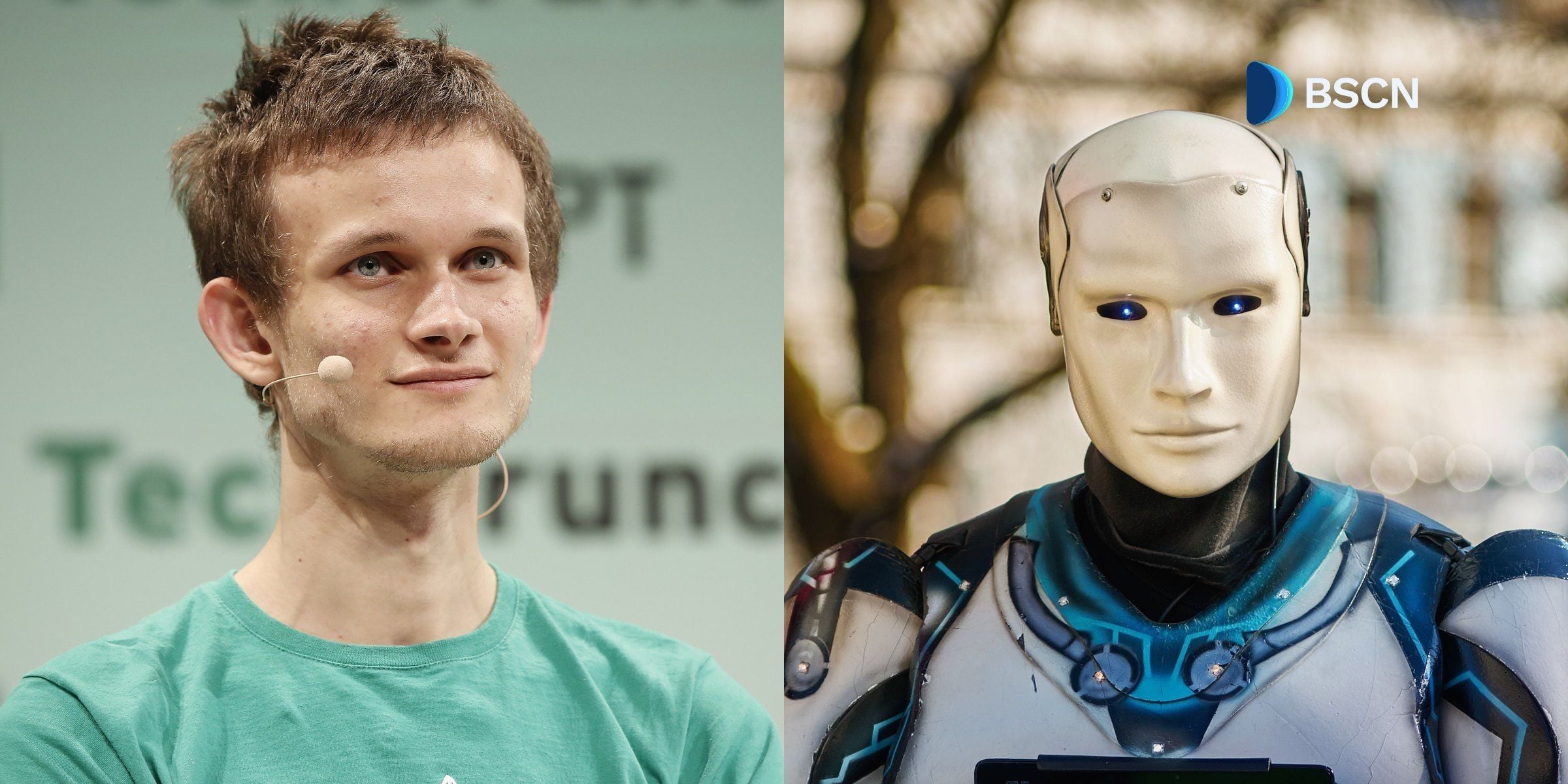
Ethereum (@ethereum) co-founder Vitalik Buterin (@VitalikButerin) has backed a decision by Chinese AI developer Moonshot AI to limit the offensive cyber capabilities of its new Kimi K3.1 Pro
Ethereum (@ethereum) co-founder Vitalik Buterin (@VitalikButerin) has backed a decision by Chinese AI developer Moonshot AI to limit the offensive cyber capabilities of its new Kimi K3.1 Pro model. He argues that restricting use cases is better than restricting users, and warns that poorly handled AI risks could push the industry toward heavy surveillance and identity-based access rules.
What Buterin said about Kimi K3.1 Pro
According to a post cited by Gokhshtein, Buterin wrote that he is "okay with Kimi 3.1 deliberately leaving out top-end offensive cyber capabilities" from its training data. He added that discriminating against use cases is much less bad than discriminating against users.
Buterin said the world needs as much time as possible to prepare, harden systems, check old code and formally verify new code before very powerful cyberattacks arrive. PANews reported that he also warned of a possible dystopia if this first wave of AI risk is mishandled: tightly locked down models, KYC checks on all access and pervasive surveillance. In that scenario, people could face different tiers of model access based on their credentials and nationality.
What Moonshot AI changed in the model
Moonshot AI announced the safeguards on October 24, according to StratNews Global. The Beijing-based company describes Kimi K3.1 Pro as its most capable open-weight model in the three-trillion-parameter class. It said it removed cyber-related data from the training corpus and reinforcement-learning environments, while keeping the model's general coding abilities.
In its technical blog, Moonshot said it aims not to release open weights that would extend the absolute frontier of cyber capability. It also said the model's offensive cyber capability is, by design, below what its own pipeline can produce.
The company reported that K3.1 Pro scored 81.0% on an internal cyber benchmark, compared with 90.5% for a similar version built without the risk-reduction measures. The Express Tribune, as relayed by UA.News, noted that these results have not been independently verified. The same report said Moonshot plans to publish the model weights by November 4.
There are open questions about how durable the limits will be. On a recent podcast, hosts Nathan Lambert and Florian Brand pointed to services that already offer safeguards-stripped versions of other open models, according to AI Weekly. They did not give a timeline for a modified K3.1 Pro, and Moonshot has not said how it would respond if one appeared.
Buterin has long focused on AI safety and privacy. Earlier this month he released an open-source privacy setup for AI agents that uses Tor routing and zero-knowledge payments to make it harder for model providers to identify users, BigGo Finance reported.
Sources
PANews: Vitalik endorses Kimi 3.1's removal of offensive cyber capabilitiesKimi: Kimi K3.1 Pro technical blogStratNews Global: Moonshot limits Kimi model's hacking capabilities