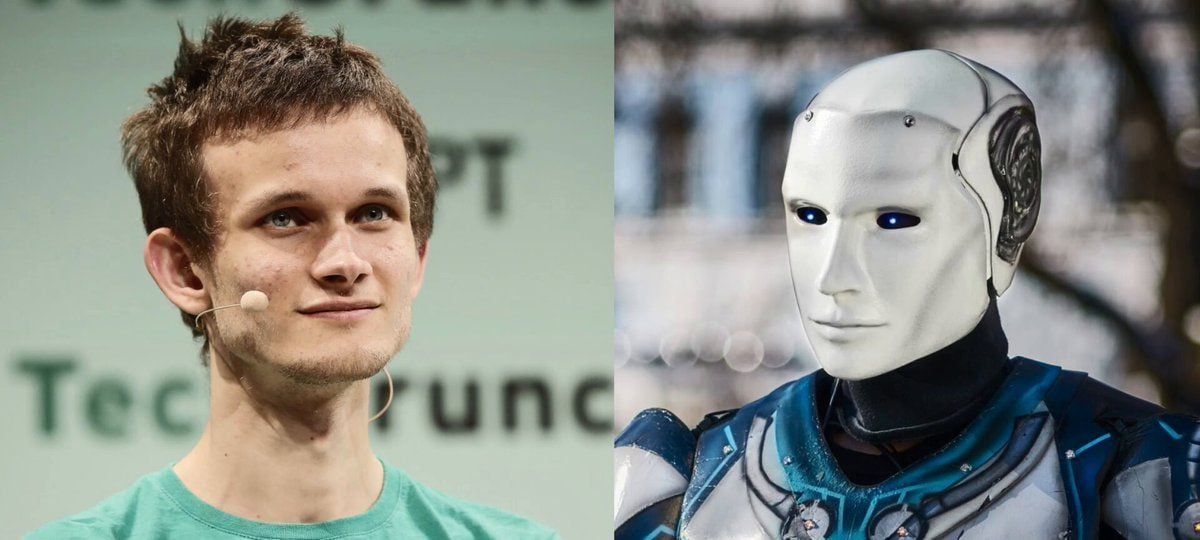
Ethereum co-founder Vitalik Buterin (@VitalikButerin) has shared details of a personal experiment testing how far privacy tools can shield sensitive data when using artificial intelligence fo
Ethereum co-founder Vitalik Buterin (@VitalikButerin) has shared details of a personal experiment testing how far privacy tools can shield sensitive data when using artificial intelligence for health and lifestyle advice.
A Three-Layer Privacy Stack
Buterin used his own health and travel data to generate personalised diet and exercise recommendations, with the goal of leveraging state-of-the-art AI models while minimising the exposure of private information to those systems.
In the experimental design, he used a local model, Qwen 3.8 Flash Next, for coordination and leveraged tool calls to access more powerful remote frontier models, enabling higher-level reasoning and knowledge beyond what the local model could provide on its own.
The setup applied three distinct privacy layers: first, the local model writes queries to the frontier model to avoid leaking personally identifiable information or revealing identity through writing style. The second layer uses zkAPI to prevent identity from being exposed through the payment channel, while the third uses Tor to provide network and IP-level privacy."You need all three," Buterin wrote.
A skill file instructed the local model when to seek outside assistance and how to construct requests revealing minimal data. The local model also wrote the queries instead of Buterin, addressing his concern that writing patterns could expose his identity.
Progress, But Clear Trade-Offs
Buterin stated that the experiment works and that enhanced insights from advanced models improved recommendations, though increasing privacy can limit the contributions of remote models.
He acknowledged the functional success of the approach while noting its drawbacks. The more cautiously the system behaves by sharing less data with remote models, the more limited the assistance it receives, highlighting an ongoing tension between AI utility and privacy.
Buterin also flagged that Tor is not well-optimised for request-by-request de-linking, noting it is "probably not private enough" while also adding latency 10 to 100 times higher than it could be.He linked to a new change in the Ethereum zkAPI repository that adds Tor-routed client support, with a pull request open as of October 4.
The experiment fits with his earlier focus on privacy as AI systems handle more personal information. Buterin argued in April 2025 that growing AI capabilities and centralised data collection increased the need for stronger privacy tools.
Sources:Vitalik Buterin tries AI that keeps personal data private – crypto.newsVitalik Buterin Tests Three Privacy Layers for Remote AI Requests – TokenPostEthereum Creator Vitalik Buterin Reveals Privacy-Focused AI Experiment – U.Today