Ethereum Is "Not Just a Blockchain Anymore" Ethereum co-founder Vitalik Buterin published an essay on September 27 mapping out how the network's architecture could change fundamentally by 203
Ethereum Is "Not Just a Blockchain Anymore"
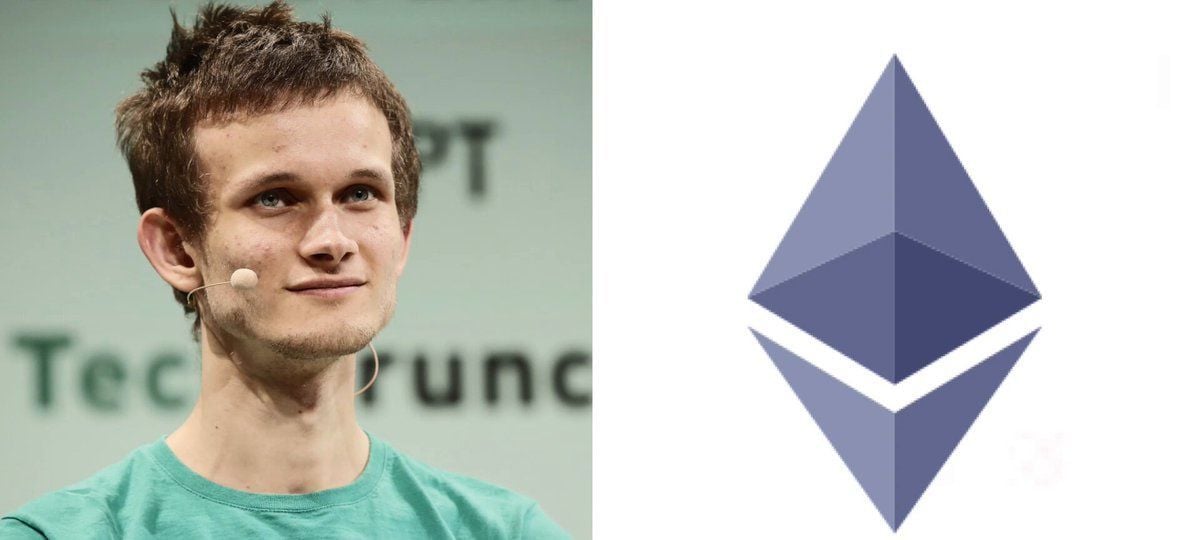
Ethereum co-founder Vitalik Buterin published an essay on September 27 mapping out how the network's architecture could change fundamentally by 2030. Sharing the piece on X, Buterin wrote that Ethereum is "really not just a blockchain anymore," calling it "a hybrid architecture that combines together blockchains and modern cryptography, to enable much more powerful properties."
Buterin titled the essay "The cryptographic world computer," describing a system combining blockchain with cryptographic proofs and external networks, aiming to boost scalability and privacy. Central to that shift is a move away from nodes downloading and executing every block. Instead, a single computer would process transactions and generate a concise cryptographic proof that it followed network rules, with other nodes validating the proof orders of magnitude faster than re-executing the original computation. Buterin also envisions mempool nodes combining signatures and proofs into a single recursive STARK before passing them to block builders, who would include an aggregated proof rather than process every large proof independently.
Buterin named concrete targets for 2030: block time is to fall from about 12 seconds today to 4 to 8 seconds, and finality from several minutes to 8 to 32 seconds.He added a caveat: "Ethereum itself will never have latency that competes with servers, but infrastructure built around it could."
Hegota, FOCIL, and the Road to Quantum Resistance
Buterin expects the Hegota upgrade, planned for next year, to be Ethereum's last "normal" fork, built with technology familiar to someone working on the network in 2015. Subsequent upgrades would increasingly rely on mathematical proofs, tools that check software for errors, and security designed to withstand future quantum computers.
Hegota is also where a key censorship-resistance mechanism is set to land. The Ethereum Foundation has designated FOCIL (EIP-7805) as a must-ship proposal for the Hegota upgrade. FOCIL lets validator committees force inclusion of legitimate mempool transactions, strengthening censorship resistance.FOCIL would let multiple validators require eligible transactions to appear in a block, reducing users' dependence on centralized block builders for inclusion.
Longer term, Buterin also expects aggregated signatures and multi-participant block construction to reshape how validation works across the network. The Ethereum Foundation's Protocol cluster has set a December 2029 target for making Ethereum's Layer 1 quantum-resistant across execution, consensus, and data.The cluster plans around quantum attacks becoming possible in 2030, while describing that assumption as deliberately aggressive, noting that most credible estimates place that threat later.
Ethereum's plans still require substantial engineering work. Producing proofs needs to become efficient enough for widespread use, and computers handling separate jobs must coordinate updates without interfering with one another. The 2030 vision remains a technical direction rather than a locked schedule. Even so, Buterin's essay signals that Ethereum's most consequential transformation may still lie ahead.
Sources:The Block: Vitalik Buterin maps Ethereum's path to 2030The Defiant: Ethereum Foundation sets 2029 quantum target and narrows Hegota scopeCrypto.news: Vitalik Buterin says Ethereum is becoming a cryptographic world computer