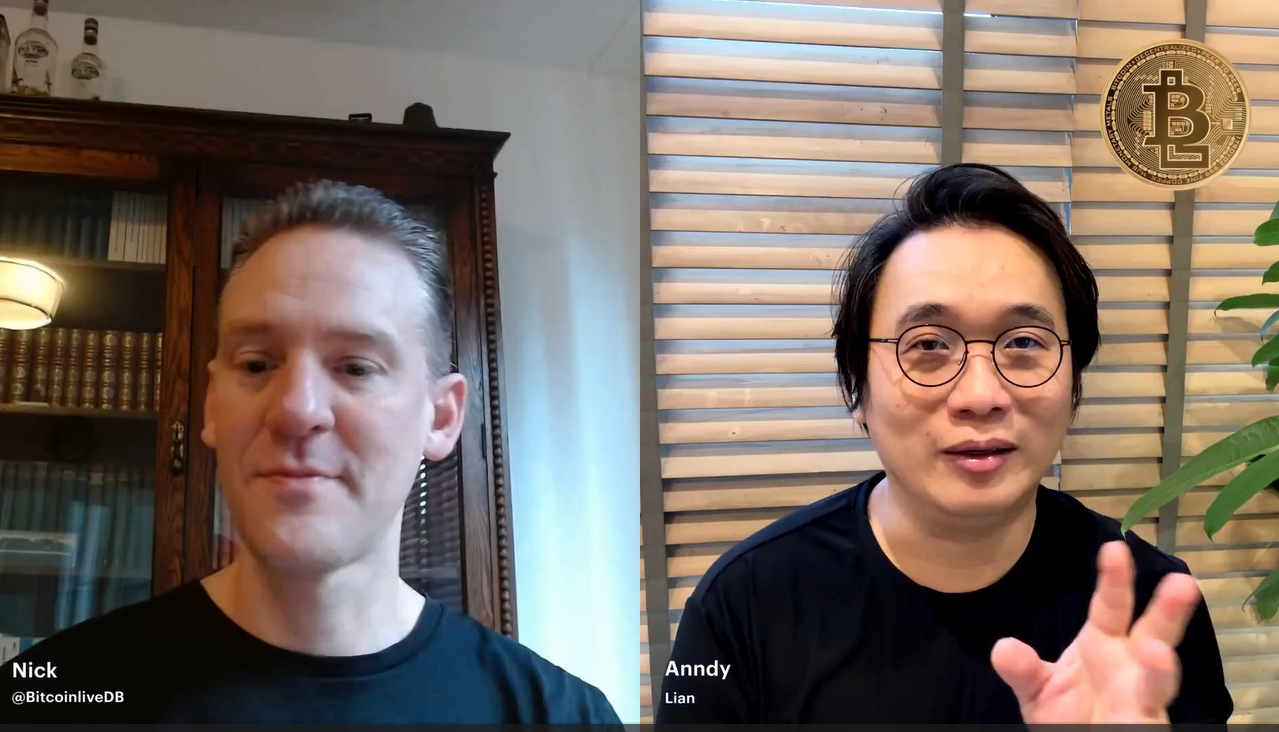
I had the pleasure of sitting down with Nick from BitcoinLive to discuss my latest book, Web4: The Age of Autonomous Intelligence. Writing this book was a rigorous journey—I went through 23 v
I had the pleasure of sitting down with Nick from BitcoinLive to discuss my latest book, Web4: The Age of Autonomous Intelligence. Writing this book was a rigorous journey—I went through 23 versions and trimmed a massive 950-page manuscript down to a readable 350 pages for the hardcover. I didn’t write this for the royalties; I wrote it to spread a critical message about the future of technology.
During the interview, Nick and I covered a lot of ground, but a few core themes really stood out regarding where we are heading.
The Web4 Thesis: AI is the Brain, Blockchain is the Spine
The central premise of Web4 is the perfect marriage between Artificial Intelligence and blockchain. In Web3, we saw a lot of centralization disguised as decentralization, plagued by human greed and flawed consensus mechanisms. Web4 fixes this.
In this new era, AI acts as the "brain," providing immense computing power and reasoning capabilities. Blockchain acts as the "spine" or nervous system—the immutable trust and security layer. When you combine them, AI agents can operate autonomously, while blockchain ensures every transaction, decision, and movement of funds is transparently recorded and accountable. This synergy eliminates the need for human intervention in daily operations, paving the way for true, uncompromised decentralization.
The Urgency of Decentralized, Open-Source AI
If AI is the brain of Web4, we cannot allow that brain to be monopolized by a handful of massive tech corporations. Currently, centralized AI models can be shut down, censored, or weaponized by the entities that control them.
This is why I strongly advocate for open-source AI. If we want true autonomy, the community must provide the computing power. We are already seeing incredible advancements in open-source models from Asia that are highly accessible and cost-effective. If the West wants to keep up, it needs to embrace cheap, open-source models rather than hiding behind expensive, closed-off ecosystems driven by corporate and government restrictions.
Pragmatism in Government Adoption
Having advised many governments on blockchain policy, I’ve learned that regulators fundamentally want three things: control, tax revenue, and productivity. They don't want to hear about pure decentralization.
When advising them, I don't push ideological decentralization; I push practical utility. For example, if a government wants to tokenize Real World Assets (RWAs) like national stocks, I advise them against using a public blockchain like Ethereum or Solana. Public chains expose them to front-running and privacy issues. Instead, I guide them toward private or hybrid blockchains that offer 24/7 operational efficiency and transparent audit trails without compromising national security.
Humans as the "Architects" of Web4
A common fear is that AI will make humans obsolete. I want to reassure everyone: in Web4, humans will not be jobless; we will become "architects."
We will design the interfaces, protocols, and data layers, and then delegate the execution to AI. Instead of spending eight hours doing manual labor or repetitive digital tasks, AI will handle 90% of the heavy lifting, leaving us with more free time. While semi-automation is here now, I predict full automation—where robotics and AI seamlessly integrate into physical and digital workflows—will mature around 2035. Until then, our job is to learn how to prompt, reason with, and direct these systems effectively.
Macroeconomics and the Bitcoin Outlook
Finally, we touched on the macroeconomic landscape and Bitcoin’s price trajectory. The reality is that crypto is deeply tied to global liquidity and macro factors, particularly oil prices and geopolitical tensions in the Middle East. If oil prices remain high, inflation will spike, and risk assets will suffer.
For Bitcoin to hit $100,000 by the end of the year, we need a favorable macro environment: controlled interest rates, stabilized oil prices, and stimulus checks to inject new liquidity into the market. If those conditions aren't met and we continue to see a lack of new money flowing in, a correction down to the $44,000 range early next year is highly probable. It all comes down to liquidity.
Embrace the Future
Web4 is not just a buzzword; it is the inevitable evolution of the internet. The internet is about to think for itself, execute for itself, and make decisions for itself. The transition won't happen overnight, but the foundation is being laid right now.
I encourage everyone to look beyond the hype of Web3, embrace the integration of AI and blockchain, and start thinking like an architect. The future is automated, decentralized, and incredibly exciting.
About Web4 Book:
Web4: The Age of Autonomous Intelligence by Anndy Lian
https://www.amazon.com/Web4-Autonomous-Intelligence-Anndy-Lian-ebook/dp/B0H35597HS
https://youtu.be/fR76bwKgUWo?si=0OjXE-Mt8CPot7Eq