An AI-assisted audit using Anthropic’s Opus 4.8 uncovered a critical vulnerability in Zcash’s Orchard shielded pool that could have enabled unlimited counterfeit ZEC creation. The flaw remain
- An AI-assisted audit using Anthropic’s Opus 4.8 uncovered a critical vulnerability in Zcash’s Orchard shielded pool that could have enabled unlimited counterfeit ZEC creation.
- The flaw remained undetected for nearly four years before researchers developed a proof-of-concept exploit and developers deployed an emergency patch.
- Zcash (ZEC) fell more than 36% following the disclosure, as investors questioned the network’s supply integrity and long-term credibility.
- The incident showcased AI’s growing role in cybersecurity, highlighting its ability to identify complex vulnerabilities that traditional audits may miss.
AI-Assisted Audit Exposes Critical Vulnerability in Zcash
The cryptocurrency industry is facing one of its most significant security incidents of 2026 after an AI-assisted audit uncovered a critical vulnerability in Zcash’s Orchard shielded pool, triggering a sharp market selloff and reigniting debate over the future of blockchain security.
Security researcher Taylor Hornby discovered the flaw while using Anthropic’s Opus 4.8 AI model to analyze Zcash’s privacy infrastructure. According to researchers, the vulnerability had remained hidden since the launch of the Orchard shielded pool in May 2022, leaving the network exposed for nearly four years.
The flaw could have allowed an attacker to create unlimited counterfeit ZEC tokens without detection. Due to the privacy-preserving design of the Orchard pool, any illicitly minted coins may have been impossible to distinguish from legitimate ones. Researchers reportedly developed a working proof-of-concept exploit before developers deployed an emergency patch to secure the network.
Zcash Price Plunges as Trust Takes a Hit
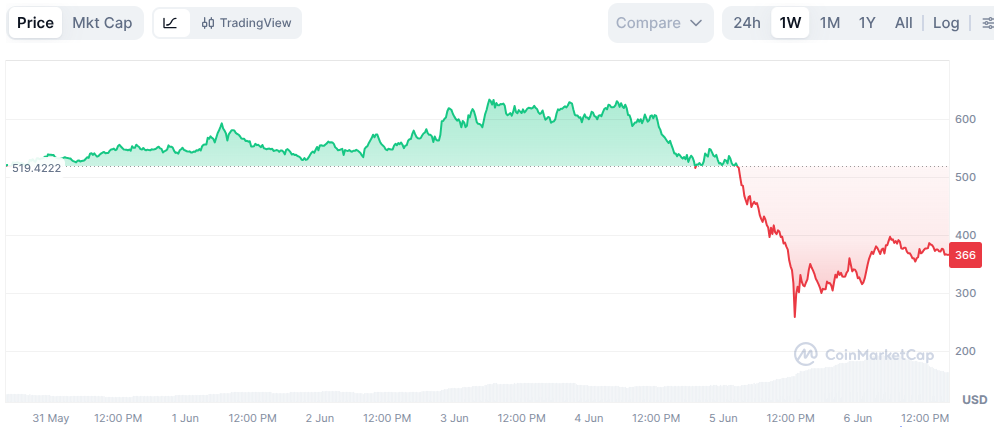
The disclosure sparked an immediate market reaction, with Zcash (ZEC) plunging more than 36% in a single day (June 5) as investors rushed to reassess the project’s risk profile.
The selloff inflicted significant losses on large holders. Blockchain analytics platform Arkham highlighted the market fallout in a post on X, stating, “THIS ZEC WHALE IS DOWN $70 MILLION IN A DAY,” underscoring the scale of wealth erased as the privacy coin’s price collapsed following the vulnerability disclosure.
The selloff came during an already challenging period for the broader cryptocurrency market, with Bitcoin and Ethereum hovering near critical technical support levels amid weakening sentiment and reduced trading activity.
Investor concerns extend beyond the vulnerability itself. Because of the privacy-focused nature of the affected system, there is currently no cryptographic proof confirming that counterfeit coins were never created before the bug was fixed. This uncertainty has raised questions about Zcash’s monetary integrity and long-term credibility.
The incident has also reignited debate about the relationship between artificial intelligence and cryptocurrency. As AI continues to dominate technology headlines and attract investment, some industry observers have questioned whether crypto innovation is losing momentum.
Following the Zcash disclosure, Gabriel, a crypto commentator on X, remarked, “CRYPTO IS DEAD. WE SHOULD HAVE PIVOTED TO AI.”
The comment quickly gained traction across social media, reflecting growing discussion around AI’s expanding influence on technology and financial markets.
Arthur Hayes Sells Entire Zcash Position
Among the most notable responses was that of Arthur Hayes, co-founder of BitMEX and Chief Investment Officer of Maelstrom, who announced that he had liquidated his entire ZEC position following the disclosure.
Hayes explained that while he believes exploitation of the vulnerability was unlikely, the inability to verify the network’s historical supply undermined his investment thesis. For investors, he argued, uncertainty around supply integrity represents a risk that cannot be easily quantified.
Despite exiting his position, Hayes indicated he could reconsider investing in Zcash if future upgrades provide stronger guarantees regarding the authenticity and traceability of the network’s circulating supply.
Network Reliability Faces Additional Scrutiny
The vulnerability disclosure arrived shortly after Zcash experienced another setback. Earlier in the week, the blockchain appeared to go nearly four hours without producing a new block, prompting concerns about network stability.
According to multiple Zcash block explorers, the most recent visible block was 3,364,601 after the activation of the network upgrade at block 3,364,600. While some observers believed block production had stalled, the Zcash blockchain itself continued operating normally.
The issue was traced to several block explorers that had not updated their nodes following the upgrade, causing them to stop displaying new blocks despite ongoing network activity.
Although developers later attributed the issue to explorer-related problems following a network upgrade rather than a consensus failure, the incident added to growing scrutiny surrounding the project’s operational reliability.
Following the disclosure, some community members pushed back against claims that the incident represented a failure of the protocol. A community analysis titled “Zcash Was Tested, Not Broken: A Rational View on the Orchard Incident” argued that the vulnerability was discovered, responsibly disclosed, and patched before any known exploitation occurred, demonstrating the resilience of Zcash’s security processes.
AI’s Growing Role in Cybersecurity
Beyond its impact on Zcash, the incident highlights the rapidly evolving role of artificial intelligence in cybersecurity and blockchain auditing.
What human reviewers and traditional security processes failed to detect for years was reportedly identified within hours using advanced AI-assisted analysis. The discovery is being viewed as a potential turning point for the industry, demonstrating how AI could significantly improve the detection of vulnerabilities in increasingly complex software systems.
Following the Zcash finding, Hornby reportedly added Monero (XMR), the largest privacy-focused cryptocurrency by market capitalization, to his audit queue. The move has drawn attention across the privacy coin sector as developers and investors evaluate whether similar risks could exist elsewhere.
A Double-Edged Sword for Security
While many experts see AI as a powerful new defensive tool, others warn that the technology may create new challenges.
Supporters argue that AI can accelerate code reviews, formal verification processes, and vulnerability detection, helping developers secure blockchain networks more efficiently than ever before.
Critics, however, caution that the same technology could also empower attackers. As AI systems become more capable of analyzing complex codebases, cybercriminals may be able to discover and exploit vulnerabilities faster than organizations can respond, creating what some researchers describe as an “asymmetric security war.”
The implications could extend far beyond cryptocurrency, potentially affecting banking systems, payment networks, and other critical financial infrastructure.
Supporters argue that AI can accelerate code reviews, formal verification processes, and vulnerability detection, helping developers secure blockchain networks more efficiently than ever before. Dragonfly Managing Partner Haseeb Qureshi echoed this view, arguing that AI discovering vulnerabilities is ultimately beneficial because it will strengthen software security through formal verification and help eliminate entire classes of bugs across the industry.
What Comes Next?
Zcash developers and Shielded Labs are now focused on strengthening transparency measures and implementing upgrades designed to reinforce confidence in the network’s supply integrity.
For the broader cryptocurrency industry, the incident may ultimately be remembered as more than just a security scare. It serves as a powerful reminder that even mature and heavily scrutinized blockchain protocols can contain hidden vulnerabilities, and that artificial intelligence is rapidly transforming the way those vulnerabilities are discovered.
Whether the Zcash episode becomes known as a costly failure or one of the first major examples of AI preventing a catastrophic exploit before it could be weaponized remains to be seen. What is already clear, however, is that the intersection of AI and cybersecurity is becoming one of the most important themes shaping the future of digital assets.
Zcash Price Shows Signs of Recovery After Sharp Selloff
 Zcash Graph
At the time of writing (10:46 AM UTC June 6), Zcash (ZEC) traded at $366.20, up 9.96% in the last 24 hours but still down 29.68% over the past week. The rebound suggests some buyers have returned following the panic-driven selloff, although the privacy coin remains significantly below levels seen before the disclosure of the Orchard shielded pool vulnerability.
Conclusion
The Zcash Orchard vulnerability marks one of the most significant crypto security events of 2026, demonstrating both the risks hidden within mature blockchain networks and the transformative potential of AI-assisted security research. While the flaw was patched before any confirmed exploitation occurred, uncertainty surrounding the historical integrity of Zcash’s supply triggered a sharp market reaction and renewed scrutiny of privacy-focused cryptocurrencies. At the same time, the discovery reinforces the value of AI as a powerful tool for vulnerability detection, potentially shaping the future of blockchain security and software auditing across the digital asset industry.