What is Tokenomics? Explore Supply, Utility, Allocation, Demand Terms Anyone who has spent even a week scrolling through crypto Twitter has run into the word "tokenomics". It gets thrown arou
What is Tokenomics? Explore Supply, Utility, Allocation, Demand Terms
Anyone who has spent even a week scrolling through crypto Twitter has run into the word "tokenomics". It gets thrown around in project pitches, YouTube thumbnails, and Telegram groups as though everyone already understands it. Most people don't. They nod along, check the price chart, and move on. That's a problem, because tokenomics is arguably the single most useful lens for figuring out whether a project has a real shot at surviving or whether it's just a well-marketed way to separate people from their money.
What is Tokenomics?
At its core, tokenomics is simply the economics of a token – how it's created, distributed, used, and eventually removed from circulation. The word is a mashup of "token" and "economics", and once that clicks, the rest of the concept stops feeling mysterious. A token model is basically the financial constitution of a crypto project It decides who gets rich, who gets diluted, and whether the whole system can hold together once the initial hype fades.
This piece walks through what tokenomics actually means, why it matters more than most people realise, and how to read a token model the way an experienced investor would without needing a finance degree to do it.
Why Tokenomics Deserves More Attention Than the Price Chart
New investors tend to obsess over price. That's understandable, but price is an output, not a cause. It's the result of everything happening underneath supply schedules, unlock dates, demand drivers, and incentive structures. A coin can pump on a headline and still be structurally doomed if its tokenomics are broken.
Take a project that mints new tokens every day to reward stakers, without any real source of demand pulling those tokens back out of circulation. The maths is simple: more supply, the same or shrinking demand, and falling prices. It doesn't matter how good the app is or how active the community seems on social media. If the token model leaks value faster than it creates it, the price eventually reflects that.
This is why seasoned traders and analysts read the tokenomics section of a whitepaper before anything else. It tells them how the project is wired internally, long before the market figures it out.
The Building Blocks of a Token Model
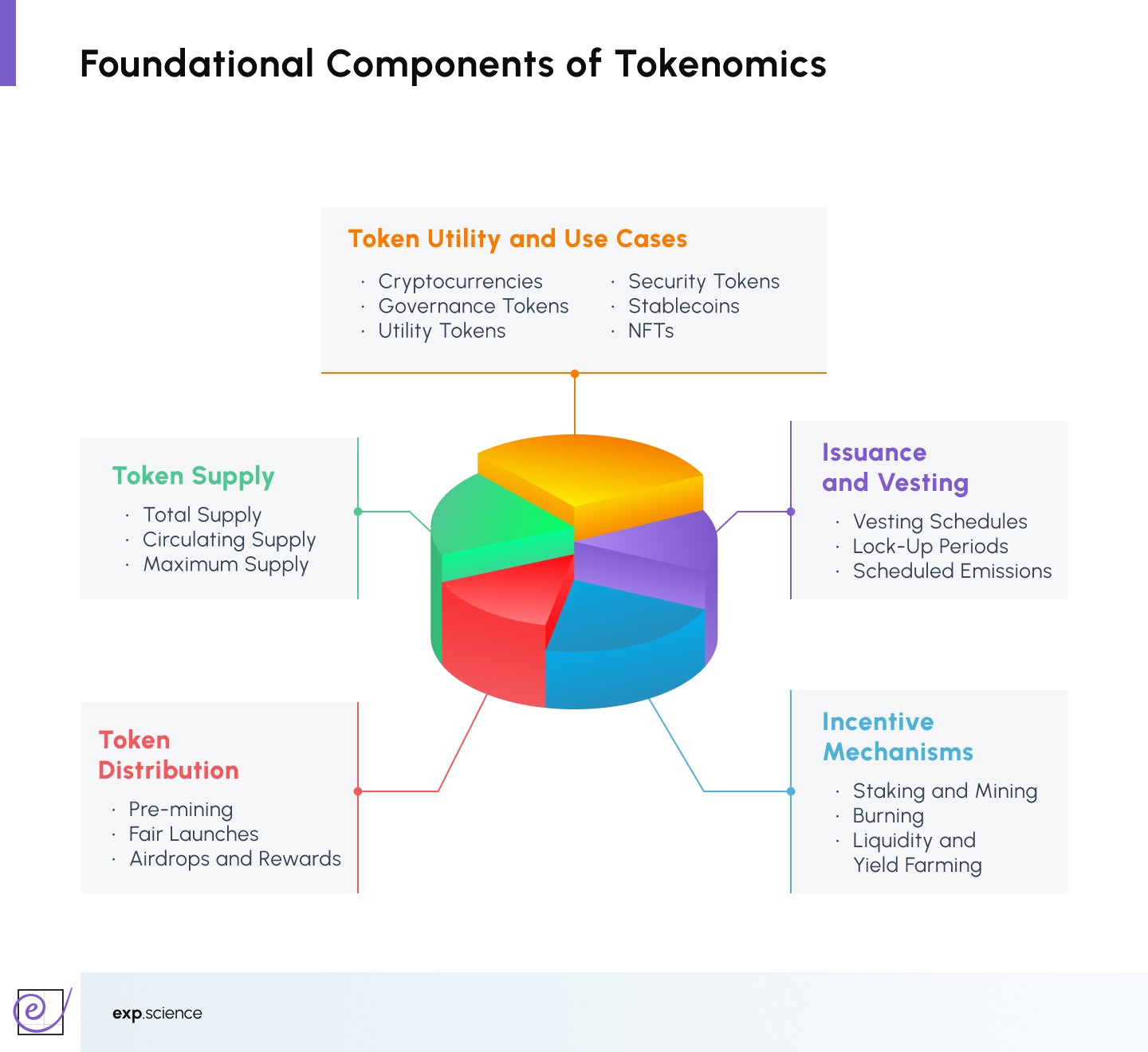
A token model isn't one single number; it's a handful of moving parts that work together. Understanding each piece individually makes the whole picture much easier to judge.
Total Supply, Circulating Supply, and Max Supply
Total supply is how many tokens exist right now. Circulating supply is how many are actually available to be bought and sold. The max supply is the hard cap; if there is one, Bitcoin ($BTC) famously caps out at 21 million, while many newer tokens have no cap at all and can be minted indefinitely.
The gap between circulating and total supply matters a lot. If only 15% of a token's total supply is circulating today, that means 85% is sitting somewhere, usually with the team, early investors, or a treasury, waiting to be released. That's not automatically bad, but it's information a buyer needs before assuming today's price reflects tomorrow's reality.
Allocation and Vesting
This is where a lot of retail buyers get burnt. Allocation refers to how the token supply is split up: how much goes to the founding team, early venture investors, the community, ecosystem grants, and public sale participants. Vesting refers to the schedule on which locked tokens become spendable.
A model where insiders hold 40% of the supply with a one-year cliff and a two-year linear unlock is a very different bet than one where the community holds the majority and insiders vest slowly over four or five years. Steep, early unlocks for insiders are one of the most reliable predictors of future sell pressure. Smart readers pull up the vesting chart before they pull up the price chart.
Utility: What the Token Is Actually For
A token needs a job. Maybe it pays for gas fees like Ethereum’s Ether, maybe it grants governance votes $UNI (UniSwap), maybe it's required to access a product, maybe it captures a share of protocol revenue. The stronger and more organic that demand driver is, the more sustainable the token's value tends to be over time.
Plenty of tokens fail this test quietly. They exist mainly as a speculative vehicle with a thin layer of "utility" bolted on for the crypto whitepaper a governance vote nobody uses and a staking reward funded by inflation rather than revenue. Reading a token model means asking, bluntly, why would anyone need to hold or buy this beyond hoping the price goes up?
Incentives and Emissions:
Emissions describe how new tokens enter circulation over time, often through staking rewards, liquidity mining, or ecosystem incentives. High emissions can bootstrap early activity, but they also create constant sell pressure from participants cashing out rewards. A healthy model usually tapers emissions over time and ties rewards to genuine network usage rather than pure participation.
How to Actually Read a Token Model, Step by Step
Reading a token model doesn't require a spreadsheet degree. It helps to move through it in a consistent order: start with supply and max supply, then check circulating supply against total supply to see how diluted the market cap already is. From there, look at allocation percentages and vesting timelines, paying close attention to how much unlocks in the next six to twelve months. Then ask what the token is actually used for, and whether that use case creates real, recurring demand. Finally, check the emissions schedule to see whether inflation is being controlled or left to run unchecked.
Doing this consistently turns tokenomics from an intimidating whitepaper section into a practical checklist, one that separates projects built to last from projects built to exit.
Final Thought on What is Tokenomics?
Tokenomics won't tell an investor exactly when to buy or sell, and it isn't a guarantee against volatility. What it does offer is a clearer picture of what's happening beneath the surface of a project, who benefits, who gets diluted, and whether demand has any real chance of keeping pace with supply. In a market full of noise, that kind of clarity is worth far more than another price prediction.
Risk Disclosure and Disclaimer
Cryptocurrency markets are highly volatile, and token prices can rise or fall sharply within short periods. Nothing in this article should be treated as financial, investment, or legal advice. The information shared here is intended purely for educational purposes, to help readers understand how tokenomics works and how to evaluate a token model more critically.
Every project carries its own risks, including but not limited to smart contract vulnerabilities, regulatory changes, low liquidity, team-related risks, and market manipulation. Past performance of any token or project is not indicative of future results, and a strong tokenomics structure does not guarantee price appreciation or long-term success.
Readers are strongly encouraged to conduct their own research (DYOR), consult a qualified financial advisor, and only invest amounts they can afford to lose. The author and publisher of this article do not hold responsibility for any financial losses incurred based on the information provided here.