AI is one of the most crowded narratives in crypto. New tokens attach the word "AI" to their name every week, and it is hard to tell which ones solve a real problem. One practical way to cut
AI is one of the most crowded narratives in crypto. New tokens attach the word "AI" to their name every week, and it is hard to tell which ones solve a real problem.
One practical way to cut through the noise is to look outside crypto first. Where are ordinary people already paying for AI every month, and why do they keep paying? Consumer AI apps answer that question with real behavior, not roadmaps.
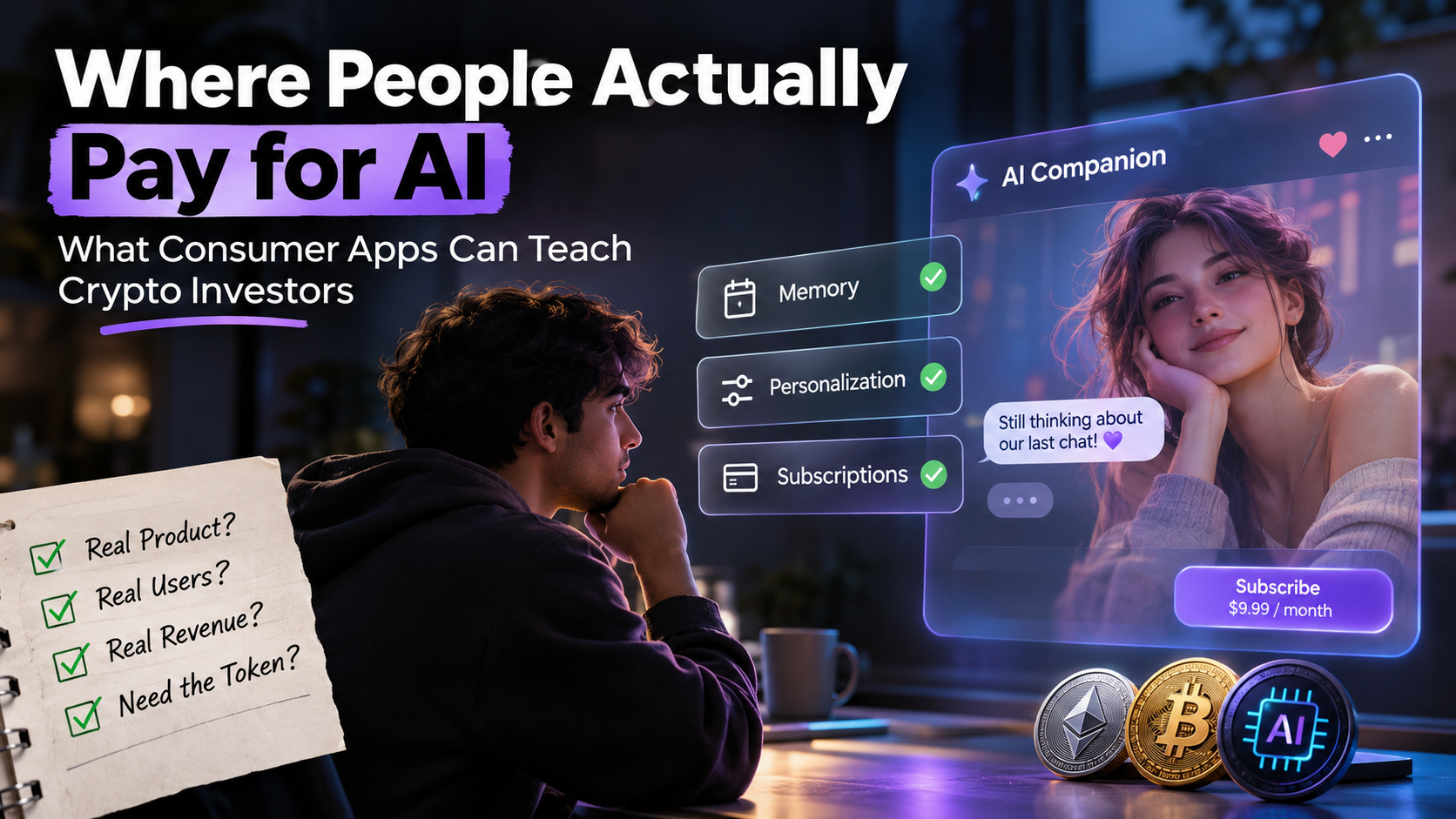
AI companion apps are among the clearest examples of consumer AI that people use daily. Users create a persistent character and keep talking to it over weeks or months.
Three design choices explain why this category holds attention:
Memory. The character remembers past conversations, so the product gets more valuable the longer someone uses it. That creates switching costs.
Personalization. Users shape the character themselves, so they feel ownership of what they built.
Subscriptions. Daily use fits a monthly payment, which gives the business predictable recurring revenue.
None of this needs a token. That is exactly why it is a useful benchmark: it shows what organic demand for AI looks like when no one is paid to show up.
MyDreamCompanion, a Berlin-based service for adult users, is a typical example of the model. Users design a character's appearance, personality and backstory, then chat with it in the browser. The AI keeps track of earlier conversations, and the platform can also generate images of the character.
The business model is simple. A free tier lets people try the product, and paid plans unlock more features. The company also runs an affiliate program, so part of its growth comes from partners who refer new users rather than from paid ads alone.
For an investor, the structure matters more than the brand. The value sits in three places: the user's history with the product, a working payment flow, and a distribution channel. These are the same things many AI tokens promise but cannot yet show.
Use consumer AI apps as the baseline. If a token-based AI project cannot pass the same tests a subscription app passes, the token is likely carrying the story on its own.
Question to ask
Strong answer
Red flag
Is there a working product today?
Public app or API people can use now
Only a whitepaper, waitlist or demo video
Who pays, and for what?
Users or businesses pay for a clear service
Revenue comes mainly from token sales or emissions
Do users come back?
Visible repeat usage and active communities
Activity spikes around airdrops, then drops
Does the product need the token?
Token has a specific role (payments, access, compute)
Product would work the same without it
Who covers AI compute costs?
A clear model: fees, subscriptions or staking
Costs not explained, or subsidized by the treasury
Is the team transparent?
Named team, public updates, audited contracts
Anonymous team, vague roadmap, no audits
No single answer settles the question. A project with several red flags deserves extra caution, however strong its marketing looks.
Consumer AI has its own weak points, and they apply to crypto AI projects too.
Regulation. Rules on AI, data protection and age verification are tightening in several regions. Companion apps for adults face extra scrutiny.
Privacy. Personal conversations are sensitive data. Users should read how a service stores and uses their chats.
Platform dependence. App stores and payment processors can restrict a category overnight. Some projects see crypto payments as a hedge against this, which is one place where the two worlds may meet.
Compute costs. Running AI models is expensive. Any business, with or without a token, must earn more per user than it spends on inference.
The AI narrative in crypto will keep producing new tokens. The projects most likely to last will look like good consumer software underneath: a product people return to, someone willing to pay, and costs that add up.
Before buying into any AI token, compare it with an app that already earns from real users. If the token project cannot explain what it does better, that gap is the answer.
This article is for information only and is not financial or investment advice. Always do your own research.