Before Flutterwave became Africa’s most valuable fintech, it was a pitch that made investors walk out of the room. In a past episode of the Afropolitan podcast, Flutterwave co-founder Iyinolu
Before Flutterwave became Africa’s most valuable fintech, it was a pitch that made investors walk out of the room.
In a past episode of the Afropolitan podcast, Flutterwave co-founder Iyinoluwa Aboyeji pulled back the curtain on what building the company actually felt like in its early days, and the picture is nothing like the celebrated success story most people know today. In 2016, he said, the Flutterwave pitch sounded “insane” to almost everyone who heard it.
The reason was simple. Flutterwave intended to compete directly with Interswitch, Nigeria’s dominant payments company and the established infrastructure backbone of the country’s financial system at the time. For most investors, that was enough to end the meeting.
“As soon as they heard we wanted to take on Interswitch, they would just close the conversation,” Aboyeji said.
The company was not pitching a niche product or an underserved segment. It was going after the market leader head-on with a better product and a bigger vision.
Investors, particularly those unfamiliar with the specific dynamics of Nigeria’s payments market, heard that and heard risk. Most of them stopped listening.
Flutterwave 600 investors, $5,000 cheques, and one conviction for Flutterwave
What followed was a fundraising process that tested the resolve of Aboyeji, co-founder and CEO Olugbenga Agboola, and their team in ways that would have broken most founders. They pitched to approximately 600 investors before securing their first round of funding. Their cap table eventually included 150 investors, with many of the early cheques coming in at $5,000 to $10,000, amounts so small they reflected not confidence but a calculated willingness to take a small bet on something most people did not believe in.
Their first round after Y Combinator raised $500,000. The largest cheque in that round came from Greycroft, not because Greycroft had independently identified Flutterwave as a compelling opportunity, but because the firm had previously backed Aboyeji at Andela, and a persistent advocate pushed the investment through.
In other words, even the biggest cheque in their first round was relationship-driven rather than conviction-driven.
Aboyeji described his fundraising style as “brutal”, honest to the point of discomfort. He told investors that Interswitch existed. He told them exactly what the risks were. He refused to package the pitch in a way that softened the competition or obscured the difficulty of the mission. That transparency, he said, was deliberate. He was not interested in investors who would panic when reality set in. He wanted people who understood what they were getting into.
Most of those 600 investors declined.
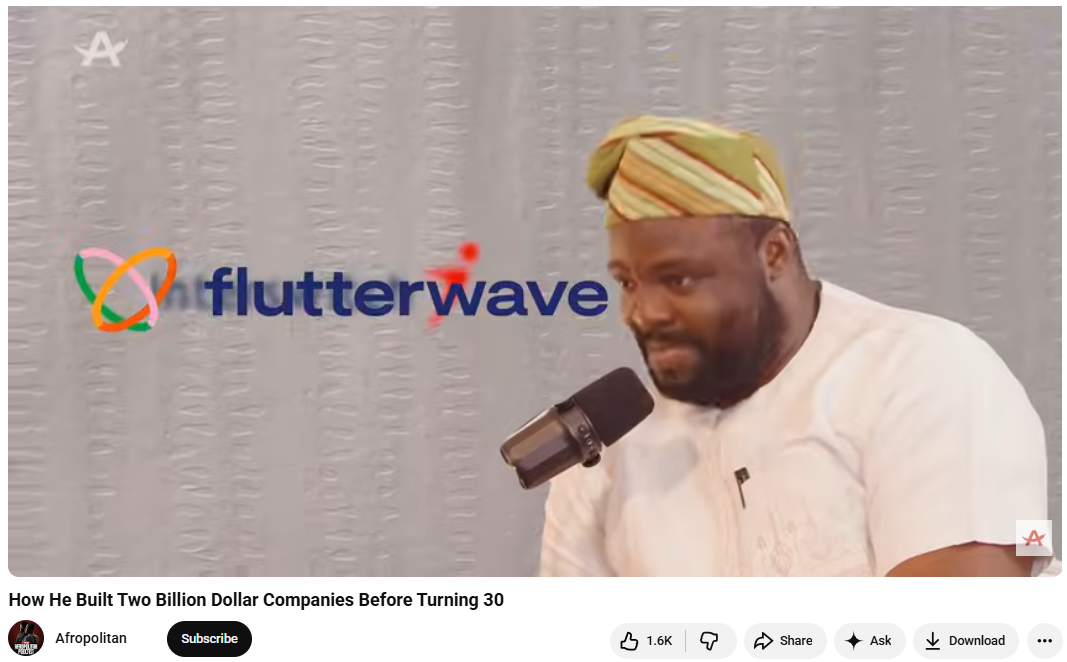
Flutterwave co-founder Iyinoluwa Aboyeji on the Afropolitan podcast From $500,000 to becoming Africa’s most valuable fintech
The ones who said yes eventually backed one of the most consequential companies in African technology history.
Flutterwave has since processed more than one billion transactions and moved over $40 billion in value, supporting more than two million businesses across Africa and connecting the continent to global payment networks. The company has raised hundreds of millions of dollars across multiple funding rounds, including a Series D that valued it at over $3 billion, making it one of Africa’s few private companies to achieve unicorn status.
In 2026, Flutterwave crossed another milestone: it received a banking licence from the Central Bank of Nigeria, allowing it to move from being a payments infrastructure provider to operating as a full financial services institution. The licence enables Flutterwave to offer business accounts, lending, payroll management, and multi-currency transactions on a single platform, an evolution that CEO Agboola has described as stepping “into the core of the system.”
Also read: Flutterwave promotes 25% of workforce, expands employee benefits as it celebrates 10 years
The company also announced plans to establish a regional hub in Anambra State as part of its South-East Nigeria expansion, with commitments to bring POS infrastructure, loans, and entrepreneurship support to small businesses in the region.
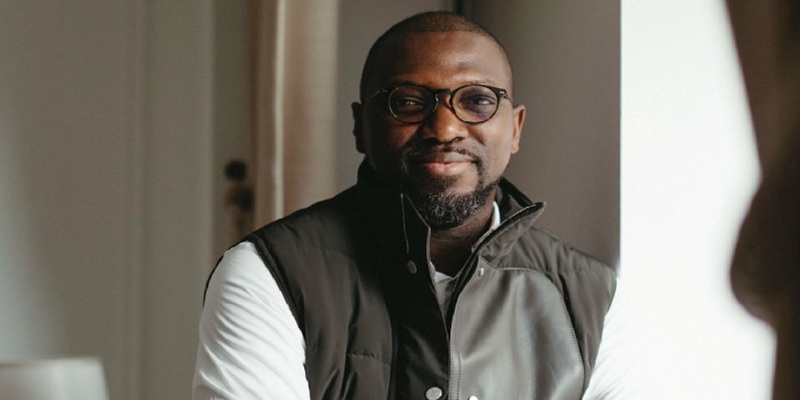
Flutterwave Founder/CEO, GB Agboola
None of that existed when Aboyeji and his co-founders were sitting in front of investor 347, or investor 512, or investor 599, hearing the same polite version of no. What existed then was a conviction that the dominant player in a market is not the same thing as the best player in a market, and that the gap between those two things was worth building for.
The story of Flutterwave’s early fundraising is worth telling not because it is unusual in the African startup ecosystem, but because it is representative. Many of the continent’s most important companies looked like bad ideas at the start. The founders who built them were not lucky. They were persistent in a way that most people, including most investors, are not built to sustain.
Six hundred rejections. One yes. A $3 billion company.