Crypto woke up in the red today, July 8, 2026. Just a day after Bitcoin, Ethereum and XRP had pushed past key levels and the mood was turning optimistic, the market flipped within hours. The
Crypto woke up in the red today, July 8, 2026. Just a day after Bitcoin, Ethereum and XRP had pushed past key levels and the mood was turning optimistic, the market flipped within hours. The trigger wasn't anything on-chain — it came from the Middle East.
The US conducted airstrikes against Iranian targets in retaliation for Iran firing on non-military ships in the Strait of Hormuz. Risk assets sold off almost immediately, and crypto — as it so often does when geopolitics turns ugly — was first to bleed.
What actually happened between the US and Iran?
The escalation landed at an especially fragile moment. Talks between the two countries were already on pause as Iran observes a weeklong funeral for the late Supreme Leader Ali Khamenei, and now the airstrikes and the president's recent comments put long-term peace into serious jeopardy.
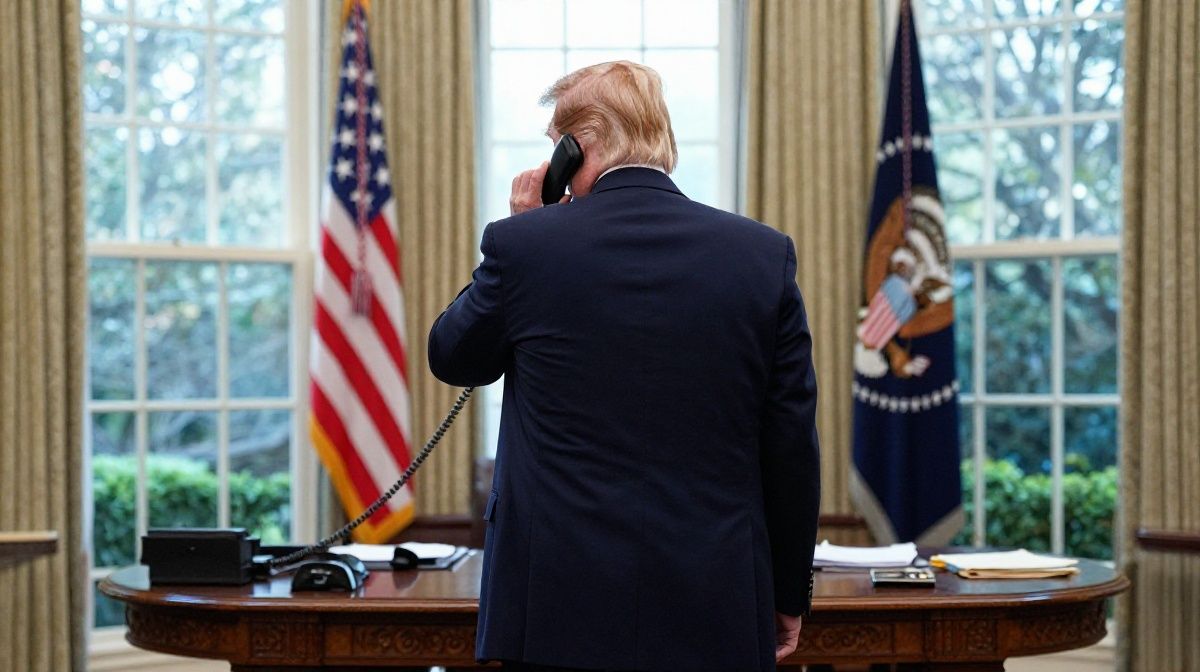
Then came the words that spooked traders most. Addressing NATO leaders, US President Donald Trump declared the ceasefire "over" and said negotiating with Iran is a "waste of time," though talks reportedly continue. He went further later in the day: Trump said the US will "very probably" hit Iran again tonight, warning that Washington could strike hard.
Iran, for its part, isn't backing down. Tehran's foreign ministry framed the US action as a "clear and material breach of Article 10 of the Memorandum of Understanding on the Cessation of War," and reports indicate Iran has begun retaliatory strikes, firing anti-ship cruise missiles and drones at US Navy warships in the Sea of Oman. In other words, the MoU that had underpinned the fragile truce now looks effectively dead.
How far did crypto prices fall?
The damage was broad rather than catastrophic — a risk-off flinch, not a full capitulation. Most cryptos dropped on average 2.9% since midnight UTC, with all but one token declining. Bitcoin and ether fell more than 2% after Trump declared the ceasefire "over."
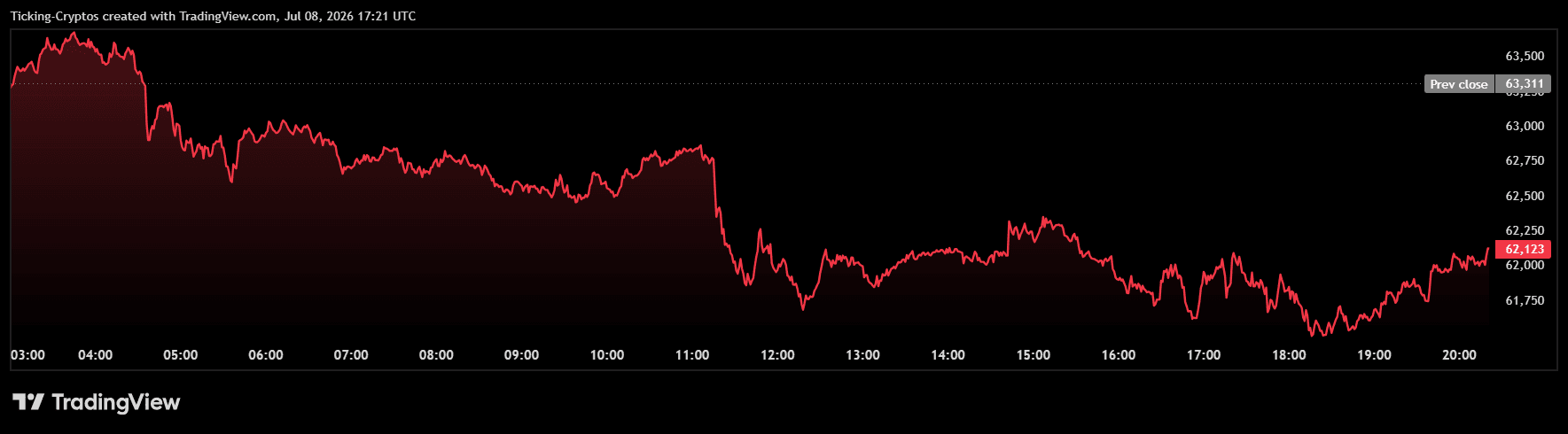
BTC price in USD today
Looking at the majors: Bitcoin slipped back toward the $61,000–$62,000 zone, Ethereum lost the momentum that had briefly carried it above $1,800 and dropped toward $1,720, and XRP was among the hardest hit of the large caps, sliding around 5% on the day to about $1.07. Solana took the worst of it among the majors — Solana has now completely retraced a rally that began on July 2, trading back near $77 after challenging $84 on Monday.
Why did altcoins get hit hardest?
This is the pattern almost every time fear spikes: the further out on the risk curve, the harder the fall. Altcoins bore the brunt, with $350 million of the $450 million in total liquidations coming from altcoin pairs, and tokens like JUP, ETHFI and PUMP losing between 5.5% and 9.3%.
When traders de-risk, they rotate out of speculative small caps first and hold the majors longer, which is exactly why an index like the CMC20 and coins further down the list show steeper 24-hour losses than Bitcoin itself.
Why does a Middle East conflict move Bitcoin at all?
It comes down to how the market treats crypto right now — as a risk asset, not a safe haven. Demand for risk-based assets like crypto tends to decline during uncertain geopolitical situations such as this.
There's also a direct macro channel through oil. The Strait of Hormuz is one of the world's most critical oil chokepoints, so strikes in the area push energy prices up fast. Following the escalation, Brent crude rose 2.05% to $75.68 a barrel and US West Texas Intermediate gained 2.07% to $71.90. Higher oil feeds inflation fears, which pressures rate expectations, which drains liquidity from speculative assets — crypto included. When oil spikes and yields rise, crypto is historically the first to bleed.
Was the market already vulnerable before the strikes?
Yes — and that context matters for anyone trying to gauge what comes next. The sell-off didn't hit a healthy market; it hit one that was still recovering. As Yahoo Finance noted, crypto is already trying to recover from one of its worst monthly performances in years. You can see that strain in the year-to-date numbers on today's board: even blue-chips like Ethereum sit deep in the red for 2026, so sentiment was thin to begin with.
At the same time, it's worth keeping perspective. This isn't 2022 — institutional infrastructure is stronger, and corporate balance sheets are actively participating. On-chain accumulation hasn't stopped either: Tom Lee's Bitmine bought another 40,000 ETH worth $71.6 million, following a 42,000 ETH purchase the previous week as it pushes toward 5% of total supply.
Where does crypto go from here?
The uncomfortable truth for holders is that crypto's next move probably won't be decided on-chain at all. While it trades like a risk asset, direction is being set by headlines out of the Middle East and by the oil market. Watch three things: whether Iran's retaliation escalates or cools, whether the ceasefire gets stitched back together despite the "over" rhetoric, and whether oil keeps climbing.