The Solana Institute is putting pressure on the U.S. Senate to move quickly on the CLARITY Act, arguing that Congress has only a narrow window to pass the crypto market structure bill before
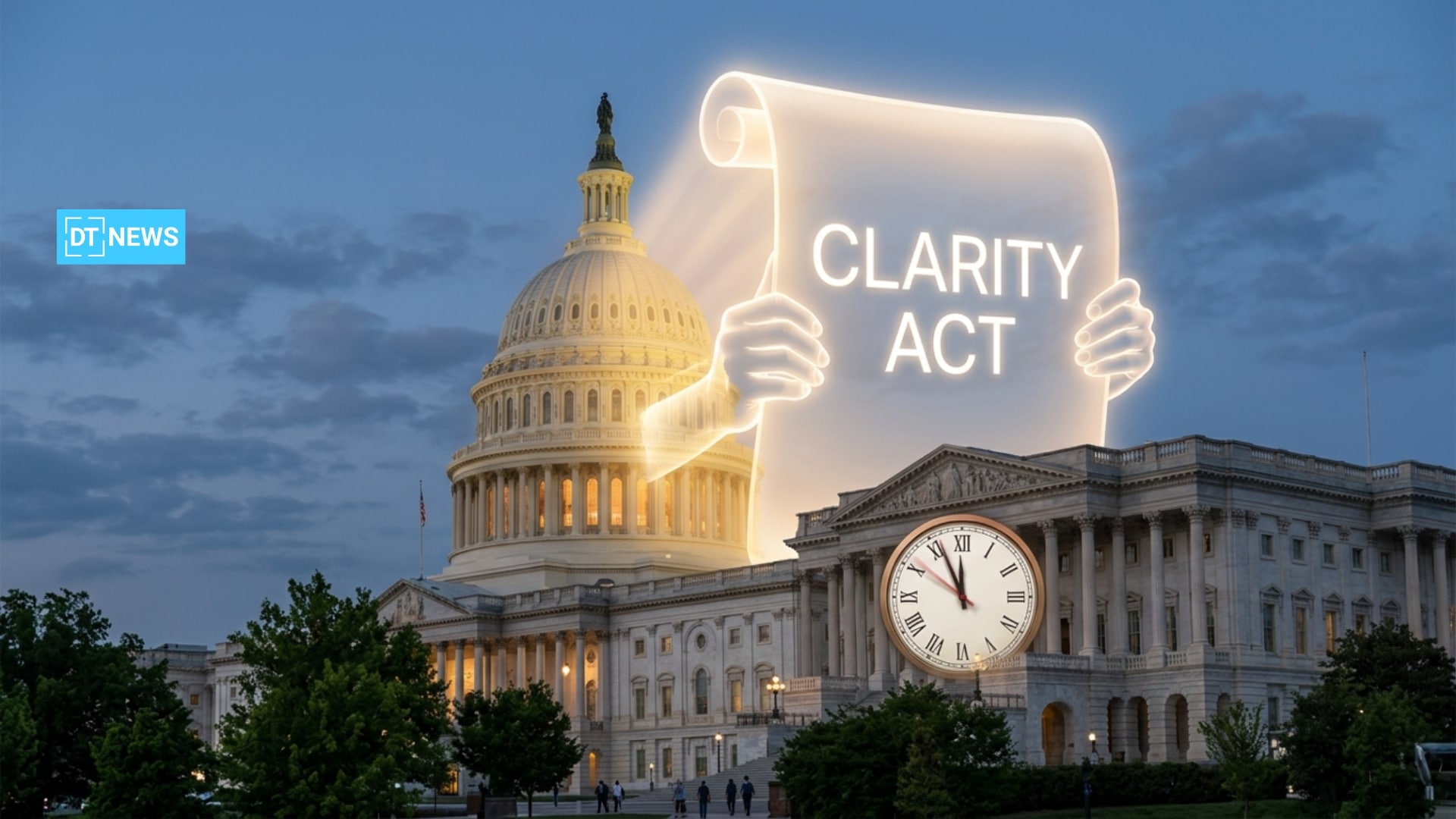
The Solana Institute is putting pressure on the U.S. Senate to move quickly on the CLARITY Act, arguing that Congress has only a narrow window to pass the crypto market structure bill before lawmakers turn their attention to government funding, election campaigns, and other legislative priorities.
Kristin Smith, president of the Solana Institute, said the legislation is effectively complete after months of negotiations involving lawmakers, congressional staff, and the White House.
She warned that missing the Senate’s remaining legislative days could reduce the bill’s chances of becoming law this year, even if procedural votes begin before the August recess.
Why the Senate Calendar Matters for the CLARITY Act
Timing has become almost as important as the contents of the bill itself. Although supporters remain optimistic that the Senate will hold an initial procedural vote before early August, passing a complex piece of legislation requires multiple procedural steps, debate, and bipartisan support.
The Senate also faces a crowded schedule that includes government funding negotiations, the National Defense Authorization Act (NDAA), executive nominations, and campaigning ahead of the fall elections.
Smith noted that the GENIUS Act consumed roughly a month of Senate floor time before advancing, an example of how difficult it can be to move major crypto legislation through Congress.
While the CLARITY Act has benefited from months of behind-the-scenes negotiations, lawmakers still need to resolve remaining disagreements before the legislation can clear the Senate’s 60-vote threshold.
This compressed timeline is why industry organizations are treating the coming days as a a matter of urgency.
 Why Solana Institute Urges Senate to Fast-Track CLARITY Act
What the CLARITY Act Would Change
The CLARITY Act is designed to establish a comprehensive federal framework for digital asset markets, replacing the regulatory interpretations that have developed over the past several years.
Among its most notable provisions are clearer registration requirements for crypto businesses, mandatory segregation of customer assets, enhanced disclosure obligations, stronger consumer protections during bankruptcies, and expanded oversight responsibilities for federal regulators.
The legislation also incorporates provisions from the Blockchain Regulatory Certainty Act, which would protect developers of non-custodial software, validators, and node operators from being treated as money transmitters simply because they publish or maintain open-source code.
Supporters argue that these protections are important for decentralized blockchain networks because they distinguish software developers from financial intermediaries that actually take custody of customer assets.
The proposal also seeks to strengthen enforcement capabilities by expanding blockchain tracing resources, improving investigator training, and providing additional tools for combating illicit financial activity.
Supporters Say Regulatory Clarity Could Keep Innovation in the U.S.
Smith argues that the issue extends beyond regulatory compliance.
According to her, clearer rules would make it easier for blockchain companies, developers, and institutional investors to operate within the United States instead of relocating to jurisdictions with more predictable digital asset regulations.
Several countries, including members of the European Union, the United Arab Emirates, and Singapore, have introduced comprehensive digital asset frameworks while the United States has continued relying on enforcement actions and agency interpretations.
Supporters believe the CLARITY Act would reduce legal uncertainty, encourage investment, and provide stronger consumer safeguards without preventing innovation.
They also argue that regulatory certainty could strengthen America’s competitiveness as digital assets become increasingly integrated into global financial markets.
 Solana Institute Urges Senate to Fast-Track CLARITY Act
Political Challenges Still Stand in the Way
Despite growing industry support, the bill’s path through the Senate remains uncertain.
One of the biggest stumbling blocks continues to be ethics provisions governing public officials’ involvement with cryptocurrency businesses.
Negotiators have spent weeks attempting to reach bipartisan agreement on language that would satisfy both Republicans and Democrats, and several lawmakers continue to seek revisions before supporting the legislation.
Also, Senate Minority Leader Chuck Schumer has reportedly submitted Democratic nominees for vacancies at both the SEC and the CFTC, easing one source of political tension that had previously become intertwined with negotiations over crypto legislation.
Industry observers also note that simply bringing the CLARITY Act to the Senate floor would represent meaningful progress. Even if final passage slips beyond the August recess, beginning the discussions could preserve momentum heading into the fall session, although competing legislative priorities may make that path more difficult.
Why the Outcome Matters for the Crypto Industry
The CLARITY Act has become one of the most closely watched pieces of digital asset legislation in the United States because it attempts to answer questions that have remained unresolved for years.
Clearer definitions of regulatory responsibilities could reduce uncertainty for exchanges, token issuers, blockchain developers, and institutional investors. Consumer protections such as asset segregation and bankruptcy safeguards are also intended to address weaknesses exposed by high-profile failures, including the collapse of FTX.
For projects built on networks like Solana, Ethereum, and other public blockchains, the legislation could also provide greater certainty around the legal treatment of decentralized infrastructure and open-source software development.
Supporters are hoping that Congress can capitalize on the remaining legislative window to determine both the bill’s immediate future and also the pace of U.S. crypto regulation heading into 2027.
Conclusion
The Solana Institute CLARITY Act campaign spells out the growing concern that Congress is running out of time to approve comprehensive cryptocurrency legislation before competing priorities dominate the legislative calendar.
While Kristin Smith believes the bill is nearly finalized and bipartisan negotiations have made significant progress, procedural hurdles and unresolved political issues continue to complicate its path through the Senate.
If lawmakers can begin floor consideration before the August recess, supporters believe the legislation still has a viable chance of advancing. Otherwise, the effort may face a more uncertain future as election politics and other legislative priorities reshape Congress’s agenda.
Glossary
CLARITY Act: Proposed U.S. legislation establishing a regulatory framework for digital asset markets.
Blockchain Regulatory Certainty Act (BRCA): Legislative provisions protecting non-custodial blockchain developers and validators from money transmitter classification.
Digital Assets: Cryptographic assets such as cryptocurrencies and tokenized financial instruments recorded on blockchain networks.
SEC: The U.S. Securities and Exchange Commission, responsible for regulating securities markets.
CFTC: The U.S. Commodity Futures Trading Commission, which oversees derivatives markets and certain digital asset activities.
Non-Custodial Software: Applications that allow users to control their own digital assets without a third party holding customer funds.
Frequently Asked Questions About CLARITY Act Progress
What is the CLARITY Act?
The CLARITY Act is proposed U.S. legislation that would establish a comprehensive federal regulatory framework for digital asset markets, including consumer protections, registration requirements, and clearer oversight responsibilities.
Why is the Solana Institute supporting the bill?
The Solana Institute argues that the legislation would provide legal certainty for blockchain developers, strengthen consumer protections, and help keep crypto innovation within the United States.
What are the biggest obstacles to passage?
The bill must secure bipartisan support in the Senate, overcome procedural hurdles, and resolve outstanding disagreements over ethics provisions before Congress begins its August recess.
Could the bill still pass after August?
Yes, but supporters believe the legislative path would become considerably more difficult because Congress will shift its focus to government funding, elections, and other priorities.
References
Solana Policy
CoinDesk
Solana Compass